
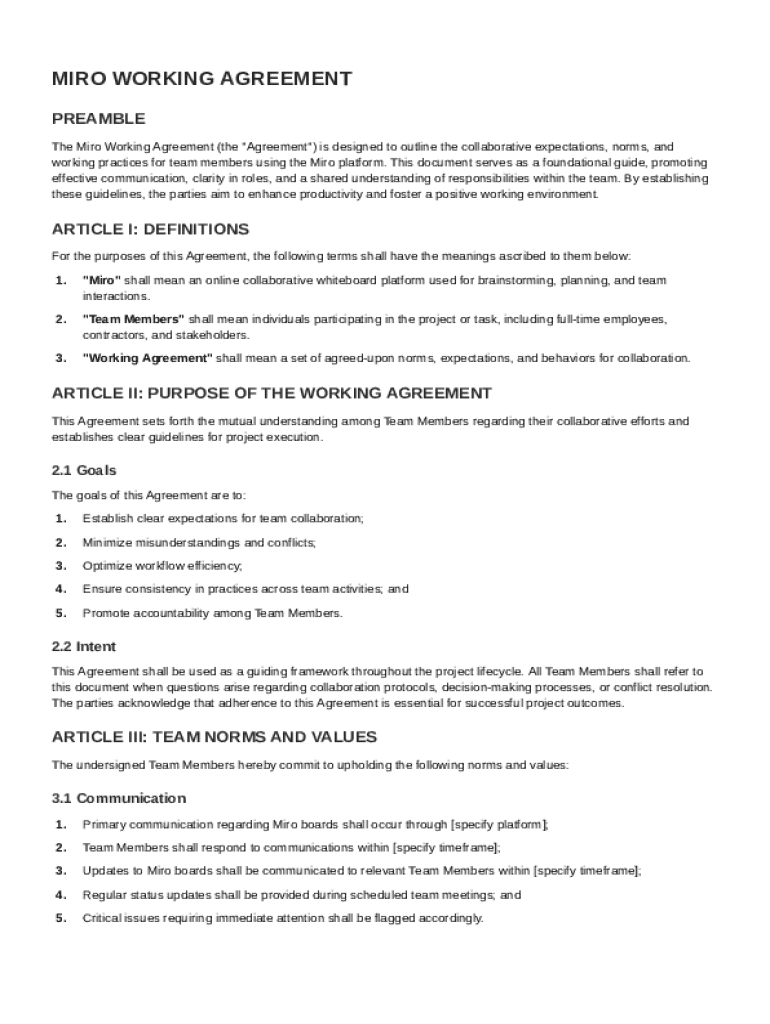







Definition & Meaning
The Miro Working Agreement Template is a structured framework designed to facilitate effective collaboration among team members in a work environment utilizing the Miro platform. It serves as a set of guidelines and expectations that define how team members should communicate, manage roles and responsibilities, and resolve conflicts. This template aims to enhance productivity and foster a positive working atmosphere by promoting accountability and minimizing misunderstandings.
Key Components
- Communication: Outlines methods and frequency of communication, ensuring clarity and reducing the chances of communication breakdowns.
- Roles & Responsibilities: Establishes clear roles for each team member, distributing tasks and responsibilities to ensure accountability.
- Conflict Resolution: Provides strategies for resolving disagreements constructively, maintaining a harmonious team environment.
How to Use the Miro Working Agreement Template
Utilizing the Miro Working Agreement Template involves several key steps to ensure it effectively supports team collaboration. Teams should begin by assembling all relevant members to contribute to the agreement's creation. The template encourages open discussion, allowing team members to voice their expectations and concerns. This process ensures the document reflects the team’s collective goals and working styles.
Step-by-Step Utilization
- Initial Meeting: Gather all team members for an introductory meeting to discuss the purpose and structure of the working agreement.
- Roles Definition: Assign specific roles and responsibilities, ensuring each team member understands their tasks and expected contributions.
- Drafting: Collaboratively draft the agreement, incorporating input from each team member about communication preferences and working norms.
- Review and Revise: Continuously review and revise the agreement as the project progresses to address any emerging issues or changes in team dynamics.
Key Elements of the Miro Working Agreement Template
The template includes several critical elements that help structure team interactions and project management effectively. These elements form the foundation of a successful working agreement and are designed to be adaptable to various team sizes and project scopes.
Structure of Elements
- Goals & Objectives: Clearly stated project goals to guide the team’s efforts and align individual tasks with broader objectives.
- Meeting Protocols: Guidelines for conducting productive meetings, including frequency, duration, and expected preparation.
- Feedback Mechanisms: Systems in place for providing and receiving feedback constructively to improve team performance and personal development.
Steps to Complete the Miro Working Agreement Template
Completing the Miro Working Agreement Template is a collaborative process that requires input from every team member. It is an iterative approach that evolves as projects and team dynamics change.
Completion Process
- Gather Information: Collect information on team members’ roles, responsibilities, and individual working preferences.
- Collaborate: Use teamwork to discuss and agree upon the norms and expectations to be included in the agreement.
- Document: Record the agreed elements in the template, ensuring clarity and comprehensiveness.
- Finalize and Distribute: Finalize the document and distribute it to all team members for their reference and adherence.
Who Typically Uses the Miro Working Agreement Template
Various teams across different industries and sectors use the Miro Working Agreement Template to enhance their workflow and collaboration. The template is particularly beneficial for remote and hybrid teams needing structured communication protocols and role clarity.


Typical Users
- Remote Teams: Ensures consistent communication and workflow among distributed team members.
- Cross-Functional Teams: Facilitates coordination among individuals from different departments working towards a common goal.
- Project Teams: Helps manage project tasks, deadlines, and responsibilities effectively.
Examples of Using the Miro Working Agreement Template
Real-world examples illustrate how teams customize and benefit from the Miro Working Agreement Template. These case studies show adaptation to distinct team needs, project goals, and industry requirements.
Practical Scenarios
- Tech Startups: A tech startup might focus on rapid iteration cycles by defining specific times for feedback and revisions within the agreement.
- Educational Teams: A university research team can use the template to outline publication goals and allocate tasks according to members' expertise.
Important Terms Related to Miro Working Agreement Template
Understanding the important terms associated with the Miro Working Agreement Template is crucial for effective utilization. These terms clarify specific sections and encourage the standardized use among team members.
Relevant Terms
- Stakeholders: Individuals or groups with an interest in the project outcomes, often included in communication plans.
- Alignment: Ensures the team's objectives and individual goals are aligned with organizational priorities.
- Iteration: The process of refining and improving the working agreement as projects and teams evolve.
Legal Use of the Miro Working Agreement Template
While the Miro Working Agreement Template primarily serves to streamline team collaboration, its legal implications ensure teams adhere to organizational and industry standards.
Legal Considerations
- Compliance: Ensure the template complies with organizational policies and legal standards for workplace conduct.
- Confidentiality: Address confidentiality agreements within the team to protect sensitive information.
- Documentation: Properly document the agreement to serve as a reference in case of disputes or misunderstandings.




