
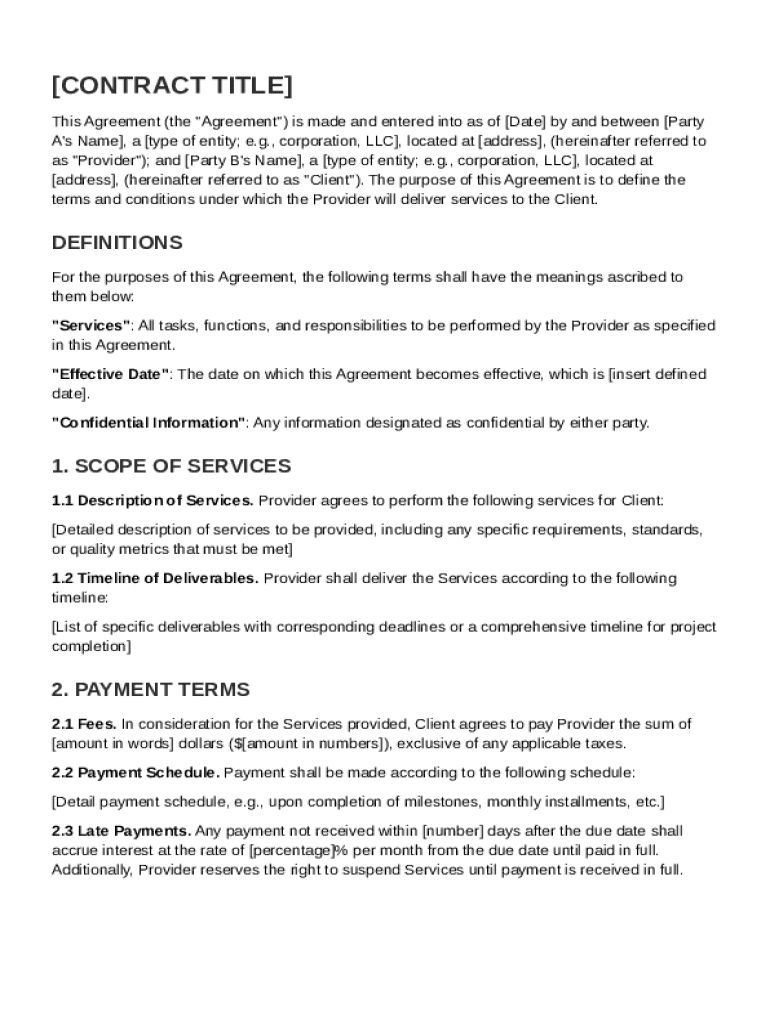







Definition & Meaning
A formal contract template is a structured document that outlines the terms and conditions agreed upon by two or more parties in a legal agreement. This template serves as a foundational framework, detailing obligations, rights, and responsibilities to be upheld by each party involved. It typically includes sections such as the scope of services, payment terms, confidentiality clauses, dispute resolution procedures, and governing law. This ensures a clear understanding and serves as a reference to resolve potential disputes.
Practical Examples and Applications
- Service Agreements: Often used between clients and service providers to outline deliverables, deadlines, and remuneration.
- Lease Contracts: Establish the terms between landlords and tenants, including rent specifics and maintenance responsibilities.
- Partnership Agreements: Clarify the roles and profit-sharing arrangements between business partners.
Key Elements of the Formal Contract Template
The formal contract template consists of crucial components that ensure clarity and enforceability:
- Identifying Information: Names and contact details of all parties involved.
- Definitions Section: Clarifies any terms that carry specific meanings within the contract.
- Obligations and Duties: Sets out the rights and responsibilities of each party.
- Payment Terms: Specifies the amount, due dates, and methods of payment.
- Confidentiality Clause: Protects sensitive information exchanged during the contract.
- Termination Conditions: Describes circumstances under which the contract can be legally terminated.
Steps to Complete the Formal Contract Template
Filling out a formal contract template involves several critical stages to ensure precision and compliance:
- Gather Necessary Information: Collect all relevant details about the parties involved and the subject matter of the contract.
- Customize the Template: Adjust any sections to reflect the unique aspects of the agreement.
- Review Legal Terms: Ensure an understanding of all terms and conditions and adjust as necessary for clarity or specificity.
- Seek Legal Advice: Consult with a legal expert if needed to verify the accuracy and completeness of the document.
- Finalize and Distribute: Sign the finalized document and distribute copies to all parties involved for their records.
Edge Cases and Variations
- Complex Transactions: May require additional sections or schedules, such as detailed project milestones or deliverable specifications.
- Multiple Parties: In scenarios involving more than two parties, add clauses to address multi-party interactions and responsibilities.
Legal Use of the Formal Contract Template
The use of the formal contract template is essential to ensure that agreements are legally binding and enforceable:
- Contracts must be signed by all parties: To be legally effective, all parties involved should sign the document, signifying their acceptance of the terms.
- Adherence to Governing Laws: The contract should specify which jurisdiction's laws it falls under, typically aligning with the location of the primary business operations or where the agreement is executed.
- Inclusion of Legal Remedies: Should any disputes arise, the contract must outline the available legal remedies and dispute resolution processes.
Case Study
- Tech Startup and Freelance Developer: A tech startup utilized a formal contract template to hire a freelance developer. The contract detailed the developer's deliverables, payment schedule, and confidentiality agreements, minimizing misunderstandings and ensuring smooth project execution.
Who Typically Uses the Formal Contract Template
Formal contract templates are versatile tools employed across various industries and sectors:
- Small and Medium Enterprises (SMEs): Frequently utilize these templates to engage in vendor and client contracts.
- Large Corporations: Often required for complex, high-stakes agreements involving multiple departments or international parties.
- Freelancers and Independent Contractors: Use contract templates to ensure clear terms and expectations with their clients.
- Nonprofits and Charitable Organizations: Employ these contracts to manage partnerships, sponsorships, and service providers.


Software Compatibility
Modern solutions like DocHub enhance the usability of formal contract templates through seamless digital integration.
- Software Integration: Many legal document management solutions support formats like DOC and PDF, enabling easy editing and sharing.
- Cloud Services Compatibility: Platforms such as Google Drive and Dropbox ensure that templates are accessible and can be collaboratively edited online.
- Versatile Platforms: Desktop and mobile compatibility ensures that users can view and edit templates without needing specialized software installations.
Business Types That Benefit Most from Formal Contract Template
Certain business entities find pronounced benefits in utilizing formal contract templates for their routine operations:
- Limited Liability Companies (LLCs): Regularly employ formal contracts for secure partnerships and service agreements.
- Corporations: Utilize contracts to manage extensive supplier networks and maintain regulatory compliance across departments.
- Partnerships: Rely on such templates to define personal and business obligations match individual contributions with financial benefits.
Examples
- Software Development Firms: Streamline client contracts specifying deliverables, ownership rights, and support terms.
- Event Management Companies: Use templates to prepare agreements with venues, vendors, and performers covering all logistics.
Important Terms Related to Formal Contract Template
Understanding key terminology within a formal contract template enhances clarity and prevents potential legal disputes:
- Force Majeure: A clause that protects parties from liabilities due to unforeseen events beyond their control.
- Indemnification: An agreement to compensate for any losses or damages incurred by another party.
- Jurisdiction: Specifies the legal authority under which the contract shall be governed and disputes resolved.
- Arbitration Clause: An alternative dispute resolution method to litigation, often faster and more economical.
Detailed Context
- Confidentiality Agreements: Ensure sensitive information disclosed during contractual negotiations is protected.
- Non-Compete Clauses: Prevents parties from engaging in competitive business activities within certain limits post-agreement.




