Definition and Meaning
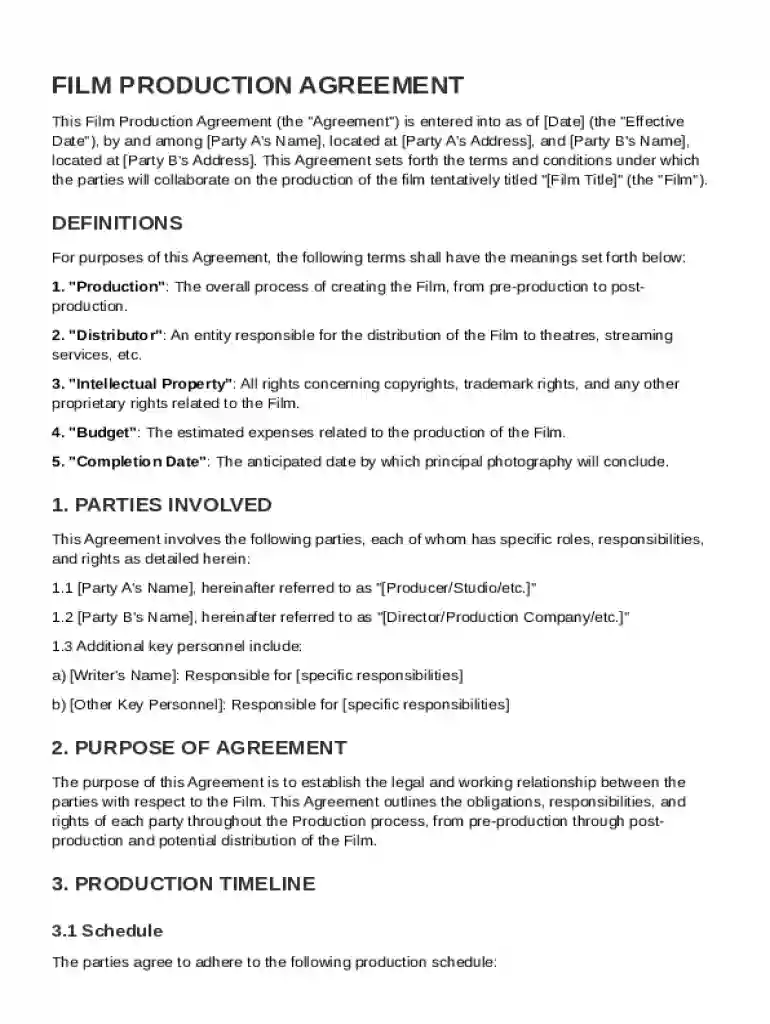
A Film Contract Template is a comprehensive legal document used in the film industry to facilitate agreements between two or more parties involved in the production of a movie. The template serves as a foundational piece, detailing the roles and responsibilities of each party, as well as the financial, legal, and logistical elements required for the film's production. This document is essential in laying out a clear legal framework, ranging from pre-production tasks to post-production obligations, ensuring all parties are in consensus regarding the project's execution and deliverables.
Key Elements of the Film Contract Template
The Film Contract Template comprises several critical sections that form the backbone of the agreement. These include:
- Project Title and Description: Clearly identifies the film project by name and provides a basic synopsis or outline.
- Parties Involved: This section specifies the names and roles of all parties, usually including the producer, director, and key stakeholders.
- Budget and Financial Terms: Outlines the project's budget, along with details on financial responsibilities, funding sources, and profit-sharing mechanisms.
- Intellectual Property Rights: Addresses ownership of film content, distribution rights, and guidelines governing the use of music, scripts, and any other creative content.
- Confidentiality: Establishes expectations for privacy and the safeguarding of sensitive information related to the project.
- Dispute Resolution: Provides a framework for resolving conflicts, often through mediation or arbitration, rather than through court proceedings.
- Termination Conditions: Specifies the scenarios under which the contract can be terminated, including breach of contract, failure to meet deadlines, or financial insolvency.
Each section is meticulously detailed to ensure clarity and avoid potential disputes throughout the production process.
How to Use the Film Contract Template
The process of utilizing a Film Contract Template involves several steps to ensure it meets all legal and project-specific requirements:
- Download or Obtain the Template: Access the template from a reliable source, such as a legal documentation platform or a film industry association.
- Customize the Template: Tailor the document by inserting specific details such as the film title, names of parties involved, and project-specific terms.
- Review Legal Terms: Have a legal professional review the customized document to ensure it complies with applicable laws and industry standards.
- Finalize Agreement: All parties must thoroughly read and understand the agreement before signing to ensure mutual consent.
- Sign and Distribute: Once finalized, all parties should sign the document, and copies should be distributed to each stakeholder for record-keeping.
The template serves as a dynamic tool that can be adapted to suit various film production scenarios, ensuring each project's unique needs are addressed.
Steps to Complete the Film Contract Template
Completing the Film Contract Template requires attention to detail and careful consideration of the project’s specific requirements. Follow these steps:
- Identify Core Sections: Start by filling in the basic information such as project title, parties involved, and date of agreement.
- Customize Financial and Legal Terms: Ensure budget details, profit-sharing agreements, and intellectual property clauses are accurate and complete.
- Draft Specific Obligations: Clearly define the roles and responsibilities of each party within the production process, including timelines for deliverables.
- Include Necessary Addendums: Attach any additional documents or agreements that may impact the contract’s terms, such as third-party agreements or location permissions.
- Review and Edit: Carefully review the entire document for any errors or omissions that might lead to misunderstandings or legal challenges.
- Consult Legal Experts: Engage legal counsel to validate the final draft and ensure compliance with industry regulations and legal requirements.
- Officially Execute the Contract: Upon agreement from all parties, proceed with signing and officially executing the contract.
This step-by-step approach ensures that the Film Contract Template is not only complete but also legally robust and ready for implementation.
State-Specific Rules for the Film Contract Template
State-specific regulations can significantly influence the terms and conditions within a Film Contract. Key considerations include:
- Employment Laws: Determine labor laws regarding working hours, wage minimums, and union requirements specific to the state of operation.
- Tax Implications: Consider any state-specific tax credits or incentives available for filmmakers, and ensure the contract reflects these financial considerations.
- Permits and Licenses: Address state-specific requirements for permits related to filming locations, public spaces, and special effects.
- Environmental Regulations: Include clauses that commit to compliance with state environmental laws, especially when filming outdoors or in environmentally sensitive areas.
- Intellectual Property Laws: Ensure state laws concerning intellectual property rights are reflected, particularly in regards to distribution and revenue sharing.
Understanding these variations is pivotal to ensuring the Film Contract Template is effective and enforceable across different jurisdictions in the United States.
Legal Use of the Film Contract Template
Utilizing a legally sound Film Contract Template is crucial to protecting the rights and responsibilities of all involved parties. Fundamental considerations include:
- Adhering to the ESIGN Act: The template can incorporate electronic signatures, ensuring that digital contracts are legally binding and compliant.
- Avoiding Ambiguities: Clear language is essential to prevent misunderstandings about contractual obligations and expectations.
- Adherence to Contract Law: The agreement must comply with general principles of contract law, ensuring it is valid, with clear offers, acceptance, and consideration.
- Documenting Modifications: Any changes made after the original signing should be documented officially and agreed upon by all parties to maintain legality.
Careful legal consideration when using a Film Contract Template safeguards the interests and establishes the commitment to uphold the outlined terms throughout the film’s production lifecycle.
Examples of Using the Film Contract Template
Real-world applications of the Film Contract Template illustrate its flexibility and utility:
- Independent Film Projects: Small production companies leverage templates to establish clear agreements without the need for extensive legal teams.
- Major Studio Productions: Large film studios use detailed contracts to manage the complexity of multi-party, high-budget film projects.
- Cross-Border Film Collaborations: International co-productions rely on these templates to navigate varying country regulations while setting common terms for all involved parties.
- Educational and Student Films: Universities and film schools often adapt the templates to teach students professionalism and legal standards in filmmaking.
- Documentary Productions: Documentarians use specific clauses related to the authenticity and legal release of documentary footage.
These diversified examples showcase how the Film Contract Template serves as an essential tool across various types of film production scenarios, ensuring structured and equitable agreements for all parties involved.