
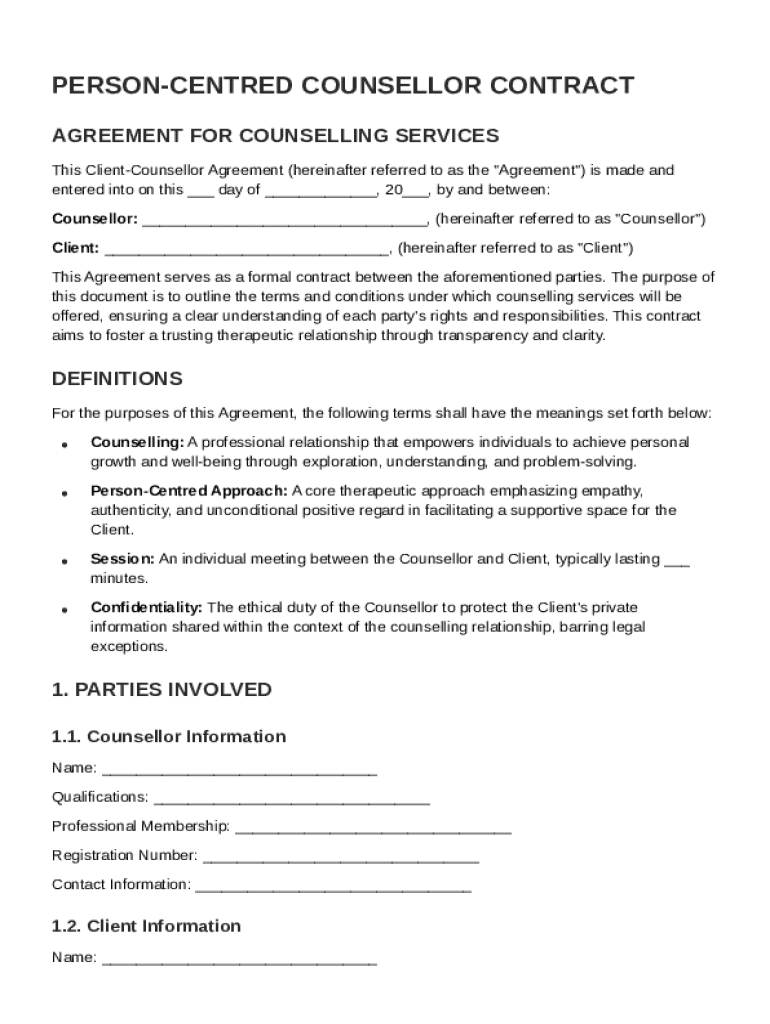







Definition and Meaning
The Person Centred Counsell Contract Template is a document that outlines the contractual agreement between a counsellor and a client. It defines the core components of person-centred counselling, which emphasizes the importance of a therapeutic relationship based on trust and collaboration. This contract ensures that both parties are in agreement about the terms of their engagement, addressing aspects such as roles, responsibilities, and confidentiality.
Key Elements of the Person Centred Counsell Contract Template
- Counselling Approach: Outlines the methodology, focusing on a non-directive, empathetic approach to facilitate client growth.
- Session Details: Specifies session length, frequency, and mode (in-person, online).
- Confidentiality Clause: Establishes guidelines for the protection of client information.
- Roles and Responsibilities: Clearly defines what is expected from both the counsellor and the client.
- Fees and Payment Terms: Details the cost per session and accepted payment methods.
Steps to Complete the Person Centred Counsell Contract Template
- Review the Template: Understand all sections thoroughly to ensure all details are pertinent to your specific agreement.
- Fill Out Personal Information: Include names, contact details, and any other identifying information.
- Specify Session Terms: Agree on the number and frequency of sessions, and confirm the mode of delivery.
- Discuss Fees: Input agreed payment details and reconcile any financial arrangements.
- Review and Sign: Both parties should review the completed contract for accuracy before signing.
How to Use the Person Centred Counsell Contract Template
This template serves as a foundational document in establishing the terms of a counselling relationship. It's used to align expectations, clarify roles, and set boundaries. To effectively use the template, a counsellor should go through each section with the client to ensure understanding and agreement. This facilitates a mutual understanding and forms the basis for a constructive therapeutic relationship.
Important Terms Related to the Person Centred Counsell Contract Template
- Client Autonomy: Ensures the client maintains control over their counselling process.
- Non-Directivity: The counsellor provides an environment for self-discovery without directing the client's path.
- Empathy and Unconditional Positive Regard: These are foundational principles of the person-centred approach, focusing on creating a supportive environment.
Examples of Using the Person Centred Counsell Contract Template
- Therapeutic Alignment: The template helps establish a mutual understanding of goals between client and counsellor.
- Dispute Resolution: Outlining clear terms in the contract facilitates addressing any disagreements amicably.
- Scope of Services: Clearly delineates what the counselling sessions will cover, preventing scope creep.
Who Typically Uses the Person Centred Counsell Contract Template
- Individual Counsellors: Utilize this template to formalize client agreements.
- Counselling Practices: Ensure consistency across multiple client engagements.
- Clients: Understanding their rights and responsibilities within the therapeutic relationship.

Legal Use of the Person Centred Counsell Contract Template
- Compliance: Must comply with state and federal regulations regarding therapeutic practices.
- Ethical Standards: Aligns with the legal and ethical guidelines established by professional counselling associations.
- Protective Measures: Provides legal protection to both the counsellor and client by clearly setting out the terms of service.
State-Specific Rules for the Person Centred Counsell Contract Template
While the core principles of this contract remain consistent, certain state-specific regulations may influence its components, such as:
- Mandatory Reporting Laws: Varies by state, requiring specific clauses related to client confidentiality exceptions.
- Licensing Requirements: States may have different requirements for a counsellor’s credentials, impacting contract terms.
- Payment and Insurance Policies: State regulations determining acceptable payment methods and insurance coverage options.




