Definition and Purpose of the Performance Review Contract Template
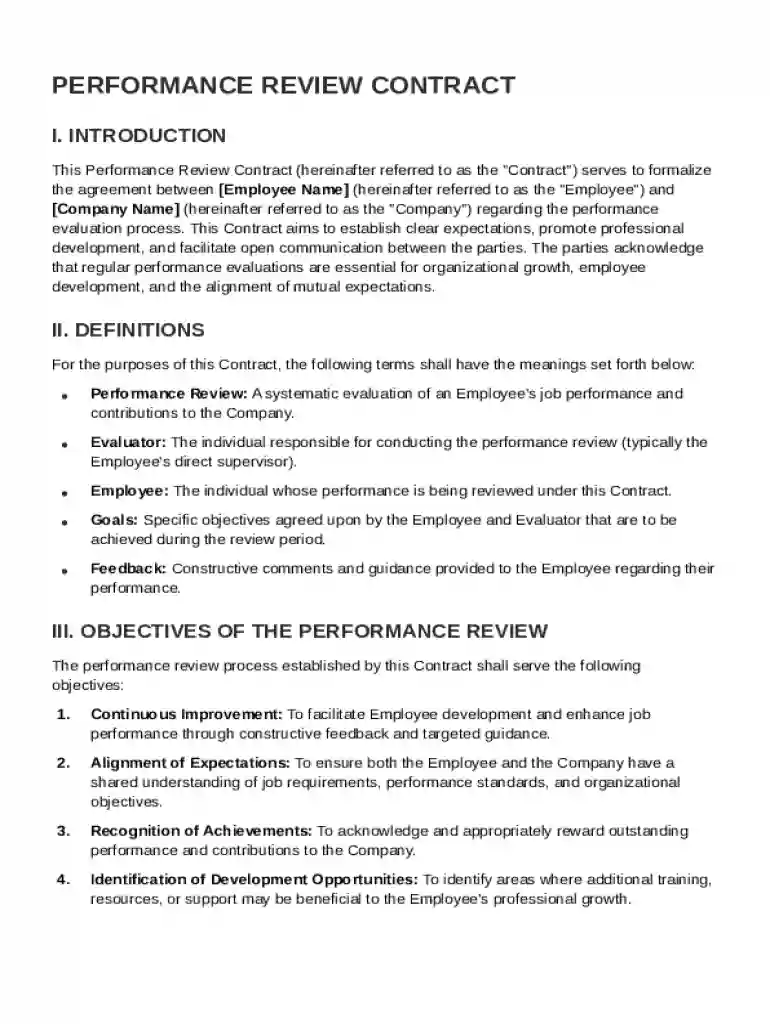
The Performance Review Contract Template is designed to formalize the agreement between an employee and their employer regarding the evaluation of job performance. It aims to establish a structured process that includes setting objectives such as continuous professional development, aligning employer-employee expectations, recognizing achievements, and identifying potential areas for improvement. By detailing these components, the template serves as a foundational tool to ensure fairness and transparency in performance evaluations.
Key Features
- Objective Setting: Utilizes SMART criteria (Specific, Measurable, Achievable, Relevant, Time-bound) to define clear performance goals.
- Review Frequency: Specifies the intervals (annual or quarterly) at which performance reviews will take place.
- Confidentiality: Includes provisions to maintain the confidentiality of the review process and results.
- Amendments: Outlines procedures for making any necessary changes to the contract.
Practical Scenarios
- An employee unclear about job expectations can use the contract to clarify goals with their manager.
- A manager can utilize the template to document performance for potential promotions or salary adjustments.
Key Components of the Performance Review Contract Template
The template is composed of several essential elements designed to guide both employees and employers through the performance review process effectively.
Core Sections
- Performance Criteria: Defines the specific metrics and benchmarks used to evaluate an employee's performance.
- Review Process: Details the steps involved, including who conducts the review and how feedback is communicated.
- Appeals Process: Provides a formal mechanism for employees to respond to and appeal performance evaluations in case of disagreements.
Detailed Breakdown
- Metrics Examples: Common metrics include sales targets for sales roles or project completion rates for project managers.
- Process Steps: May include a self-assessment by the employee, followed by a manager's evaluation and a subsequent feedback session.
Steps to Complete the Performance Review Contract Template
Completing the Performance Review Contract Template involves several steps to ensure a comprehensive and accurate agreement is achieved.
Step-by-Step Process
- Initial Discussion: Begin with a meeting between the employee and manager to outline the initial performance expectations.
- Drafting Goals: Use SMART criteria to draft specific performance goals and objectives.
- Document Creation: Finalize the document with required performance criteria, review process, and confidentiality agreements.
- Review and Signatures: Both parties review the document, make necessary amendments, and provide signatures to formalize the agreement.
Example Scenario
- An employee and manager meet at the beginning of the fiscal year to set a sales target goal and schedule quarterly check-ins to review progress.
How to Use the Performance Review Contract Template
Utilizing the Performance Review Contract Template correctly is crucial for maximizing its benefits.
Usage Guidelines
- Customization: Tailor the template to fit specific roles and departmental needs within the organization.
- Integration: Incorporate it into the broader human resources toolkit to standardize performance review processes across the company.
- Review and Update: Regularly review and update the contract terms to reflect any organizational changes or role developments.
Practical Tips
- Adjust the template for remote work environments by specifying virtual meeting protocols for performance discussions.
- Incorporate technology by setting up digital signature solutions to streamline the signing process.
Legal Aspects and Compliance
Understanding the legal context of using the Performance Review Contract Template is essential for ensuring compliance and validity.
Legal Framework
- ESIGN Act Compliance: Ensure that electronic signatures are used properly for legitimacy.
- Confidentiality Clauses: Adhere to privacy laws regarding maintaining the confidentiality of performance data.
Potential Legal Ramifications
- Failure to comply with the specified review processes may lead to legal disputes over fairness in employment practices.
- Properly executed contracts can serve as a defense in wrongful termination cases if performance issues are documented and communicated as per the contract terms.
Importance and Benefits of Using the Template
The Performance Review Contract Template offers numerous advantages to both employees and employers, emphasizing its importance as a workplace tool.
Key Benefits
- Clarity and Accountability: Ensures employees have a clear understanding of job expectations and performance standards.
- Motivation and Engagement: By recognizing achievements and setting future goals, employees are more engaged and motivated to perform.
- Fair and Transparent: Establishes a structured process that is fair and transparent, minimizing bias and promoting trust.
Real-World Application
- Companies with high turnover rates may find that using structured performance reviews helps retain talent by making employees feel valued and understood.
State-Specific Considerations
While the template provides a general framework, employers must consider state-specific regulations that may affect how performance reviews are conducted.
Variations by State
- Labor Laws: Employment laws vary by state, which may influence elements such as the frequency and documentation of performance reviews.
- Employee Rights: Some states have more stringent employee rights concerning access to performance data and the ability to contest evaluations.
Implementation Tips
- Businesses operating in multiple states should customize templates to adhere to local laws and regulations.
- Legal consultation may be necessary to ensure that all state-specific requirements are met in the performance review contracts.
Common Use Cases and Scenarios
This template is used across various industries and job functions to facilitate performance evaluations, offering versatility and adaptability.
Industries Benefiting
- Corporate: Used in large organizations to maintain accountability in managerial positions.
- Nonprofit: Helps align organizational goals with employee performance in mission-driven roles.
- Startups: Provides structure for new businesses looking to establish clear performance standards from the outset.
Typical Users
- Human Resources Managers: Utilize the template to standardize the performance review process company-wide.
- Line Managers: Employ the template in direct oversight roles to provide consistent feedback and development guidance for their teams.
By covering these comprehensive areas, the template serves as a robust tool for managing employee performance.