






Definition and Meaning of the Paid Intern Contract Template
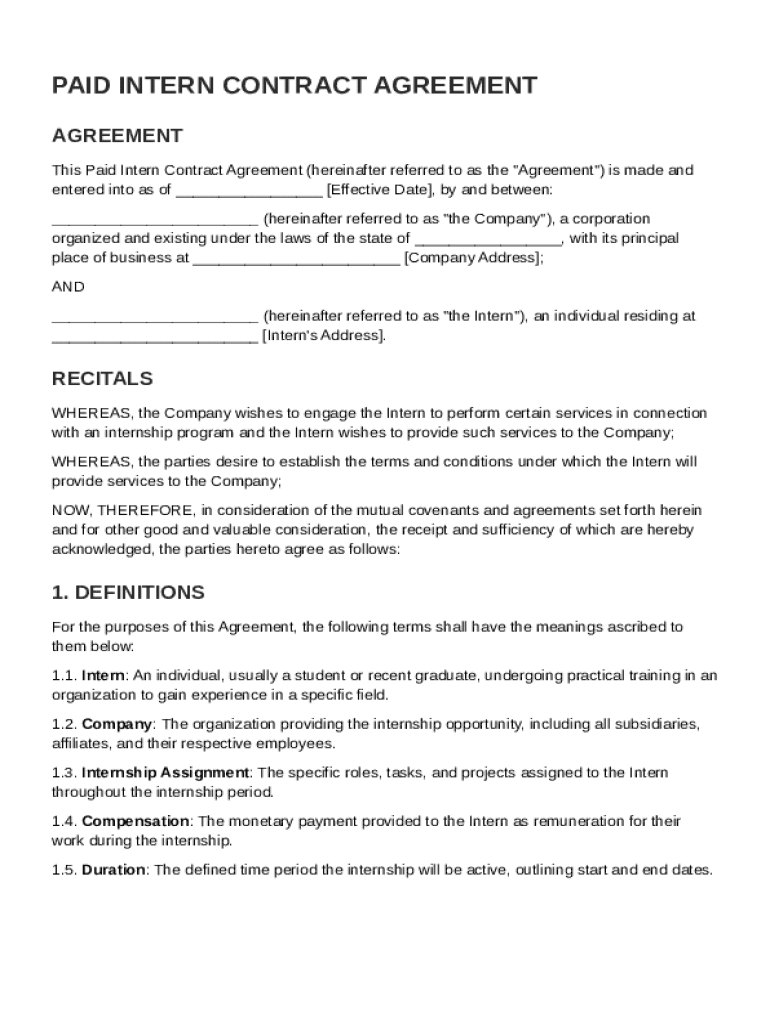
The Paid Intern Contract Template is a legally binding document designed to clarify the terms and conditions of an internship between a company and its intern. Typically utilized in professional environments, this contract ensures both parties understand their responsibilities and expectations. The agreement encompasses definitions pertinent to the internship, such as the roles of the intern and employer, as well as specific terms regarding compensation, work schedule, and duties. By formalizing the internship arrangement, the contract helps mitigate misunderstandings and potential disputes, providing a clear framework within which both parties operate.
The template serves as a vital tool for outlining confidentiality obligations and protecting proprietary business information. This section of the contract is particularly crucial for companies dealing with sensitive data or trade secrets, necessitating the intern's non-disclosure of certain information during and after the internship period. Additionally, the document typically addresses situations such as termination, specifying circumstances under which the internship may be concluded prematurely and any associated procedures.
Key Elements of the Paid Intern Contract Template
The Paid Intern Contract Template comprises several pivotal elements, each contributing to a comprehensive and clear agreement. Notable components include:
- Internship Overview: This section provides a snapshot of the role, detailing the program’s objectives and duration.
- Schedule and Duties: Enumerates expected working hours, days of attendance, and core responsibilities, ensuring clarity on what is required from the intern.
- Compensation Details: Articulates the intern’s pay structure, whether it be hourly, weekly, or in another format, alongside any additional benefits or reimbursements.
- Confidentiality Clause: Protects the company’s confidential information by establishing the intern's duty to maintain privacy.
- Termination Clause: Outlines conditions under which the internship can be ended by either party.
- Eligibility for Academic Credit: Discusses the possibility of earning course credit, if applicable.
- Legal Provisions: Includes compliance with applicable state and federal laws, ensuring the internship aligns with labor regulations.
Each of these elements helps ensure that the expectations, rights, and responsibilities of both the intern and the employer are explicitly stated, reducing the potential for future conflicts.
How to Use the Paid Intern Contract Template
Navigating the Paid Intern Contract Template is a straightforward process designed to streamline agreement formation. Here’s a step-by-step guide:
- Download the Template: Obtain the contract template from a trusted resource or business platform.
- Fill in General Information: Include the company and intern’s names, addresses, and contact details.
- Specify Internship Details: Clearly state the internship title, department, supervisor, and total duration.
- Outline Schedule and Duties: Detail the expected work schedule and duties associated with the role.
- Add Compensation Structure: Enter compensation specifics such as pay rate, payment frequency, and any additional benefits.
- Include Confidentiality and Legal Clauses: Incorporate clauses related to confidentiality, compliance with laws, and termination conditions.
- Review and Sign: Ensure both parties read through the contract thoroughly. Have the intern and a company representative sign to confirm agreement.
This process helps ensure the contract is complete, precise, and aligns with mutual expectations.
Legal Use of the Paid Intern Contract Template
The legal framework incorporated in the Paid Intern Contract Template is crucial for ensuring compliance with relevant laws, including labor regulations related to internships. Prior to usage, it’s important that the template is customized to reflect any state-specific laws in the United States, especially regarding minimum wage, hours of work, and permitted activities for interns.
Organizations must ensure the contract aligns with the Fair Labor Standards Act (FLSA) where applicable, particularly focusing on whether the intern will be classified as an employee entitled to compensation. Companies offering college credit should verify the arrangement meets the educational institution’s requirements as well. Finally, ensuring the document is reviewed by legal professionals before implementation can help preempt legal challenges and ensure it protects the organizational interests while complying with applicable laws.
Steps to Complete the Paid Intern Contract Template
Completing the Paid Intern Contract Template involves careful entry of relevant details to tailor the document according to the specific internship:
- Enter Basic Details: Begin with company and intern identification details to personalize the contract.
- Define Role and Expectations: Accurately describe the intern’s role, expected contributions, and learning objectives.
- Clarify Compensation and Benefits: Provide detailed information regarding payment, fringe benefits, and acceptable expenses.
- Detail Confidentiality Obligations: Outline the scope of confidentiality and define proprietary information.
- Specify Termination Terms: Establish guidelines for contract termination, including notice periods and acceptable reasons.
- Include Additional Clauses: Insert any additional clauses that cater to unique organizational or state requirements.
- Finalize and Sign: Conduct a thorough review, making amendments as necessary before executing signatures.
These steps are essential in ensuring that the contract remains legally sound and clearly represents the involved parties' intentions.
Who Typically Uses the Paid Intern Contract Template
The Paid Intern Contract Template is commonly utilized by a diverse range of organizations, including:
- Corporations and Enterprises: Large entities often have structured internship programs requiring formal contracts to ensure compliance and manage numerous interns.
- Small and Medium Enterprises (SMEs): Smaller businesses use templates to efficiently onboard interns and outline agreed-upon responsibilities.
- Non-Profit Organizations: These groups utilize contracts to formalize roles and secure necessary disclosures regarding volunteer work.
- Educational Institutions: Universities and colleges may employ these contracts when managing internships linked to academic credits, ensuring students and participating businesses uphold agreements.
The template serves as a foundation for any entity looking to forge legally compliant and clear internship agreements, promising fairness and transparency for both parties.


Examples of Using the Paid Intern Contract Template
Practical scenarios illustrate how the Paid Intern Contract Template proves valuable:
- Technology Start-Up: A tech company looking to engage an intern for software development projects uses a contract to enunciate coding tasks, hours, and payment models while securing intellectual property rights.
- Marketing Agency: An agency working with clients' sensitive data employs a contract requiring interns to uphold confidentiality, clarifying expectations in project duties and permissible use of company information.
- Academic Partnership: A student works with an organization through a college program, using a contract to specify academic credit eligibility and graded project expectations, ensuring alignment with academic standards.
Such use cases exemplify the template's versatility and necessity in maintaining professional standards in apprenticeship facilitation.
State-Specific Rules for the Paid Intern Contract Template
Internship contracts may necessitate adjustments based on varying state regulations within the U.S. Here are examples of state-specific considerations:
- California: Stringent rules on intern classification mean contracts must adhere to state laws determining student or non-employee status.
- New York: Pay requirements can differ, compelling businesses to ensure contracts reflect state minimum wage laws where applicable.
- Texas: Local labor laws may influence work hours and compensation specifics, therefore contracts should reflect any pertinent regional statutes.
Being aware of and adapting to unique state mandates helps prevent potential legal issues, ensuring the intern agreements remain valid and enforceable within the respective jurisdiction.