






Definition & Meaning
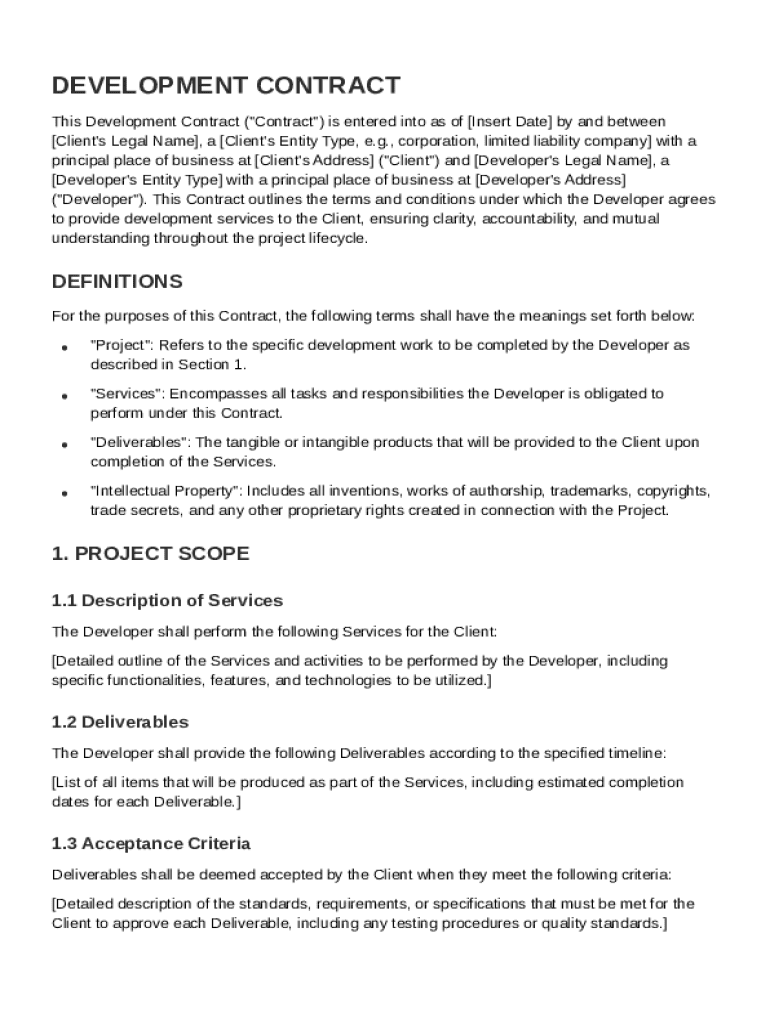
A Development Contract Template serves as a formal agreement between a client and a developer for the provision of development services. This essential document outlines the scope of the project, detailing the services to be provided, deliverables, acceptance criteria, and timelines. By establishing clear terms, both parties can maintain a shared understanding and ensure the project's successful completion. Key aspects also include compensation terms, intellectual property rights, confidentiality obligations, and termination conditions, all crucial for defining the roles and responsibilities of each party involved.
Key Elements of the Development Contract Template
The contract template contains several critical components to cover the project lifecycle comprehensively. These elements are designed to address every aspect of the development process, ensuring clarity and reducing the possibility of disputes.
- Scope of Work: Defined tasks and responsibilities, clear deliverables, and criteria for project acceptance.
- Compensation Terms: Payment schedules, invoicing processes, and late payment penalties.
- Timeline: Project milestones, delivery dates, and any conditions for timeline adjustments.
- Confidentiality and IP Protection: Clauses to safeguard sensitive project information and intellectual property rights.
- Termination Conditions: Conditions under which the contract can be terminated and the consequences thereof.
- Dispute Resolution: Methods for resolving disagreements, including mediation or arbitration processes.
Legal Use of the Development Contract Template
The legal framework forms the backbone of the Development Contract Template. Adhering to this ensures that it is enforceable and protects both parties from potential legal pitfalls.
- Compliance with U.S. Laws: Templates must meet local, state, and federal regulations applicable to the specific type of development work.
- Legally Binding Agreement: Clearly outlined mutual obligations and signatures authenticate that both parties agree to the contract terms.
- Confidentiality Agreements: Legally protects proprietary information and restricts unauthorized disclosure.
Who Typically Uses the Development Contract Template
The Development Contract Template is widely used across various industries. Typically, it is utilized by individuals and businesses that engage in software development, website creation, or any custom development services. The primary users include:
- Freelance Developers: Independent professionals providing specialized development services.
- Development Agencies: Companies offering a wide range of digital solutions to different clients.
- Clients and Project Managers: Individuals responsible for ensuring the required services are delivered to meet the project specifications.


Steps to Complete the Development Contract Template
Properly completing the Development Contract Template involves several steps to ensure it is both comprehensive and tailored to the specific project requirements.
- Identify the Parties Involved: Include full names and contact details of the client and developer.
- Outline the Project Scope: Clearly define the services, expected deliverables, and acceptance criteria.
- Determine Payment Terms: Specify the total cost, payment schedule, and methods of payment.
- Set Project Milestones: Establish key dates for deliverables and project completion.
- Detail Confidentiality Obligations: Outline terms regarding the protection of sensitive information.
- Include Dispute Resolution Measures: Specify the methods for resolving potential conflicts or disagreements.
- Review and Finalize: Ensure all details are correct, then obtain signatures from all parties involved.
Important Terms Related to Development Contract Template
Understanding specific terms is crucial for correctly interpreting the Development Contract Template. Here are some common terms that frequently appear:
- Deliverable: A tangible or intangible output provided to the client upon completion of project stages.
- Milestone: A significant event or point in the project timeline indicating progress.
- Intellectual Property: Creations of the mind, including inventions, designs, symbols, or images used in commerce.
- Non-Disclosure Agreement (NDA): A legal contract establishing a confidential relationship and protecting sensitive information.
Software Compatibility
For effective use, the Development Contract Template should be compatible with various software tools to facilitate seamless document management.
- DocHub Integration: Direct integration supports PDF editing, annotation, and electronic signing.
- Cloud Services Compatibility: Import and export capabilities with Google Drive, Dropbox, and OneDrive improve accessibility.
- Mobile and Desktop Browsers: Compatibility ensures that documents can be managed from any device, promoting flexibility and efficiency.
State-Specific Rules for the Development Contract Template
Legal requirements can vary by state, affecting how the Development Contract Template is crafted and enforced. It is crucial to consider these regional differences to ensure compliance with local laws.
- State Regulations: Some states may have additional requirements for contract enforceability or clauses that must be included.
- Varied Licensing Requirements: Developers may need to have specific licenses or permits depending on the project's location.
- Local Tax Considerations: States may have different taxation rules affecting how contracts are structured financially.