




Key Elements of the Narration Contract Template
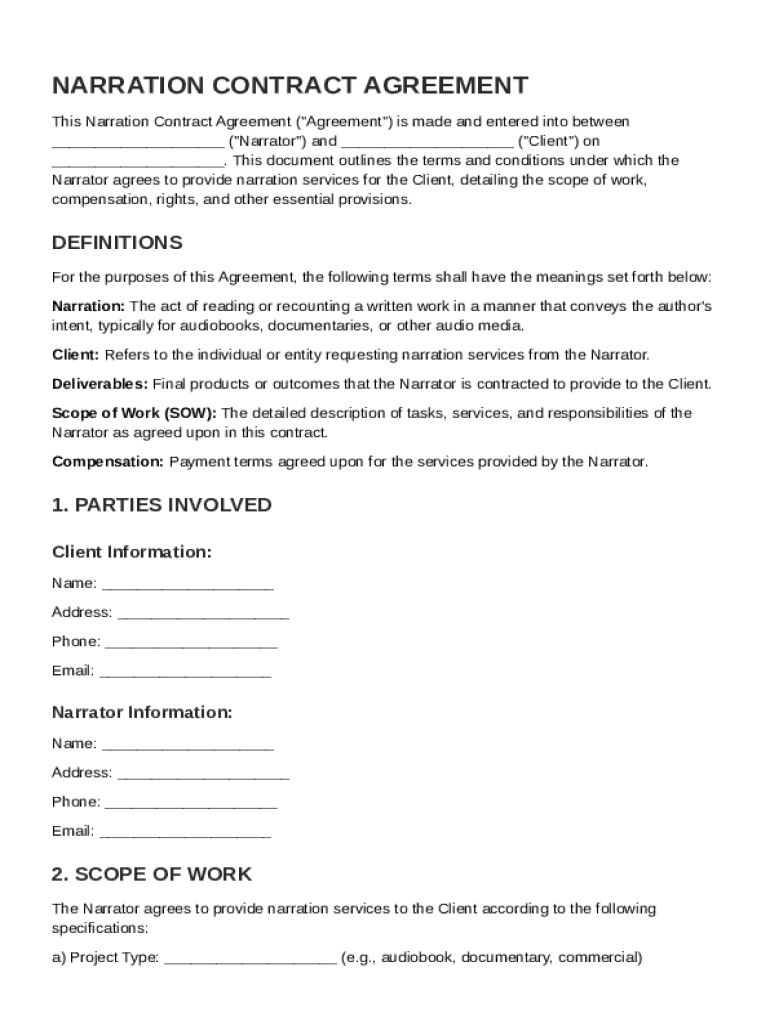
The Narration Contract Template serves as a critical tool in formalizing the relationship between a narrator and a client. This document ensures clarity and mutual understanding regarding the scope of work, compensation, and other essential details. The contract typically includes:
- Scope of Work: Clearly defines the narration services to be provided, including deadlines and specific project details. This ensures both parties are aligned on expectations.
- Compensation: Specifies the payment terms, including the amount, schedule, and method of payment, offering transparency and preventing disputes.
- Rights and Ownership: Details the ownership rights of the final product, including any licensing agreements or rights retained by the narrator.
- Confidentiality: Outlines any confidentiality obligations, protecting sensitive information and materials shared during the project.
- Termination Conditions: Describes the conditions under which the contract may be terminated, providing protection for both parties.
- Amendments: Details the process for modifying the agreement, ensuring that changes are agreed upon and documented.
- Legal and Governing Law: Identifies the jurisdiction's laws governing the contract, adding a legal framework for resolving disputes.
Understanding these elements is vital for both parties to ensure their interests are protected and the project progresses smoothly.
How to Use the Narration Contract Template
Utilizing the Narration Contract Template involves several steps to ensure its effective application:
-
Download the Template: Obtain the contract template from a trusted source such as DocHub to ensure authenticity and comprehensiveness.
-
Customize the Contract: Tailor the document to fit the specific requirements of the project, including details like scope of work and deadlines.
-
Detail Compensation and Payment Terms: Ensure that all financial terms are clearly outlined to prevent misunderstandings.
-
Specify Rights and Ownership: Clearly define the ownership of the finished narration product to protect intellectual property rights.
-
Review and Amend: Both the narrator and client should review the document thoroughly. Discuss and finalize any amendments as necessary.
-
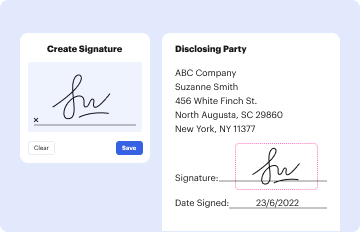
Sign and Execute: Use electronically binding signatures via platforms like DocHub to finalize the contract, ensuring legal validity.
This process ensures that both parties are fully aware of their obligations and rights before commencing the project.
Important Terms Related to Narration Contract Template
Understanding key terms within the Narration Contract Template is crucial for both clarity and legal compliance. Some important terms include:
- Narrator: The individual providing the voice services for the project.
- Client: The entity or individual hiring the narrator for their services.
- Deliverables: Specific audio files or materials that the narrator is expected to produce and deliver to the client.
- Licensing: The permissions granted concerning the use and distribution of the narration.
These terms help both parties grasp the contract's purpose and ensure all components are correctly interpreted.
Steps to Complete the Narration Contract Template
Completing the Narration Contract Template effectively requires a detailed approach:
-
Gather Essential Details: Collect all necessary information pertaining to the project, including timelines and specific requirements.
-
Fill in the Project Scope: Clearly outline what the narration work will cover, specifying the type of narration and length.
-
Input Financial Terms: Clearly state the compensation terms to avoid future discrepancies.
-
Define Rights and Ownership: Ensure clarity in the rights associated with the narration work.
-
Include Signatures: Both parties sign the contract, physically or using an electronic platform, to authenticate the agreement.
Completing these steps ensures the contract is comprehensive and enforceable.
Legal Use of the Narration Contract Template
To legally benefit from using the Narration Contract Template:
- Ensure Compliance with Applicable Laws: Contracts should adhere to local laws and regulations to be enforceable.
- Utilize Legal Counsel: Consider consulting with an attorney to ensure all legal aspects are correctly addressed in the template.
These practices enhance the contract's validity and provide a legal safety net for both parties.
Examples of Using the Narration Contract Template
Utilizing the Narration Contract Template can be beneficial in various scenarios, such as:
- Audiobook Recordings: A publishing company hires a narrator for a new audiobook, using the contract to outline project details.
- Corporate Training Modules: A company utilizes a narrator for creating voice-over content in e-learning modules, ensuring rights and usage are clearly defined within the contract.
These examples illustrate the contract's versatility across different narration projects.
Who Typically Uses the Narration Contract Template
The Narration Contract Template is frequently used by a range of professionals and businesses, including:
- Freelance Narrators: Independent professionals offering their voice services to clients on diverse projects.
- Publishing Houses: Companies engaging narrators for audiobooks or other audio materials.
- Corporate Sector: Businesses employing narrators for internal training or promotional materials.
These varied applications highlight the template's broad usefulness in securing professional engagements.

State-Specific Rules for the Narration Contract Template
While the Narration Contract Template provides a standardized framework, it's crucial to consider state-specific variations:
- State Law Compliance: The contract should be reviewed in the context of the relevant state's contract laws to ensure validity.
- Legal Documentation Requirements: Some states might require additional disclosures or clauses within contracts.
Understanding these variations ensures that the contract is legally enforceable across different jurisdictions.