DIY Livery Contract Template 2026

Get Form
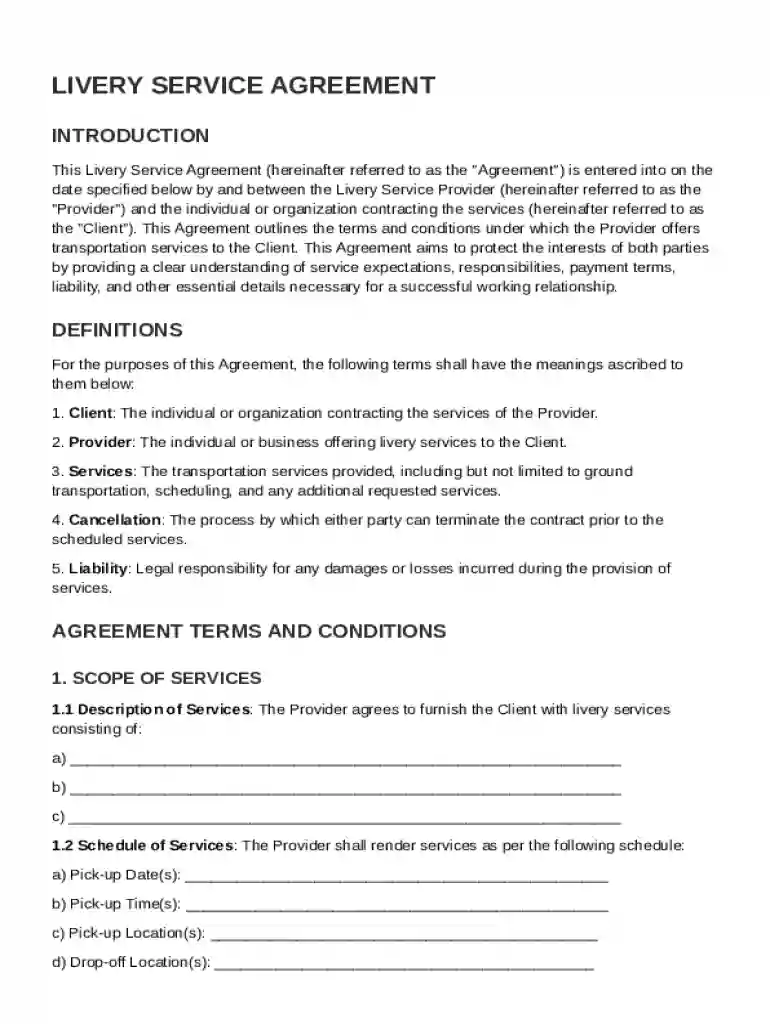
DIY Livery Contract Template Preview on Page 1

Here's how it works

01. Edit your form online
Type text, add images, blackout confidential details, add comments, highlights and more.

02. Sign it in a few clicks
Draw your signature, type it, upload its image, or use your mobile device as a signature pad.

03. Share your form with others
Send it via email, link, or fax. You can also download it, export it or print it out.

Key Elements of the DIY Livery Contract Template

The DIY Livery Contract Template is a crucial document that outlines the relationship between a transportation service provider and their clients. Key elements to include are:

  • Service Description: Detail the livery services provided, including vehicle type, service dates, and any special considerations for service delivery.
  • Payment Terms: Specify the payment structure, frequency, and methods. Consider elements like deposit requirements, payment schedules, and consequences for delayed payments.
  • Obligations of Both Parties: Define the roles and responsibilities of both the provider and the client to ensure clarity and mutual understanding.
  • Liability Limitations: Include clauses that outline the extent of liability for damages, lost items, or service disruptions.
  • Cancellation and Dispute Resolution Procedures: Establish guidelines for service cancellation and protocols for resolving disputes.

These components ensure both parties have a clear understanding of their agreement, providing a foundation for a professional relationship.

Steps to Complete the DIY Livery Contract Template

Completing the DIY Livery Contract Template involves several key steps to ensure comprehensive and accurate documentation:

  1. Gather Detailed Information: Assemble all relevant details about the service arrangement, including both parties' contact information and contract duration.
  2. Draft the Initial Agreement: Using the template, fill in the primary sections such as service description, payment terms, and liability clauses.
  3. Review and Revise: Thoroughly review the drafted agreement for completeness and accuracy. Revise any areas that lack clarity or require additional detail.
  4. Integrate Client-Specific Details: Customize the template to reflect any unique clauses or additional terms specific to the particular service engagement.
  5. Final Approval and Signing: Ensure both parties review and agree to the contract terms. Secure signatures using an electronic signature platform to ensure legality and convenience.

By following these steps, you can create a robust and legally sound contract.

Important Terms Related to DIY Livery Contract Template

Familiarizing oneself with the terminology associated with the DIY Livery Contract Template is essential for effective drafting and implementation:

  • Indemnification: This term refers to the obligation of one party to compensate the other for certain costs and damages.
  • Force Majeure: A clause that absolves a party from liability if unforeseen events, like natural disasters, prevent contract fulfillment.
  • Service Level Agreement (SLA): A component that specifies the expected service standards and metrics.
  • Breach of Contract: Refers to failure to perform any term of a contract without a legitimate legal excuse.

Understanding these terms ensures clear communication and helps mitigate potential misunderstandings.

How to Use the DIY Livery Contract Template

Utilizing the DIY Livery Contract Template efficiently can simplify the process of drafting livery service agreements. Here's how:

  • Download the Template: Access the template through a platform like DocHub, ensuring compatibility with editing tools.
  • Customize the Template: Tailor the generic components to suit the specifics of the service arrangement, adding custom clauses where necessary.
  • Utilize Fillable Fields: Make use of fillable fields for dynamic input, ensuring all necessary information is captured strategically.
  • Regular Updates: Keep the template updated to reflect any changes in service agreements or legal requirements.

This ensures the template serves its purpose as a flexible yet precise legal document.

Who Typically Uses the DIY Livery Contract Template

The DIY Livery Contract Template is used by a variety of stakeholders within the transportation sector:

  • Independent Chauffeurs: Individual providers use this template to formalize agreements with clients seeking personalized service.
  • Livery Service Companies: Businesses with multiple vehicles find the template useful for streamlining their contract workflow.
  • Event Planners: Professionals organizing events use the template to secure transportation services for attendees.
  • Corporate Offices: Companies often need livery services for executive travel, requiring formalized agreements to manage logistics efficiently.

These users rely on the template for clear contractual terms and a professional presentation.

decoration image ratings of Dochub

State-Specific Rules for DIY Livery Contract Template

When drafting a livery contract, it's important to consider state-specific regulations that could impact terms:

  • Licensing Requirements: States often have distinct licensing rules for transportation providers, which should be reflected within the contract.
  • Insurance Coverage: Varies by state; ensure compliance with the minimum requirements for liability and comprehensive coverage.
  • Local Tax Policies: Certain services may incur state-specific taxes, which need to be addressed within payment terms.

Compliance with these regional differences ensures the contract's validity and adherence to all applicable laws.

Examples of Using DIY Livery Contract Template

Practical application of the DIY Livery Contract Template can vary widely:

  • Wedding Transportation: Couples use the template to formalize arrangements with providers for transporting guests and bridal parties.
  • Corporate Travel: Businesses often use contracts for arranging regular shuttle services for employees.
  • Tourism Services: Tour operators employ these templates to outline terms with local transportation companies for sight-seeing tours.

These examples highlight the template's versatility across multiple scenarios within the livery service domain.

Legal Use of DIY Livery Contract Template

Ensuring the DIY Livery Contract Template's legality involves adhering to regulatory standards and legal frameworks:

  • Electronic Signature Legality: Under the ESIGN Act, electronic signatures on contracts are legally binding and can be used to formalize agreements.
  • Compliance with Consumer Protection Laws: Ensure the contract terms align with state and federal consumer protection statutes.
  • Review by Legal Counsel: For added assurance, have the contract reviewed by legal experts to confirm compliance and mitigate risk.

Employing these practices legitimizes the contract and reinforces trust between parties.

be ready to get more

Complete this form in 5 minutes or less

Get form

Got questions?

We have answers to the most popular questions from our customers. If you can't find an answer to your question, please contact us.
Contact us
DIY livery is where grazing and a stable or shelter are rented, but you keep all responsibility for looking after your horse. This is ideal for people who have the time to look after their horse by themselves, but may want the mutual support between owners that can be found on a livery yard.
If youre asking whether you need a lawyer to draft a contract, legally, the answer is no. Anyone can draft a contract on their own and as long as the elements above are included and both parties are legally competent and consent to the agreement, it is generally lawful.
Yes, any adults can write legally binding contracts, although minors cannot except in certain circumstances. However, oral contracts are binding, but it is better to get it in writing so you have proof of the contract. In fact, you can even enter into a contract by your actions without saying anything.
Yes you can write your own contracts. A written contract is only a written record of something that has already been agreed in speech. So to start with write down in simple terms what has been agreed already, that is a good starting point.
DIY Stabled Livery can be expected to cost around 30-40 per week. Full livery can be expected to cost in the region of 100-150 per week. Any care of the horse or duties carried out by staff at the livery yard will cost extra.

Security and compliance

At DocHub, your data security is our priority. We follow HIPAA, SOC2, GDPR, and other standards, so you can work on your documents with confidence.
Learn more
ccpa2
pci-dss
gdpr-compliance
hipaa
soc-compliance

People also ask

With proper planning and management, a livery yard or riding school can be a very profitable and rewarding business. However, if you are to make a success of it, it is important that you, or anyone you appointment to oversee the developments, has extensive experience working with horses.
Write the contract in six steps Start with a contract template. Open with the basic information. Describe in detail what you have agreed to. Describe how the contract will end. Say which laws apply and how disputes will be resolved. Include space for signatures.

Related links