




Definition & Meaning
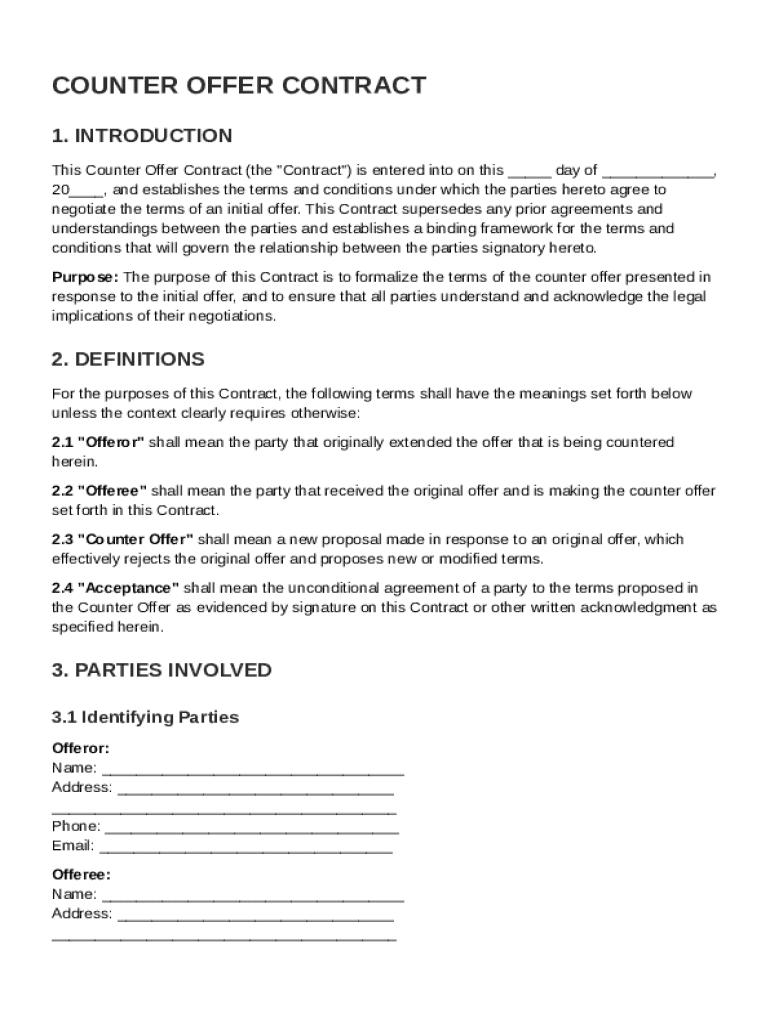
A Counter Offer Contract Template is a structured document that records the terms and conditions of a counter offer presented in response to an initial offer. This template is crucial in negotiating agreements, as it provides a formal framework to redefine terms and conditions between negotiating parties. It typically encompasses definitions, details of parties involved, revised terms proposed by the offeree, and the acceptance procedures for the counter offer. In legal contexts, having such a template ensures that all terms are recognized and upheld, facilitating smoother negotiations and reducing potential disputes.
How to Use the Counter Offer Contract Template
To effectively use the Counter Offer Contract Template, begin by importing the template document into your document management tool, like DocHub, which supports various file formats. Once imported, review the initial offer details and ensure accurate data entry in the respective sections of the template. Use DocHub's editing tools to modify sections such as terms revision, validity period, and confidentiality agreements. Ensure that each section is comprehensively filled out to reflect the new terms being proposed. Adding annotation via DocHub allows for comments and clarifications, which can be crucial during negotiations. Once completed, review the entire document for completeness and accuracy before proceeding to negotiations.
Steps to Complete the Counter Offer Contract Template
-
Review Initial Offer: Begin by carefully examining the terms and conditions of the initial offer that you are addressing with a counter offer.
-
Identify Areas for Revision: Use bullet points to list the specific terms you intend to negotiate, such as pricing, delivery schedule, or other contractual obligations.
-
Edit Template Sections: Using DocHub, input the revised terms into the template. This includes entering detailed modifications in sections like revised pricing, amended timelines, and any additional conditions.
-
Set Validity Period: Clearly state the timeframe during which the counter offer remains valid, allowing the other party to respond within an appropriate period.
-
Include Confidentiality Clauses: Depending on the nature of the contract, outline any confidentiality obligations to protect sensitive information during negotiations.
-
Legal Review: It is advisable to have a legal professional review the completed contract for compliance with applicable laws and to ensure all legal terms are adequately addressed.
-
Finalize and Distribute: Once finalized, export the document via your chosen method (email, direct link, etc.) for the other party’s review and response.
Key Elements of the Counter Offer Contract Template
-
Parties Involved: Clearly define the entities or individuals partaking in the negotiation process.
-
Initial Offer Details: Documentation of the original offer that lays the groundwork for the counter offer.
-
Revised Terms: Point-by-point description of the proposed changes, such as pricing adjustments, scope of delivery, or payment schedules.
-
Acceptance Procedures: Define how and when the counter offer can be accepted by the offering party.
-
Validity Period: A specified time frame during which the counter offer is open for acceptance.
-
Confidentiality Obligations: Agreements to protect shared sensitive information throughout the negotiation process.
-
Governing Law and Dispute Resolution: Specification of legal jurisdiction and preferred methods for resolving any future disputes.
Legal Use of the Counter Offer Contract Template
The Counter Offer Contract Template is used to enhance the clarity and enforceability of negotiations. It provides a legal acknowledgment of each step in the negotiation process, protecting both parties' rights. It is particularly useful in business environments where precise terms are critical. The template ensures all parties have a mutual understanding of legally binding obligations, reducing ambiguity and fostering a fair negotiation.
Examples of Using the Counter Offer Contract Template
-
Real Estate Negotiations: A buyer may use this template to propose a revised offer on a property, adjusting terms like the purchase price or closing date.
-
Employment Offers: Candidates responding to job offers can detail changes in salary, benefits, or work hours.
-
Service Agreements: Service providers might utilize this template to adjust the scope of work outlined in an original agreement due to new client requirements.
Each example showcases how this template can adapt to various contractual negotiation scenarios, providing a structured approach to formalize revised terms.
Who Typically Uses the Counter Offer Contract Template
This template is primarily utilized by individuals or entities engaged in negotiation processes. Common users include:
- Business Owners: To negotiate supplier contracts or sales agreements.
- Real Estate Agents: For drafting counter offers in property sales.
- Human Resource Managers: In mediating terms for employment contracts.
- Legal Professionals: To offer clients a structured negotiating framework.
Professionals leveraging this template can streamline their negotiation processes, leading to more effective dispute resolution and contract finalization.

Software Compatibility
The Counter Offer Contract Template can be used with various document management software platforms. Tools like DocHub ensure that you can effectively manage, edit, and share your documents with ease. This flexibility is crucial for maintaining structured and accessible records of negotiations. The template's compatibility with cloud-based services ensures that you can collaborate in real-time, enabling seamless document integration with platforms like Google Workspace for increased productivity.