




01. Edit your form online
Type text, add images, blackout confidential details, add comments, highlights and more.

Type text, add images, blackout confidential details, add comments, highlights and more.

Draw your signature, type it, upload its image, or use your mobile device as a signature pad.

Send it via email, link, or fax. You can also download it, export it or print it out.
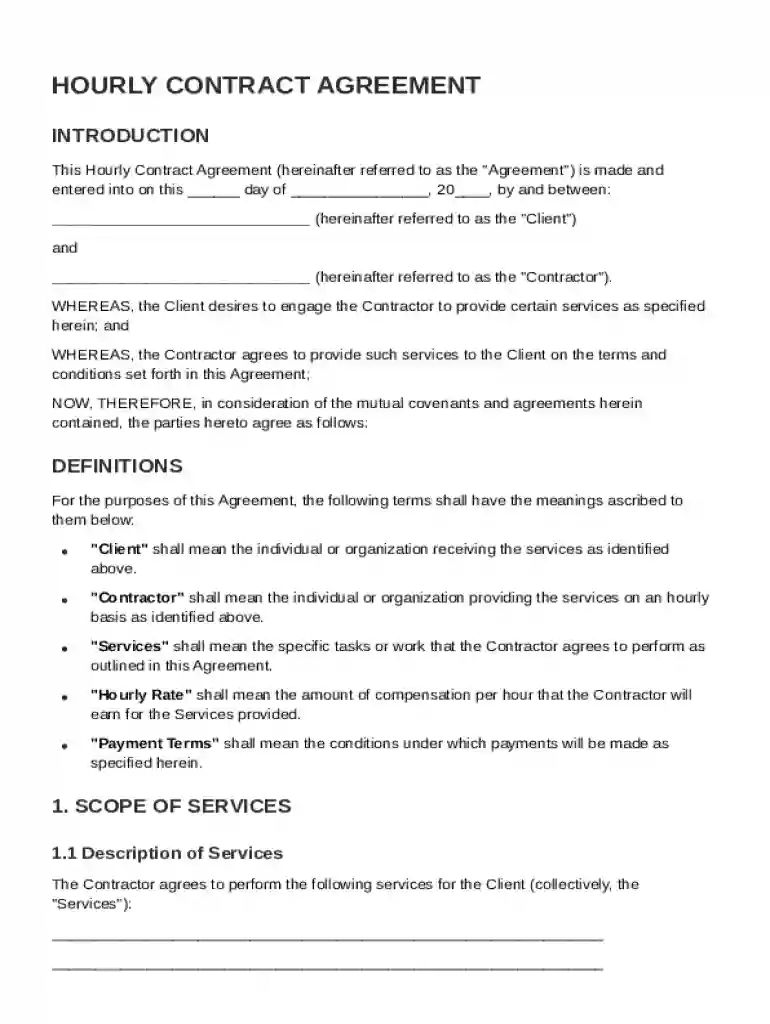
An Hourly Contract Template serves as a formal document outlining the terms of agreement between a client and a contractor for services rendered on an hourly basis. This template specifies various components like the scope of work, hourly rates, and payment terms. It sets out clear expectations for both parties and establishes a legal framework to guide the contractual relationship. This template is particularly useful for freelancers, consultants, and other professionals offering services whose compensation is based on the number of hours worked.
Using the Hourly Contract Template involves a few crucial steps to ensure all necessary information is accurately represented. First, identify the parties involved, including their legal names and contact information. Next, outline the scope of services to clarify what tasks will be performed. Specify the hourly rate and include payment terms, such as when invoices should be submitted and the timeline for payment. Additionally, incorporate terms related to confidentiality, liability, and any conditions for terminating the agreement. By clearly defining these elements, the contract will effectively prevent disputes and misunderstandings.
Several key elements must be included in the Hourly Contract Template to ensure thoroughness and legality:
These elements ensure that the contract covers all essential aspects of the client-contractor relationship.
Follow these steps for a comprehensive completion of the template:
By following these steps, the contract is more likely to meet the needs of both parties and minimize the risk of future disputes.
Understanding the terminology used in the Hourly Contract Template is crucial:
Familiarity with these terms aids in interpreting and executing the contract effectively.
The contract's legal framework ensures compliance with local, state, and federal laws. It is essential to include clauses that address legal issues such as liability, termination, and confidentiality to protect both parties. Verify that the template aligns with state-specific regulations and any industry-specific standards for contracts. Consulting a legal professional can provide additional assurance that the terms meet all legal requirements.
While the general structure of the Hourly Contract Template remains consistent, state-specific rules may dictate additional requirements or modifications:
Understanding these nuances helps tailor the contract to comply fully with regional legal standards.
Various professionals and businesses use hourly contracts to structure work agreements:
These entities benefit from standardized contracts that clarify terms and protect against potential liabilities.


At DocHub, your data security is our priority. We follow HIPAA, SOC2, GDPR, and other standards, so you can work on your documents with confidence.

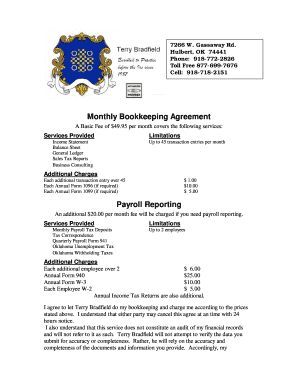
(1) CONTRACTUAL STATUS: The AGENCY and CONTRACTOR agree that the. CONTRACTOR shall perform the services required of the CONTRACTOR herein set forth for
Scope. These ZF General Terms and Conditions of Purchase apply to the purchasing of machines, assembly technology, and machining systems.
Sample Independent Contractor Agreement. This Agreement is made between. (Client) with a principal place of business at


