



Definition & Meaning
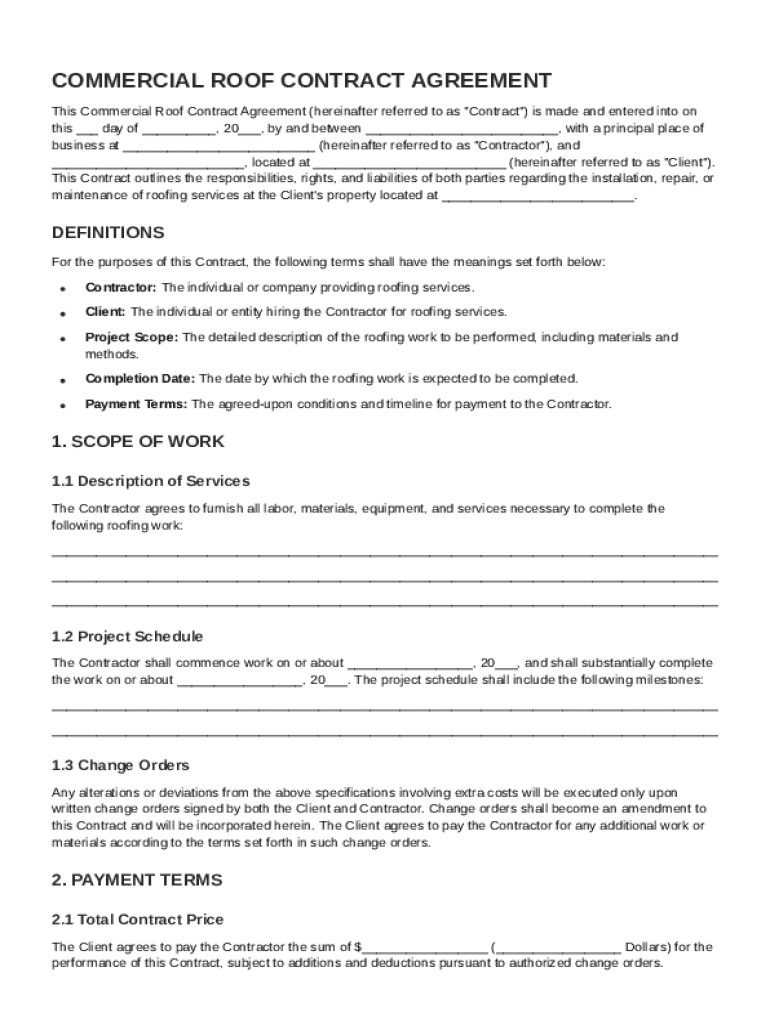
The Commercial Roof Contract Template is a structured legal document used to formalize agreements between roofing contractors and clients. It outlines crucial terms and conditions pertinent to roofing services such as installation, repair, or maintenance. This template ensures clarity and mutual understanding by detailing project scope, payment terms, responsibilities, termination conditions, and liability and insurance requirements. By providing a comprehensive framework, it mitigates potential disputes and establishes a reliable basis for professional roofing engagements.
Key Elements of the Commercial Roof Contract Template
The Commercial Roof Contract Template typically includes several vital elements that ensure both parties are aligned throughout the project. These are:
- Project Scope and Description: Details the specific work to be performed, including materials and methods.
- Payment Terms: Specifies payment schedules, methods, and any deposit requirements.
- Responsibilities and Obligations: Outlines the duties of each party, including the contractor’s adherence to building codes and standards.
- Liability and Insurance: Includes provisions for liability coverage and proof of insurance.
- Termination Conditions: Describes the circumstances under which the contract can be terminated by either party.
How to Use the Commercial Roof Contract Template
To effectively use the Commercial Roof Contract Template, follow these steps:
- Review the Template: Understand the sections included and adapt them to your specific project needs.
- Customize the Details: Modify the project scope, payment terms, and responsibilities to reflect the agreement between the parties.
- Include Necessary Attachments: Attach relevant documents such as permits or proof of insurance.
- Legal Review: Consult a legal professional to ensure compliance with state laws and regulations.
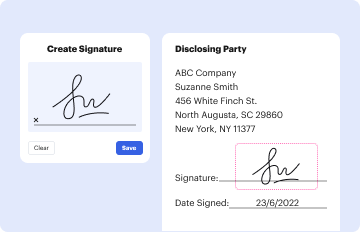
- Signature and Approval: Once both parties agree on the terms, sign the contract to make it legally binding.
Important Terms Related to the Commercial Roof Contract Template
Understanding the terminology used within the Commercial Roof Contract Template is key to ensuring mutual comprehension:
- Subcontractor: Any third party hired by the primary contractor to perform specific tasks under the contract.
- Change Order: A formal document detailing any deviation from the original project scope or terms.
- Force Majeure: Circumstances beyond control, such as natural disasters, that may impact project timelines or completion.
- Warranty: A promise made by the contractor regarding the quality and longevity of the work.
Legal Use of the Commercial Roof Contract Template
The template's legal use is governed by various factors:
- State Laws: Compliance with state-specific roofing and construction regulations is essential.
- Contractual Obligations: Both parties must fulfill their contractual duties to avoid breaches of contract.
- Dispute Resolution: Methods such as mediation or arbitration are often included to manage potential disputes amicably.
- Binding Nature: Upon signing, the document becomes a legally enforceable agreement.
State-Specific Rules for the Commercial Roof Contract Template
Different states may have unique requirements that affect the use of the Commercial Roof Contract Template:
- Licensing Requirements: Certain states mandate licenses for roofing contractors.
- Insurance Minimums: Varying state laws dictate minimum liability insurance coverage.
- Building Codes: States have specific codes and standards to which roofing work must adhere.
State-by-State Differences
Understanding state-by-state differences is crucial in using the Commercial Roof Contract Template:
- Contractor Registration: Some states require contractors to register with local bodies.
- Payment Mechanics: Laws governing payment mechanics lien rights may differ.
- Permit Requirements: Ensure familiarity with local permit requirements for roofing work.
Digital vs. Paper Version
The choice between digital and paper versions of the Commercial Roof Contract Template has implications on efficiency and accessibility:
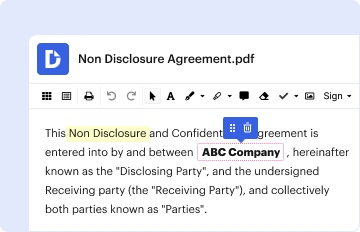
- Digital Version: Offers ease of editing, sharing, and storage, compatible with DocHub's editing and signing tools.
- Paper Version: Offers a traditional approach and may be required for records that need physical signatures or filings.
- Hybrid Approach: Some parties may choose to use a combination of digital storage and paper backups for comprehensive record-keeping.
Why Use a Commercial Roof Contract Template?
Advantages of utilizing this template include:
- Legal Protection: Protects both parties through clearly defined terms and conditions.
- Clarity and Transparency: Provides a detailed understanding of expectations, reducing the likelihood of disputes.
- Efficiency: Saves time by standardizing documentation processes, allowing parties to focus on execution and completion of the project.
- Professionalism: Demonstrates an organized and professional approach, crucial in business relationships.
Who Typically Uses the Commercial Roof Contract Template?
The Commercial Roof Contract Template is predominantly used by:
- Roofing Contractors: To specify obligations, scope, and requirements in a predefined format.
- Business Owners: Ensures contractual transparency when engaging roofing services.
- Property Managers: Coordinates multiple roofing projects and manages diverse stakeholder expectations.
- Legal Advisors: Facilitates drafting and reviewing of roofing-related agreements for clients.