Definition and Purpose of the Choreographer Contract Template
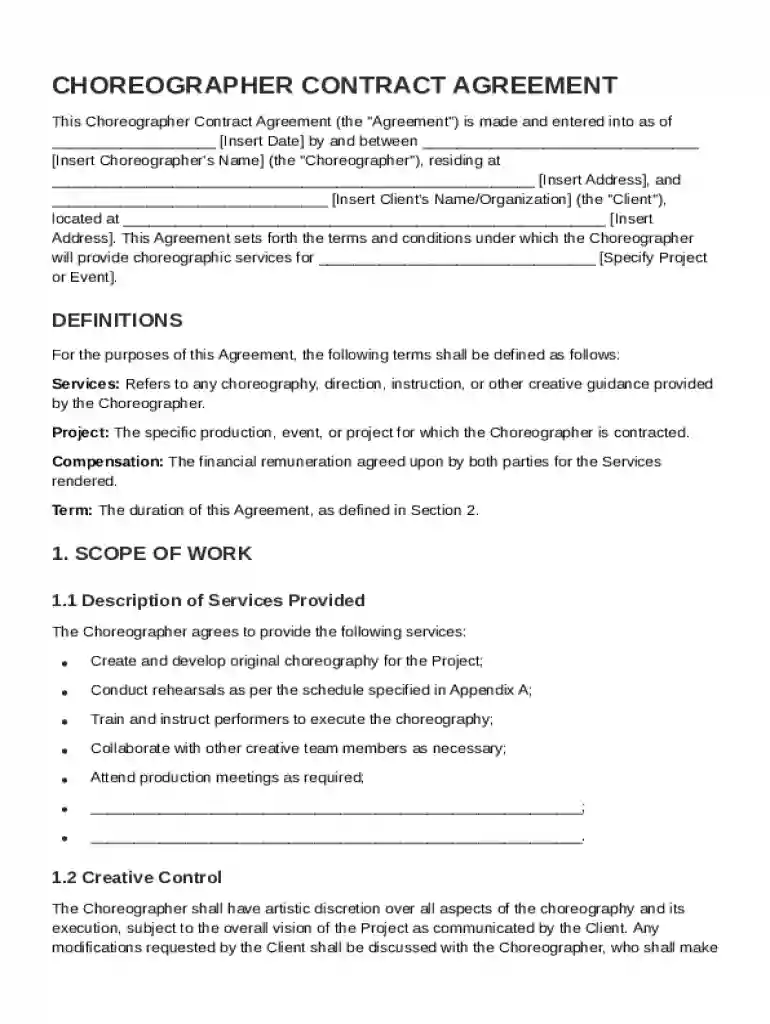
A Choreographer Contract Template is a legally binding document intended to define the terms and conditions under which a choreographer provides services for a project or event. It is an essential tool for setting clear expectations and responsibilities between the choreographer and the hiring party. This contract typically includes clauses related to the scope of work, compensation, intellectual property rights, confidentiality, termination conditions, and dispute resolution. By providing a structured agreement, the template helps ensure that both parties are protected and aware of their obligations, facilitating smooth collaboration and minimizing potential conflicts.
How to Use the Choreographer Contract Template
To effectively use a Choreographer Contract Template, begin by evaluating the specific needs of your project or event. Follow these steps to tailor the template to your requirements:
- Determine Project Details: Clearly define the scope of the work, including performance dates, rehearsal schedules, and any specific requirements for the event.
- Specify Compensation: Outline the payment structure, whether it's a flat fee, hourly rate, or percentage of ticket sales. Include the schedule and method of payment.
- Outline Intellectual Property Rights: Determine the ownership of the choreography created, setting boundaries for the use and distribution of the work.
- Establish Confidentiality Terms: Identify any sensitive information that must be protected, and include clauses to prevent unauthorized disclosure.
- Set Termination Conditions: Describe the conditions under which either party can terminate the agreement and any penalties for early termination.
- Discuss Dispute Resolution: Provide a framework for how disputes will be handled, such as mediation or arbitration.
Using a contract template increases efficiency and ensures all necessary legal protections are in place.
Steps to Complete the Choreographer Contract Template
Completing a Choreographer Contract Template involves several key steps. Here is a detailed guide to ensuring the document is comprehensive and legally sound:
- Review Template Structure: Familiarize yourself with the template's sections and language.
- Fill in Standard Information: Input the names and contact details of both parties involved.
- Custom Tailor the Agreement: Modify sections to reflect the unique aspects of the choreographic work.
- Consult Legal Counsel: Have a legal professional review the customized template to ensure compliance with state and federal laws.
- Finalize the Document: Once all parties agree on the terms, finalize the document by adding signatures where required.
- Distribute Copies: Provide each party with a fully signed copy of the contract for their records.
Following these steps ensures the contract is appropriately completed, reducing the risk of misunderstandings or legal challenges.
Key Elements of the Choreographer Contract Template
The Choreographer Contract Template contains several key elements fundamental to its purpose:
- Scope of Work: A comprehensive description of the choreography services to be provided.
- Compensation: Clearly defined terms of payment, including any bonuses or incentives.
- Duration and Schedule: Timelines for project completion and specific event dates.
- Intellectual Property Rights: Details on who retains ownership and rights to the work created under the contract.
- Confidentiality Clause: Provisions to protect sensitive information shared during the collaboration.
- Termination Clause: Conditions under which the contract can be ended prematurely by either party.
- Dispute Resolution Mechanism: Methods established for resolving disagreements, including legal remedies if necessary.
These elements provide a structured framework for the agreement, facilitating a clear understanding of the roles and obligations of each party.
Legal Use and Compliance
The Choreographer Contract Template must comply with applicable legal standards to be valid and enforceable. In the U.S., contracts must adhere to state-specific laws governing labor, intellectual property, and dispute resolution. Ensure the following:
- Validity: Confirm the template aligns with local laws and jurisdictions.
- Electronic Signatures: Use legally recognized electronic signature tools if signing digitally, as allowed by the ESIGN Act.
- Record Keeping: Maintain organized records of all signed agreements for reference.
By ensuring legal compliance, both parties mitigate potential legal liabilities and enhance the enforceability of the contract.
State-Specific Rules for Choreographer Contracts
Choreographer contracts may differ based on state-specific regulations. Factors that might influence the contract include:
- Employment Laws: Varying rules regarding independent contractor classifications and labor rights.
- Intellectual Property Protections: Different states may have distinctive statutes concerning IP ownership.
- Dispute Resolution Practices: State-specific preferences for mediation or arbitration over court litigation.
Analyzing state-specific rules helps in customizing the contract further to meet the legal standards and expectations of each jurisdiction.
Examples of Using the Choreographer Contract Template
Consider several practical scenarios where the Choreographer Contract Template can be effectively employed:
- Broadway Productions: Negotiating terms for a high-profile theater performance involving complex choreography and large budgets.
- Corporate Events: Hiring a choreographer for a company's annual gala to create a unique dance number showcasing brand identity.
- Music Videos: Engaging a choreographer for designing dance sequences within a strict deadline and budgetary constraints.
These examples illustrate the wide applicability of the contract in diverse settings where choreography is essential.
Digital vs. Paper Version of the Contract
When deciding between a digital or paper version of the Choreographer Contract, consider the following factors:
- Accessibility: Digital contracts are easier to share, modify, and store, while paper versions may be more accessible for in-person interactions.
- Security: Digital formats can embed encryption and access controls to protect sensitive information.
- Environment: Digital solutions are eco-friendly, reducing paper consumption.
Choosing the appropriate version depends on the specific needs and capabilities of both parties involved.