01. Edit your form online
Type text, add images, blackout confidential details, add comments, highlights and more.

Type text, add images, blackout confidential details, add comments, highlights and more.

Draw your signature, type it, upload its image, or use your mobile device as a signature pad.

Send it via email, link, or fax. You can also download it, export it or print it out.
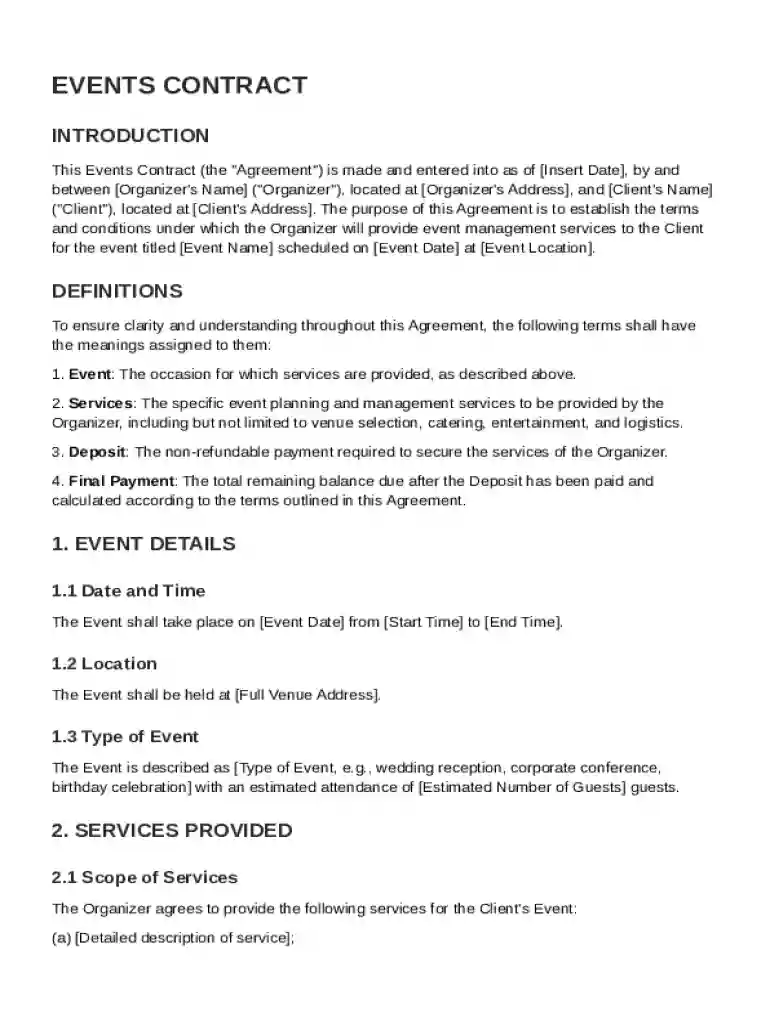
An Events Contract Template serves as a comprehensive document designed for formalizing agreements between an event organizer and a client. This template functions as a binding contract that outlines the scope of services provided, financial arrangements, specific event details, cancellation policies, and the responsibilities of both parties involved in the event. It ensures mutual understanding and communication, reducing the likelihood of misunderstandings or legal disputes.
Key elements commonly included in an Events Contract Template are:
The Events Contract Template is designed to cover critical facets of event planning and execution, ensuring both parties have a clear understanding of their expectations and obligations. Here are the primary sections included in the template:
Event Specifics: This section details the nature of the event, including the date, location, expected attendance, and main activities. It provides a comprehensive overview to which the whole contract adheres.
Services Provided: Enumerates all the services the organizer commits to delivering, such as venue setup, catering, entertainment, and technical support. It specifies any outsourced services and their financial implications.
Payment Terms: Clearly defines the total fees, payment schedule, method of transaction, and any applicable taxes. This section often includes terms for deposits and late payment penalties to maintain financial clarity.
Cancellation Policy: Outlines the conditions that permit contract termination and the financial repercussions of cancellation by either party. It protects the interests of both parties and provides a process for managing unforeseen circumstances.
Responsibilities of Both Parties: Delineates the obligations of the organizer and the client in preparing for and executing the event. This could include access to the venue, permits, insurance, and guest management.
Using the Events Contract Template is straightforward yet requires attention to detail to ensure all sections properly reflect the agreement's context. Follow these step-by-step instructions for effective use:
Identify the Parties: Start by writing the legal names and contact information of both the event organizer and the client.
Customize the Contract: Adjust the template to reflect the unique specifications of your event, ensuring each section accurately captures the agreement terms.
Discuss and Negotiate Terms: Before finalizing the contract, both parties should review each section, asking questions and negotiating terms as necessary to ensure transparency and mutual satisfaction.
Review Legal Considerations: It may be beneficial to have a legal advisor review the contract to ensure compliance with applicable laws and to address any potential risks.
Finalize and Sign: Once both parties agree on the terms, digitally sign the document using a legally binding electronic signature platform, like DocHub.
The Events Contract Template is utilized primarily by professionals engaged in event management, including:
Event Planners: Individuals or agencies specializing in organizing events, from weddings to corporate conferences, often rely on this template to formalize client relationships.
Clients: Those seeking services from event planners use these contracts to legally bind the arrangements and protect their interests.
Vendors and Third-Party Service Providers: Utilize this template to create subcontracts that specify their roles and obligations in larger event management contracts.
Legal Professionals: Often assist in drafting or reviewing these templates to ensure that they meet legal standards and appropriately mitigate risks.


Understanding the terminology associated with events contracts is crucial for effective communication and legal compliance. Here are some key terms:
Force Majeure: A clause that exempts contractual obligations due to unforeseen circumstances such as natural disasters or pandemics, offering protection to both parties.
Indemnification: An agreement to compensate for any damages or losses incurred during the execution of the event, often clarifying responsibility for unforeseeable incidents.
Performance Metrics: Specifications that detail how the success of the event will be measured, often linked to service delivery standards.
Non-Disclosure Agreement (NDA): A clause that ensures confidentiality of sensitive information exchanged during the event planning and execution process.
An Events Contract Template must conform to legal standards to be enforceable. Here are the key aspects that serve its legal utility:
Binding Agreement: When fully executed, it acts as a legal document binding both parties to the agreed terms, enforceable under applicable contract law.
Regulatory Compliance: The contract should reflect compliance with pertinent federal and state regulations, including permits, licenses, and insurance.
Litigation and Dispute Resolution: Includes clauses that specify the procedures for resolving disagreements or disputes, often favoring arbitration over litigation to preserve business relationships.
Amendments: Details the procedure for any necessary modifications to the contract, ensuring changes are mutually agreed upon and documented in writing.
While the Events Contract Template provides a uniform approach to event agreements, state-specific regulations may necessitate adaptations:
California: Contracts must comply with unique entertainment industry regulations and consumer laws impacting cancellations and refunds.
New York: Specific to hospitality and venue regulations, contracts might need to address catering services and alcoholic beverage permits distinctively.
Texas: Often emphasizes stronger clauses regarding liability and indemnification due to state tort laws.
Clients and planners need to recognize these variations to ensure compliance and protect their legal interests effectively.
DocHub offers seamless integration capabilities for the Events Contract Template:
Editing and Signing: The platform allows users to edit, sign, and share documents easily in various formats—PDF, DOC, and more—making it flexible for event planning documentation.
Cloud Integration: Users can import and export contracts via Google Drive, Dropbox, and OneDrive to streamline document management.
Mobile and Desktop Accessibility: Capable of functioning across devices without the need for installation, ensuring ease of access and usability in different settings.
Integrating the Events Contract Template with DocHub enhances efficiency and security, ensuring that contractual obligations are met effectively.
At DocHub, your data security is our priority. We follow HIPAA, SOC2, GDPR, and other standards, so you can work on your documents with confidence.