






Definition & Meaning
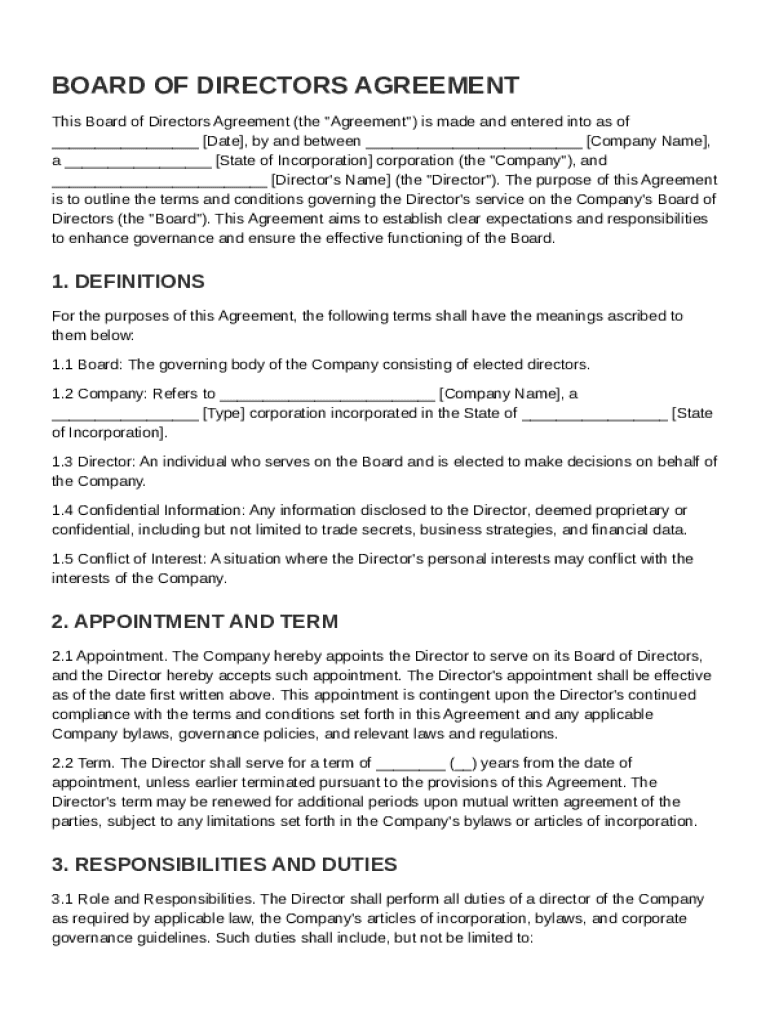
The "Board Of Directors Contract Template" is a formal document used to outline the roles, responsibilities, and expectations of a director serving on a company's board. This contract template serves as a reference guide for defining the professional relationship between a company and its board members. It typically covers critical aspects such as appointment terms, duties, compensation, confidentiality obligations, and procedures for resolving conflicts of interest. By setting these parameters, the contract ensures clear governance and accountability, which is essential for maintaining corporate integrity and transparency.
Key Elements of the Board Of Directors Contract Template
The Board Of Directors Contract Template is comprised of several essential elements designed to ensure a comprehensive agreement:
- Appointment Terms: Details regarding the duration of the director's tenure, reappointment criteria, and termination conditions.
- Responsibilities: An outline of both general and specific duties expected from the director, such as attending meetings, participating in sub-committees, and contributing strategically to the company.
- Compensation: Information about financial remuneration, benefits, and any performance-related incentives or bonuses.
- Confidentiality: Clauses that outline the expectations regarding the handling of sensitive company information and the implications of any security breaches.
- Conflict of Interest Procedures: Guidelines on identifying and managing conflicts of interest, ensuring directors act in the best interest of the corporation.
- Indemnification: Provisions specifying the extent to which the director will be protected from legal claims related to their official duties.
How to Use the Board Of Directors Contract Template
Using the Board Of Directors Contract Template involves several logical steps to ensure alignment with organizational needs:
- Customization: Tailor the template to match the specific regulatory, governance, and operational requirements of the organization.
- Review and Input: Engage legal advisors and current board members to review the draft to ensure that it accurately reflects the corporation’s needs and the expectations from board members.
- Approval Process: Present the customized contract to the relevant authority within the organization for approval and finalization.
- Issuance: Issue the contract to new board members as part of their onboarding process, ensuring they are fully informed of their obligations from the outset.
Steps to Complete the Board Of Directors Contract Template
Completing the Board Of Directors Contract Template requires careful attention to each specific section:
- Gather Required Information: Collect details about the director, company policies, and any pre-existing agreements that may need to be referenced.
- Fill Out Standard Sections: Start with general sections such as personal details, roles, and responsibilities, ensuring that all required fields are filled.
- Customize Contractual Terms: Tailor specifics like remuneration packages and meeting frequencies to align with company policies and expectations.
- Review and Finalize: Conduct a thorough review for accuracy and completeness, involving legal consultants if necessary.
- Sign and Distribute: Once finalized, have the contract signed by both parties and distribute copies accordingly.
Legal Use of the Board Of Directors Contract Template
The legal applicability of the Board Of Directors Contract Template extends to various facets of corporate law and governance:
- Compliance with Laws: Ensures adherence to federal, state, and industry-specific regulations.
- Legal Protections: Provides a basis for legal protection and indemnity for board members, safeguarding them against liabilities incurred in their official capacity.
- Enforcement of Duties: Serves as a binding agreement that enforces the director's duties and obligations within the framework of the corporation’s bylaws.
State-Specific Rules for the Board Of Directors Contract Template
In the United States, corporate governance and director contracts are subject to both federal and state-specific regulations:
- State Corporate Laws: Each state may have distinct requirements around director appointments, fiduciary duties, and contract enforcement, such as those detailed in Delaware General Corporation Law.
- Registration and Reporting Obligations: Compliance with state-specific filing requirements, like submitting the contract to the state’s corporate registry where mandated.
- Variations in Governance Practices: Local governance codes or business practices that may influence the formulation and execution of director contracts.
Variants and Alternatives to the Board Of Directors Contract Template
Depending on the specific requirements and structure of a company, there may be variants or alternative versions of the board contract templates in use:
- Non-Profit Director Contracts: Templates specifically designed for non-profit organizations, incorporating sector-specific terms and conditions, such as volunteer provisions or emphasis on non-monetary contributions.
- Advisory Board Contracts: Alternative contracts for advisory board members who may not hold formal decision-making powers but provide strategic input.
- Executive Board Contracts: More detailed templates that encompass broader fiduciary duties and higher accountability for senior board positions.
Business Types that Benefit Most from the Board Of Directors Contract Template
Certain types of business organizations benefit significantly from implementing structured Board Of Directors Contract Templates:
- Corporations: Public and private corporations that need detailed governance structures to enhance investor confidence and regulatory compliance.
- Non-Profit Organizations: Boards overseeing charitable endeavours that require transparency and accountability to donors and regulatory bodies.
- Startups and Scaleups: Emerging companies looking to establish clear governance frameworks to attract potential investors and partners through credible oversight and strategic leadership.
By integrating these comprehensive components, organizations can effectively optimize their board governance processes, safeguard their stakeholders' interests, and promote ethical and efficient management practices.