






Definition and Purpose of the Due Diligence Review Contract Template
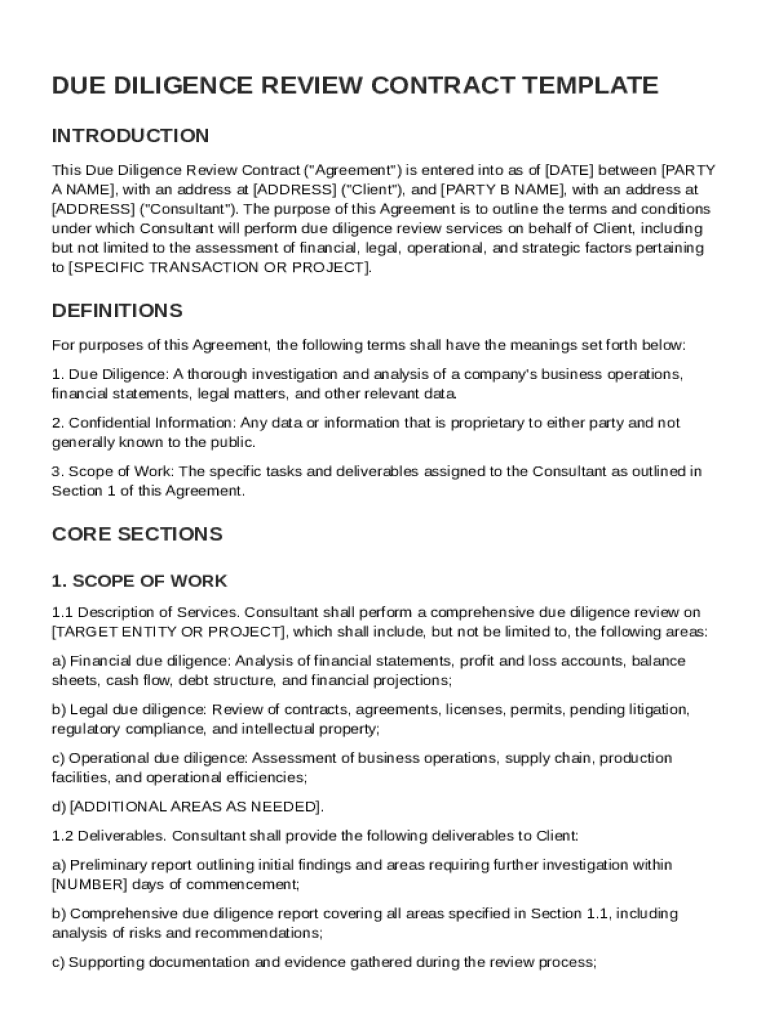
The Due Diligence Review Contract Template is a standardized document used to outline the agreement between a client and a consultant. It is designed to facilitate due diligence services related to specific transactions or projects. The primary purpose of this template is to define key terms, determine the scope of work—which often includes financial, legal, and operational assessments—and set out compensation details. It also governs confidentiality obligations, termination conditions, and other important legal aspects to ensure clarity and mutual understanding between the involved parties.
Key Components Included in the Template
- Scope of Work: Clearly defines the areas of assessment such as financial, legal, and operational reviews.
- Compensation Details: Outlines payment terms and any other financial agreements.
- Confidentiality Obligations: Specifies the level of confidentiality required to protect sensitive information.
- Termination Conditions: Lists conditions under which the agreement can be terminated.
- Indemnification Provisions: Details the indemnification protection for both parties.
Steps to Complete the Due Diligence Review Contract Template
To effectively fill out the Due Diligence Review Contract Template, you must follow a structured approach:
- Identify Parties Involved: Clearly state the names and contact information of both the client and the consultant.
- Define the Scope: Specify the exact nature and areas of the due diligence to be conducted.
- Set Compensation Terms: Agree on and document the financial terms, including amounts and payment schedules.
- Fill in Confidentiality Clauses: Provide detailed confidentiality requirements that each party must adhere to.
- Specify Termination Conditions: Clearly outline scenarios that will lead to the termination of the contract.
- Review Indemnification Clauses: Ensure that the indemnification section is comprehensible and agreeable to all parties.
Ensuring Accuracy
- Double-Check Details: Verify all names, addresses, and figures for accuracy.
- Consult Legal Counsel: Consider involving a lawyer to review the terms and ensure adherence to applicable laws.
Who Typically Uses the Due Diligence Review Contract Template
This contract template is frequently utilized by a range of professionals and entities:
- Business Consultants: Often employed when conducting evaluations for mergers or acquisitions.
- Corporate Executives: Used in scenarios requiring in-depth evaluations of business viability or acquisition targets.
- Legal Professionals: For legal audits or compliance checks related to business transactions.
- Financial Analysts: Engaged to conduct thorough financial assessments and risk evaluations.

Industries Benefiting from the Template
- Financial Services: For assessments regarding investment opportunities or new ventures.
- Technology Sector: When performing evaluations for intellectual property purchases or joint ventures.
- Healthcare: Used during audits of new service acquisitions or partnerships.
Legal Use of the Due Diligence Review Contract Template
The contract must adhere to legal protocols to be enforceable:
- Compliance with Laws: Must align with federal and state legal requirements.
- Validity of Electronic Signatures: Must incorporate legally binding electronic signatures, compliant with the ESIGN Act.
- Jurisdiction Clauses: Should specify governing laws and jurisdiction for any disputes.
Additional Considerations
- License Requirements: Verify any specialty licenses or certifications required for the consultant.
- Legal Dispute Resolution: Include detailed processes for addressing and resolving disputes.
Important Terms Related to the Due Diligence Review Contract Template
A clear understanding of specific terminology is critical:
- Indemnification: A clause that protects a party against potential losses or damages.
- Confidentiality Agreement: Provisions that ensure sensitive information remains secure.
- Termination Clause: Conditions under which the agreement may be ended prematurely.
- Scope of Due Diligence: The areas and aspects that the review will cover.
Glossary of Terms
- Client: The party seeking due diligence services.
- Consultant: The party providing due diligence services.
- Project: The specific transaction or business initiative under review.
State-Specific Rules for the Due Diligence Review Contract Template
Legal rules can vary depending on the state:
- Governing Law: Each state might have unique requirements that could influence terms and enforceability.
- State-Specific Clauses: Include any required clauses based on the jurisdiction of the agreement.
Examples
- California: Might require additional disclosures due to more stringent consumer protection laws.
- New York: Could impose specific requirements on indemnification clauses.
Examples of Using the Due Diligence Review Contract Template
Real-world scenarios offer insights into effective use:
- Mergers & Acquisitions: Used by companies undergoing a merger to identify and assess economic, legal, and operational risks.
- Investment Analysis: Engaged by venture capitalists to conduct thorough analyses before investing in startups.
- Partnership Evaluations: Used to evaluate potential risks and benefits before entering a joint venture.
Case Studies
- Tech Acquisition: A technology firm uses the template for acquiring a smaller startup, involving comprehensive patent evaluations.
- Healthcare Partnership: A health service provider utilizes the contract to assess compliance and operational efficiencies before a strategic alliance.
Software Compatibility
While the template is versatile, understanding software compatibility can simplify workflows:
- DocHub Integration: Easily compatible with DocHub's document management tools, allowing seamless editing, signing, and sharing.
- Cloud Storage Services: Compatible with Google Drive, Dropbox, and other platforms for efficient file management and sharing.
Benefits of Digital Platforms
- Ease of Access: Allows remote access and collaboration through online platforms.
- Version Control: Ensures the latest document versions are accessible to all stakeholders, facilitating real-time updates.