
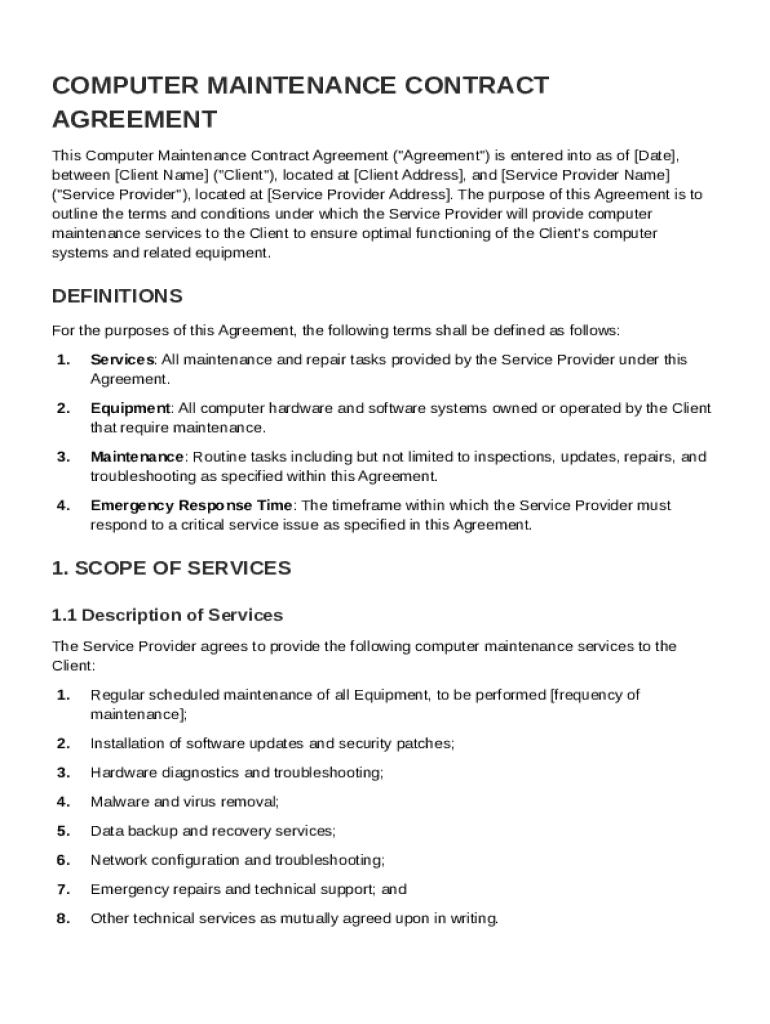







Definition and Purpose of Computer Maintenance Contract Template
A Computer Maintenance Contract Template serves as a formal agreement between a service provider and a client, detailing the terms and conditions of computer maintenance services. The document typically outlines the scope of services, frequency of maintenance, payment terms, and the responsibilities of each party. The primary goal is to establish clear expectations and prevent misunderstandings or disagreements regarding service delivery. The template provides a standard structure that both parties can adapt to their specific needs, ensuring the maintenance of computer systems runs smoothly and transparently.
Key Functions of the Template
- Standardizes expectations and responsibilities between client and service provider.
- Legally binds both parties to agreed terms, reducing the risk of disputes.
- Outlines the specific services included within the maintenance contract.
How to Use the Computer Maintenance Contract Template
Using the Computer Maintenance Contract Template involves several steps, ensuring that the document suits the unique requirements of the involved parties. Begin by downloading the template and reviewing the structure to familiarize yourself with the sections.
- Review and Customize: Adjust the scope of services and any provisions to reflect the specific needs of the relationship.
- Fill Personal Details: Both parties should fill in their name, contact information, and any unique identifiers necessary.
- Specify Service Terms: Clearly state the frequency and type of maintenance activities, expected service levels, and associated costs.
- Review Legal Clauses: Ensure understanding and agreement on confidentiality, liability limitations, and dispute resolution processes.
- Finalize and Sign: Once all fields are accurately completed, both parties should sign the document to formalize the agreement.
Steps to Complete the Computer Maintenance Contract Template
Completing the Computer Maintenance Contract Template involves structured and systematic steps:
- Fill in General Information: Begin by entering the names, addresses, and contact details of both the client and the service provider.
- Detail Scope of Services: Clearly outline what services will be provided, including frequency and expected outcomes.
- Set Payment Terms: Define the payment amount, method, and schedule. Consider including any conditions for late payment.
- Privacy and Confidentiality Clauses: Include clauses that protect sensitive information shared during the contract term.
- Liability and Dispute Resolution: Specify how disputes will be resolved and any limitations on liability.
- Finalize Terms: After completion, both parties should review the document in its entirety for accuracy and completeness before signing.
Key Elements of the Computer Maintenance Contract Template
The effectiveness of a Computer Maintenance Contract largely depends on the inclusion of key elements that define the nature and terms of service:
- Service Scope: Explicit definitions of what the maintenance services cover and what they do not.
- Service Level Agreement (SLA): Performance standards and quality metrics that the service provider must meet.
- Payment Details: Amounts, schedules, and methods of payment, including conditions for late fees.
- Duration and Termination: Terms regarding the contract period, renewal options, and conditions under which either party may terminate early.
- Confidentiality and Security: Measures for protecting sensitive data and proprietary information.
- Amendments: Procedures and allowances for making changes to the contract after it is signed.
Important Terms Related to the Template
Several technical and contractual terms are crucial in understanding the stipulations within the Computer Maintenance Contract Template:
- Preventive Maintenance: Regular activities aimed at preventing future system failures.
- Corrective Maintenance: Actions taken to fix existing problems.
- Uptime Guarantee: A commitment to ensuring systems are operational a certain percentage of time.
- Non-Disclosure Agreement (NDA): A contract clause protecting proprietary and confidential information shared during the maintenance process.
- Force Majeure: A legal clause that frees both parties from liability in the event of extraordinary circumstances preventing contract fulfillment.
Legal Use of the Computer Maintenance Contract Template
A well-drafted Computer Maintenance Contract Template ensures compliance with relevant legal standards, providing protection and security for both parties:
- Compliance with Industry Standards: Ensures maintenance practices meet sector-specific regulations and national legal requirements.
- Binding Agreement: Once signed, the template becomes a legally binding document, enforceable in court.
- Documentation: Serves as evidence of contractual obligations and commitments, providing a basis for legal recourse if terms are violated.
- Liability Protection: Protects both parties through clear attribution of responsibility and limitations to liability.
- Dispute Resolution: Establishes methods for legally resolving disagreements, such as arbitration or mediation, before escalating to litigation.
Who Typically Uses the Computer Maintenance Contract Template?
The Computer Maintenance Contract Template is versatile and utilized by various entities seeking to establish a formal service agreement:
- Small and Medium Enterprises (SMEs): Regularly require IT services but lack internal resources.
- Corporations: Large organizations that hire external IT service providers for specialized maintenance.
- Educational Institutions: Schools and universities maintaining comprehensive IT systems.
- Government Agencies: Public entities needing standardized agreements for IT services.
- Non-Profit Organizations: Groups that benefit from predefined service terms to maximize resource efficiency.


State-Specific Rules for the Computer Maintenance Contract Template
Although the Computer Maintenance Contract Template has a generalized format, customization based on jurisdiction is vital to ensure legal compliance:
- State Regulations: Different states may have varying requirements for contract enforceability and content.
- Local Laws on Service Contracts: Each state might have statutes governing acceptable terms and conditions.
- Tax Implications: State-specific tax obligations might affect cost structures and payment terms.
- Employment and Labor Laws: These may impact liability conditions and employment-related clauses within the contract.
- Electronic Signatures: State law can affect the validity of electronic agreements; some jurisdictions demand specific authentication measures.




