




01. Edit your form online
Type text, add images, blackout confidential details, add comments, highlights and more.

Type text, add images, blackout confidential details, add comments, highlights and more.

Draw your signature, type it, upload its image, or use your mobile device as a signature pad.

Send it via email, link, or fax. You can also download it, export it or print it out.
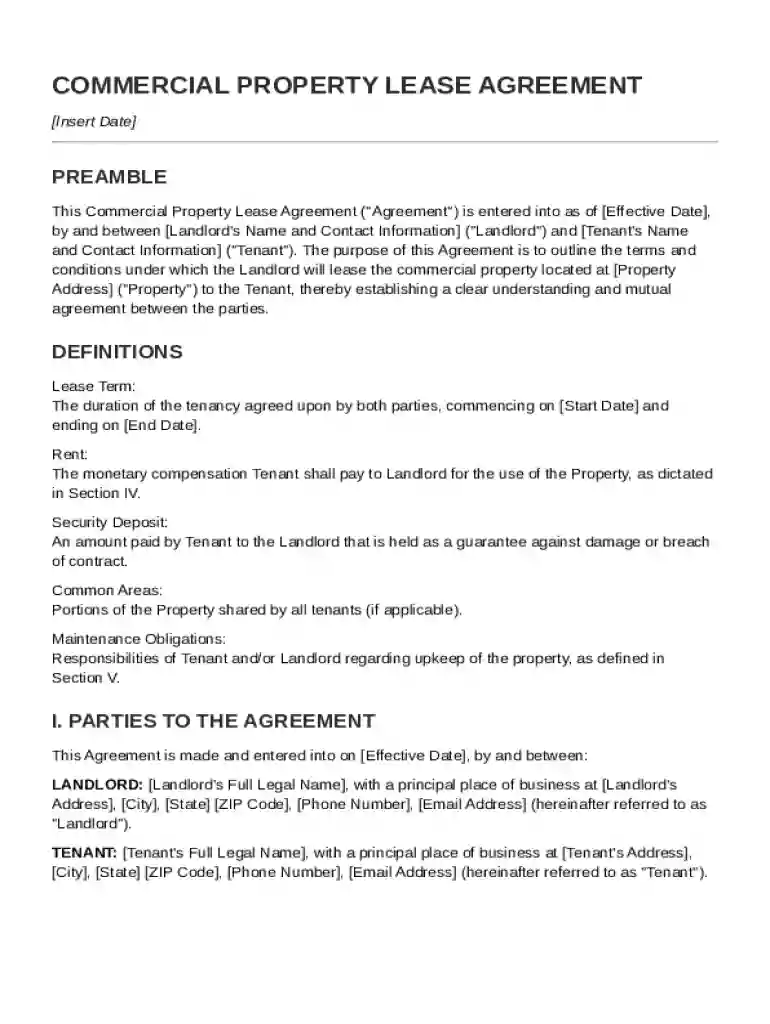
A Commercial Property Contract Template is a legally binding document used to define the terms and conditions of a commercial property lease or sale. It establishes responsibilities and rights between the Landlord and Tenant or Buyer and Seller. This template typically includes sections on lease duration, rental or purchase price, maintenance obligations, use of the premises, insurance requirements, and options for renewal or termination. A well-structured commercial property contract provides clarity to both parties, minimizing potential disputes and ensuring mutual agreement on operational terms.
Understanding the core components of a Commercial Property Contract Template is crucial for both parties involved. These key elements ensure that all necessary aspects of the agreement are addressed and that the contract serves as a comprehensive tool.
Lease or Sale Terms: Defines the duration of the lease or the terms of sale, including start and end dates for leases or closing dates for sales.
Rental or Purchase Price: Specifies the amount payable by the Tenant or Buyer, including any initial deposits or installments.
Maintenance Responsibilities: Outlines who is responsible for property maintenance and repairs, detailing obligations for both parties.
Permitted Use: Describes how the property can be used and any restrictions or special conditions associated with its use.
Insurance Requirements: Details the necessary insurance policies that need to be held by one or both parties to cover potential liabilities or damages.
Termination Clauses: Establishes the conditions under which the contract can be terminated early, including any required notice periods.
Utilizing a Commercial Property Contract Template effectively involves several steps to ensure that it meets all the necessary legal and operational requirements.
Review Key Elements: Before filling out the template, one should thoroughly review its key components to ensure that all relevant areas are covered.
Customize the Template: Adjust the template according to specific needs such as property details, unique clauses, and party information.
Consult Legal Professionals: To ensure compliance with local laws and regulations, legal advice should be sought during the drafting process.
Finalize and Execute: Both parties must review the completed template, agree on the terms, and execute it with their signatures.
The legal enforceability of a Commercial Property Contract Template is crucial for its effectiveness. It must comply with applicable state and federal laws to be valid.
State Laws Compliance: Ensure the contract adheres to specific state real estate laws that may vary, particularly regarding leases and sales.
Disclosure Requirements: The template should meet all legal requirements for disclosure of information concerning the property and transaction.
Governing Law Clause: A clause specifying which jurisdiction's laws will govern the contract should be included to prevent legal ambiguities.
Filling out a Commercial Property Contract Template involves a structured approach to ensure all necessary information is captured.
Gather Information: Collect details about all parties involved, the property, and any specific terms negotiated.
Fill in Contract Details: Enter all relevant data into the template, ensuring accuracy and completeness.
Review Clauses: Check each clause for relevancy and ensure they reflect the agreed-upon terms.
Seek Mutual Agreement: Have both parties review the completed contract for mutual understanding and agreement before signing.
Sign and Date the Contract: Once reviewed and agreed upon, the contract should be signed and dated by all involved parties.
Familiarity with the terminology used in a Commercial Property Contract Template is essential for understanding the document.
Lessee: Refers to the individual or business renting the property.
Lessor: The property owner or landlord offering the property for lease.
Escrow: A financial arrangement where a third party holds funds or property until the terms of the contract are met.
Covenants: Terms within the contract that impose duties or obligations on the parties.
Force Majeure: A clause that frees the parties from liability in case of unforeseen and unavoidable events that prevent compliance with the contract terms.
Commercial property contracts must adhere to state-specific regulations that can affect the content and enforceability of the agreement.
Zoning Laws: Different states have specific zoning laws dictating property use; these must be acknowledged in the contract.
Licenses and Permits: Some states require additional licenses or permits for certain types of commercial use which should be outlined in the contract.
Tenant Rights: Varying state regulations can protect tenant rights differently, impacting lease negotiation terms.
Examples offer insight into practical applications of the Commercial Property Contract Template.
Retail Space Lease: A business renting a retail storefront uses the contract template to outline rent terms and use limitations.
Office Space Sale: A company purchasing an office building utilizes the template to specify purchase conditions and closing requirements.
Industrial Lease Agreement: Manufacturing companies leasing industrial spaces can utilize the template to define machinery layout and safety obligations.
At DocHub, your data security is our priority. We follow HIPAA, SOC2, GDPR, and other standards, so you can work on your documents with confidence.
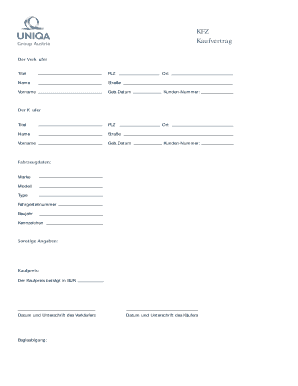
1. Offer/Acceptance. Buyer agrees to purchase and Seller agrees to sell the Property under the terms and conditions set forth in this Agreement.
Landlord, in consideration of the rents to be paid and the covenants and agreements to be performed and observed by the Tenant, does hereby lease to the Tenant
Mar 24, 2022 Discover the essential components of a robust consulting agreement. Learn how to create a solid contract with these 12 key elements.


