
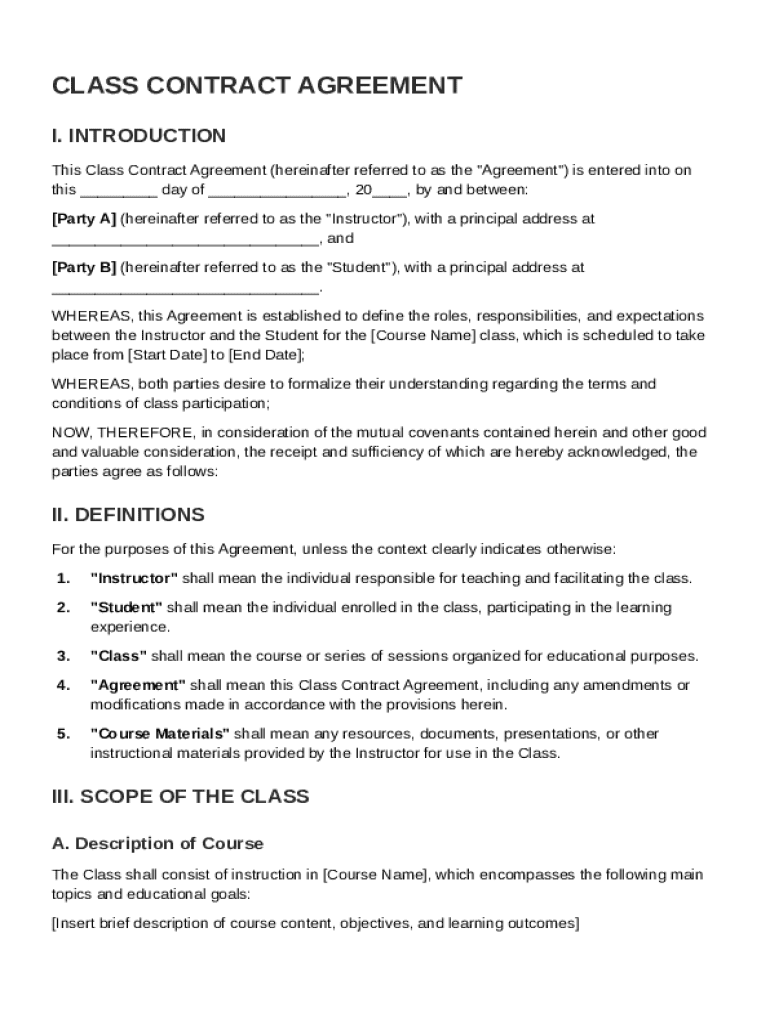







Definition and Meaning of a Class Contract Template
A Class Contract Template is a formal document that delineates the terms and conditions agreed upon by an instructor and a student for a particular course. This template serves as a blueprint for establishing a mutual understanding between both parties concerning their roles, responsibilities, and the expectations throughout the duration of the course. Key elements typically covered in the document include attendance policies, assignment schedules, fee structures, and conduct guidelines. Additionally, the contract addresses intellectual property rights, dispute resolution mechanisms, and termination conditions, providing a comprehensive framework for a structured educational experience.
By clearly defining these aspects, the Class Contract Template ensures that both instructors and students are fully aware of their obligations and rights, thereby minimizing potential conflicts and fostering a conducive learning environment.
How to Use the Class Contract Template
To effectively utilize the Class Contract Template, follow these detailed steps:
-
Download the Template: Obtain the template from a reliable source, either as a document file compatible with your preferred text editor, or directly from an educational platform that provides it.
-
Read Thoroughly: Carefully review the entire document to familiarize yourself with its components and ensure you fully understand each section before filling it out.
-
Customize the Content: Personalize the template to reflect the specific details of your class. Adjust the fields to include the course name, instructor name, student details, class schedule, fee structure, and any other relevant criteria unique to your context.
-
Consult Relevant Parties: If necessary, discuss any modifications with your legal advisor or educational institution to ensure compliance with applicable rules and regulations.
-
Sign the Document: Both the instructor and the student must sign the contract to indicate their agreement to the terms. Depending on the platform or tool used, this may involve electronically signing the document.
-
Store Securely: Maintain a secure copy of the signed contract for future reference and in case of any disputes or clarifications needed throughout the course duration.
Steps to Complete the Class Contract Template
Completing a Class Contract Template involves several structured steps to ensure accuracy and compliance:
-
Input Basic Information:
- Instructor and student names
- Contact information for both parties
- Course title and code
-
Outline Course Details:
- Class schedule and location
- Description of course structure and objectives
- Any prerequisites or required materials
-
Specify Attendance and Participation Requirements:
- Attendance policy and consequences for non-compliance
- Expectations for participation, including any specific roles or activities
-
Define Assignment and Assessment Criteria:
- List submission deadlines for assignments
- Specify grading criteria and feedback timelines
- Include policies on revisions or re-submissions
-
State Fee Structures and Payment Deadlines:
- Total course fees, payment plans, or installment options
- Deadlines for payments and consequences for late payment
-
Conclude with Signatures:
- Allocate space for signatures and dates from both instructor and student
- Use legally binding electronic signatures if completing online
Key Elements of the Class Contract Template
The Class Contract Template is comprised of several essential elements to ensure comprehensive coverage:
-
Course Information: Includes the course name, code, duration, and objectives, providing a fundamental understanding of what the class entails.
-
Roles and Responsibilities: Clearly outlines the duties and commitments expected from both the instructor and the student, fostering clarity and accountability.
-
Attendance Policies: Details rules regarding class attendance, including acceptable excuses for absences and the impact of non-attendance on student evaluations.
-
Assignment and Evaluation Guidelines: Offers a framework for assignment submissions, feedback mechanisms, and the criteria used for student assessments.
-
Code of Conduct: Establishes expected behavioral standards within the classroom to promote a respectful and productive learning environment.
-
Fee Arrangement: Specifies payment methods, schedules, and repercussions for non-payment to manage financial transactions transparently.
-
Dispute Resolution: Defines procedures for addressing conflicts or disagreements, ensuring that issues are resolved efficiently and fairly.
Who Typically Uses the Class Contract Template
Instructors and students predominantly utilize the Class Contract Template in educational settings. However, its application can extend to various stakeholders, including:
-
Educational Institutions: Schools, universities, and training centers can implement these contracts to standardize agreements across different courses and programs.
-
Online Learning Platforms: E-learning and virtual course providers use these templates to clarify expectations for remote learning environments.
-
Private Tutors and Coaches: Individuals offering specialized or one-on-one instruction find these templates beneficial for setting formal terms with their clients.


Legal Use of the Class Contract Template
The Class Contract Template is a legally binding document, holding enforceable obligations and rights for both parties involved. Key legal considerations include:
-
Compliance with Educational Laws: The template must adhere to local and national educational regulations, ensuring that terms are legally valid and enforceable.
-
Inclusion of Legal Provisions: Elements such as indemnity clauses, intellectual property rights, and termination conditions must be legally sound and clearly articulated.
-
Electronic Signatures: When utilized online, electronic signatures must comply with legislation such as the ESIGN Act, ensuring their legal recognition and enforceability.
Important Terms Related to the Class Contract Template
Understanding specific terminology within the Class Contract Template is crucial for accurate interpretation:
-
Parties: Refers to the instructor and student engaged in the contract.
-
Course Content: The curriculum or educational material covered during the class.
-
Intellectual Property Rights: Ownership rights related to the content or materials used within the course, ensuring proper use and acknowledgment.
-
Termination Conditions: Circumstances under which the contract may be legally terminated by either party.
-
Dispute Resolution: Processes and mechanisms for addressing disagreements or contractual breaches.
-
Signature Field: A designated area for either handwritten or electronic signatures, confirming acceptance of the terms within the contract.




