
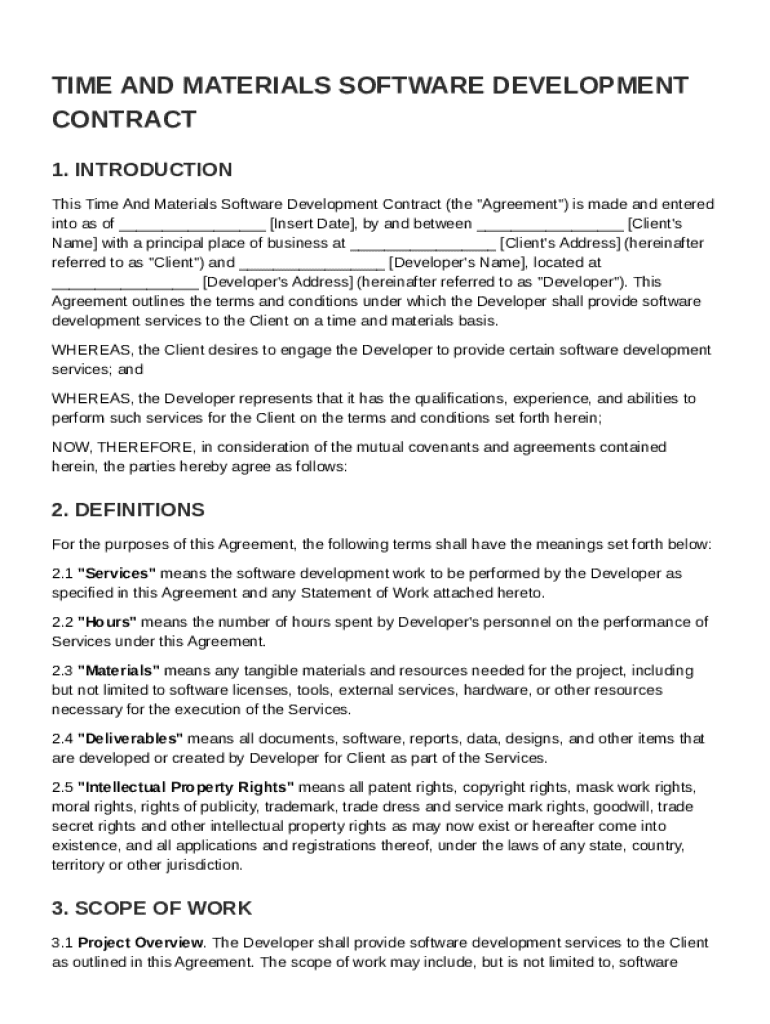




Definition & Purpose of the Time and Materials Software Development Contract Template
A Time and Materials Software Development Contract Template is a legal document that establishes a working agreement between a client and a developer for software development services. This contract specifies that the client will pay the developer based on the time spent and materials used during the project. This type of contract is particularly beneficial in scenarios where project requirements might evolve over time, allowing for flexibility in pricing and adjustments. The template sets forth terms, scope of work, payment structure, responsibilities, change management procedures, confidentiality obligations, and other essential clauses to protect both parties' interests.
Key Elements of the Contract Template
The Time and Materials Software Development Contract Template consists of various crucial elements that define the working relationship and ensure transparency. Key components include:
- Scope of Work: A detailed description of the services to be rendered, including milestones and deliverables.
- Payment Terms: Specifications on hourly rates, cost of materials, billing cycles, and payment schedules.
- Responsibilities of Both Parties: Clear delineation of responsibilities and obligations for both the client and developer.
- Change Management Procedures: Processes for handling modifications to the project scope or objectives.
- Confidentiality Agreements: Clauses detailing non-disclosure obligations to protect proprietary information.
- Indemnification Clauses: Provisions outlining liability and protective measures against third-party claims.
- Governing Law and Dispute Resolution: Determination of the legal framework governing the contract and methods for settling disputes.
How to Use the Template Effectively
To effectively utilize the Time and Materials Software Development Contract Template, both parties should collaborate during the drafting process to ensure all terms are mutually agreed upon.
-
Review and Modify the Template: Carefully read each section and tailor the template to fit the specific needs of the project. Modify clauses as needed to align with the project's unique requirements.
-
Define the Scope and Deliverables: Specify what the developer is expected to deliver, including any stages or interim outputs.
-
Specify Hourly Rates and Material Costs: Clearly outline the costs associated with the labor and materials. Ensure that these are detailed and justified.
-
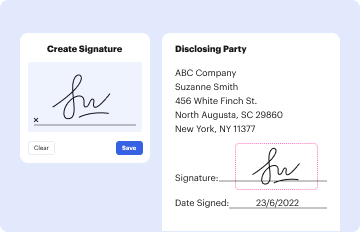
Include a Signatory Section: Both parties should sign the contract to indicate their agreement and commitment to the terms.
-
Seek Legal Advice: It is often wise to consult with a lawyer to review the contract to ensure it complies with legal standards and encompasses all necessary protections.
Practical Examples
- If a project involves developing a software application with iterative updates, the template can specify billing for each iteration separately based on hours worked and resources used.
- For projects requiring additional hardware, the template can include provisions for reimbursing the developer for these expenses.
Important Terms Related to the Contract Template
Understanding relevant terms within the Time and Materials Software Development Contract Template is crucial:
- Independent Contractor: The status of the developer, typically indicating they are not an employee and are responsible for their own taxes.
- Milestones: Key deliverables or points that indicate progress within the project timeline.
- Force Majeure: A clause that relieves both parties from liability or obligation due to extraordinary events out of their control.
Edge Cases and Variations
- Adjusting for Delays: Provisions for handling delays not attributable to the developer, such as waiting for client inputs.
- Material Cost Fluctuations: Address potential changes in material costs and how they will be managed.
Steps to Complete the Contract Template
Completing the Time and Materials Software Development Contract Template involves several steps:
-
Initial Review and Stakeholder Inputs: Start by involving all necessary stakeholders to review initial project requirements.
-
Populate Template with Specific Details: Input project-specific details such as names, start and end dates, and specific requirements.
-
Consult with a Legal Professional: Ensure the template is legally sound and appropriate for the intended use.
-
Conduct a Final Review: Both parties should review the completed document thoroughly to ensure accuracy and completeness.
-
Execution: Sign the contract to make it legally binding.
Who Typically Uses This Contract Template
This contract template is commonly used by:
- Software Development Companies: To manage client projects where the scope might evolve.
- Independent Developers: When working on client projects requiring flexibility in billing.
- Businesses Engaging Developers: Particularly in tech, startups, or firms lacking a clearly defined project outcome.
Legal Use and Considerations
The legal use of the Time and Materials Software Development Contract Template is primarily to establish a binding agreement that defines roles, responsibilities, and compensation.
-
Independent Contractor Status: The developer is typically classified as an independent contractor, impacting tax responsibilities and employment liabilities.
-
Dispute Resolution: The contract should specify methods and venues for resolving disputes, such as mediation or arbitration, to avoid litigation.
-
Compliance with U.S. Law: Ensure the contract complies with relevant U.S. federal and state laws, particularly labor and contractual laws.
Real-World Scenarios
- A startup engaging a developer for a prototype, where requirements may change based on testing feedback.
- An established firm hiring a freelancer to build a custom application that will receive functionality updates over time.
By utilizing a comprehensive Time and Materials Software Development Contract Template, businesses and developers can ensure clarity and protection throughout the software development lifecycle.