





Definition and Purpose of the Independent Contractor Non-Compete Agreement
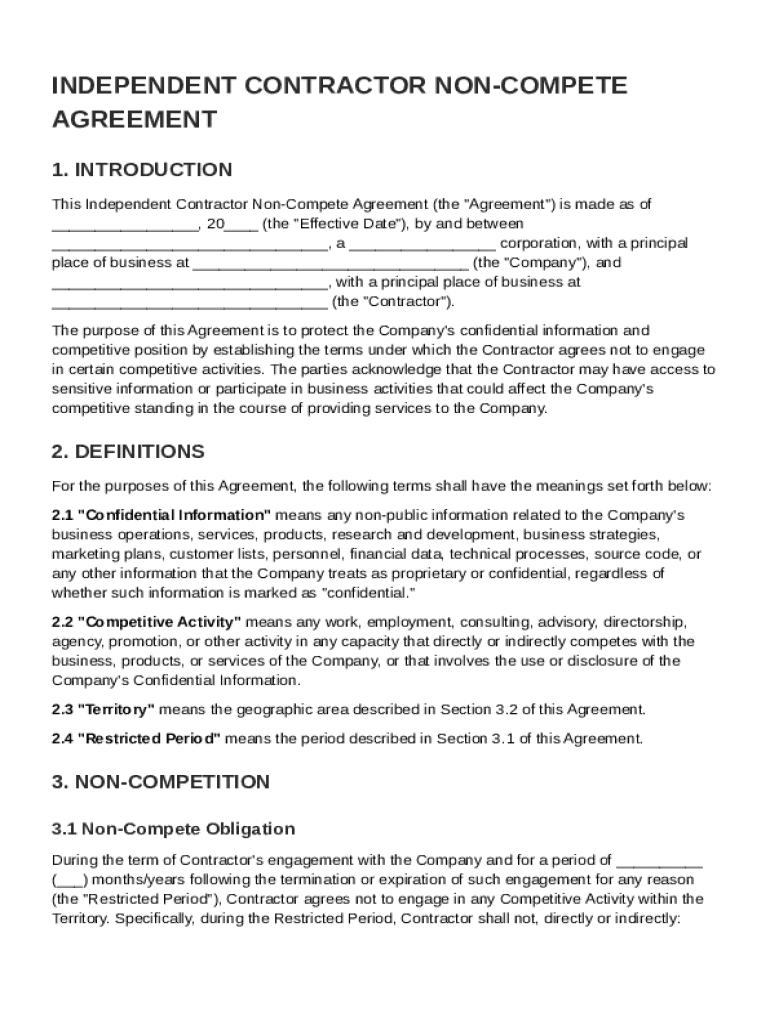
The Independent Contractor Non-Compete Agreement is a legal document that outlines the restrictions on an independent contractor's ability to engage in activities that might directly compete with a business. This agreement is designed to protect the company's business interests by preventing contractors from disclosing sensitive information or engaging in competitive practices during or after their engagement with the company.
- Confidential Information: Defined within the agreement, this refers to any proprietary business information that must be safeguarded from unauthorized access or exposure.
- Competitive Activity: Any business activity that might be seen as a direct threat or competition to the company's interests.
Key Elements of the Independent Contractor Non-Compete Agreement
Several critical components make up the Independent Contractor Non-Compete Agreement, ensuring comprehensive protection for all parties involved.
- Non-Compete Clause: Specifies the activities considered competitive and outlines the geographical and time limitations to which the contractor must adhere.
- Confidentiality Provisions: These clauses require the contractor to maintain the confidentiality of sensitive company information.
- Consideration: The consideration outlines what the contractor receives in exchange for agreeing to the non-compete terms, often a key factor in the enforceability of the agreement.
- Governing Law: Determines which state’s laws govern the agreement, an essential aspect given the varied enforceability across different jurisdictions.
Legal Use and Enforceability of the Agreement
Understanding the legal context and enforceability of the agreement is crucial in its execution and potential disputes.
- Enforceability Considerations: Courts assess whether the agreement is reasonable in scope, duration, and geography. It must also be supported by valid consideration, such as unique skills or trade secrets being protected.
- Legal Exceptions: There are circumstances where the non-compete agreement might not be enforceable, such as undue hardship on the contractor or lack of legitimate business interest.
Steps to Complete the Independent Contractor Non-Compete Agreement
Properly completing the agreement involves several definitive steps to ensure its validity and relevance.
- Clarification of Terms: Clearly define terms such as "Confidential Information" and "Competitive Activity."
- Review State Laws: As states have different laws regarding non-compete agreements, ensure compliance with state-specific legal requirements.
- Drafting the Agreement: Use clear and concise language to avoid ambiguity. Include all necessary sections like Confidentiality, Non-Compete Clause, and Consideration.
- Signatures: Both parties must sign the agreement for it to be binding. Consider using platforms like DocHub for digitally binding signatures.
Who Typically Uses This Template
The Independent Contractor Non-Compete Agreement template is often utilized in specific business contexts.
- Companies Hiring Contractors: Businesses engaging independent contractors to work on projects involving proprietary methods or information.
- Contractors Entering New Engagements: Independent contractors may require this agreement to outline and respect competitive boundaries.
- Legal Teams: In-house counsels or legal teams may adapt the template to fit organizational needs.
Important Terms Related to the Agreement
Familiarity with key legal and business terms enhances understanding and compliance with the agreement.
- Consideration: A legal concept requiring a bargained-for exchange in creating enforceable agreements.
- Non-Disclosure: Distinct from non-compete, a non-disclosure clause focuses solely on protecting confidential information without restricting competitive activities.
- Territorial Restrictions: Specific geographical limitations where the contractor is restricted from engaging in competitive activity.
State-Specific Rules and Variations
Non-compete agreements are subject to different state laws and regulations, which can affect their formulation and enforcement.
- California: Generally prohibits non-compete clauses with few exceptions related to the sale of business interests.
- Texas: Requires that the non-compete agreement is ancillary to or part of an otherwise enforceable agreement.
Business Types That Benefit Most from the Agreement
Certain businesses find more value in employing an Independent Contractor Non-Compete Agreement due to the nature of their operations.
- Tech Companies: Protect sensitive intellectual property and innovative methods.
- Consultancies: Retain client bases by limiting the contractor’s ability to solicit clients post-engagement.
- Manufacturing Firms: Maintain proprietary processes unique to their competitive advantage.
By focusing on these blocks, the content provides an in-depth, comprehensive understanding of the Independent Contractor Non-Compete Agreement and its practical application.