




Key Elements of the Antique Mall Vendor Contract Template
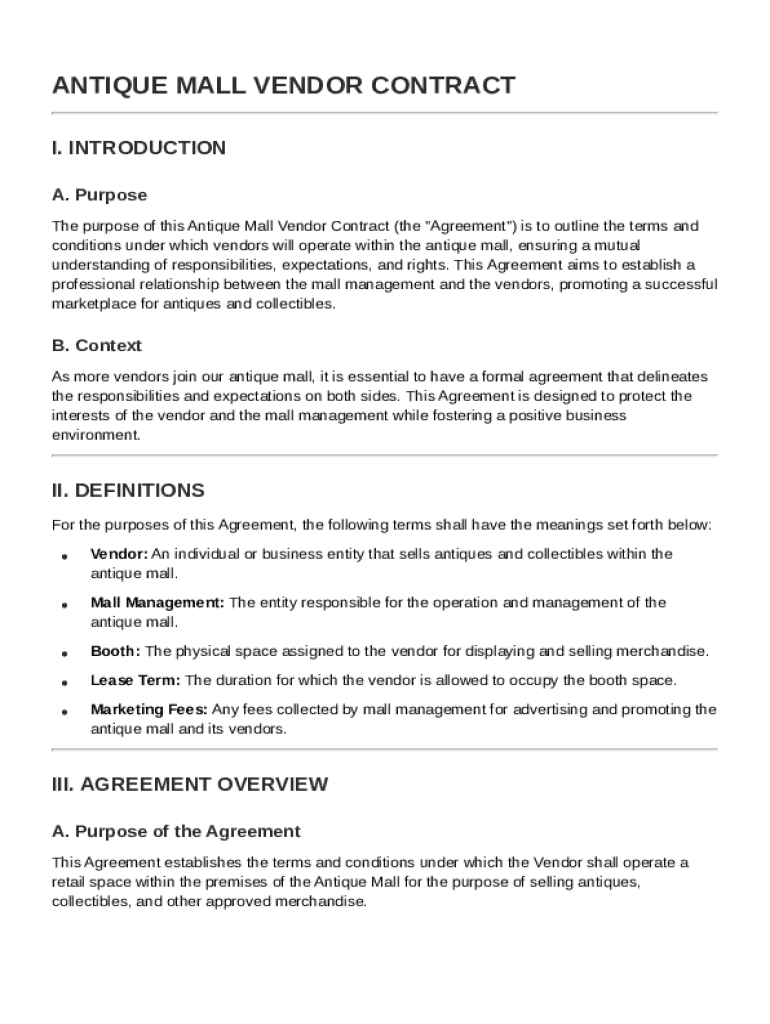
The Antique Mall Vendor Contract Template serves as a foundational document for establishing a professional and clear agreement between vendors and antique mall management. It details essential components, ensuring both parties understand their responsibilities and rights.
-
Vendor Responsibilities: Expectations for merchandise display, booth maintenance, and customer service are outlined. Vendors must keep their spaces tidy, present merchandise attractively, and maintain professional interaction with customers.
-
Mall Management Obligations: Details on space allocation, marketing efforts, and facility maintenance are provided. Mall management often takes charge in promoting the venue and ensuring that utilities and common areas are in good condition.
-
Financial Terms: The contract specifies rental fees, payment schedules, and any commissions taken by the mall from vendor sales. Clarity in financial terms helps prevent disputes and ensures smooth financial transactions.
-
Termination Conditions: Guidelines and conditions under which the contract can be terminated by either party are crucial. This section typically includes notice periods and any penalties for early termination.
-
Liability Waivers: Vendors often must agree to waivers that limit the mall’s liability for damages to merchandise or any incidents occurring within the vendor's booth.
-
Insurance Requirements: The type and extent of insurance vendors are required to carry are specified, often including general liability insurance to protect both the vendor and the mall.
-
Dispute Resolution Processes: The contract outlines procedures for resolving any disagreements that arise, which may include mediation or arbitration rather than litigation.
Legal Use of the Antique Mall Vendor Contract Template
Understanding the legal dimensions of the Antique Mall Vendor Contract Template is crucial for both vendors and mall management. The template is designed to ensure compliance with laws and regulations governing vendor agreements.
-
ESIGN Act Compliance: Ensures that the contract is legally binding when completed with electronic signatures, as recognized under the ESIGN Act. This enhances convenience while maintaining legal validity.
-
State-Specific Regulations: Vendors and management must consider state-specific laws that may influence contract terms, such as specific consumer protection laws.
-
Contractual Validity: The template provides a strong legal framework for vendor agreements, reducing the risk of unenforceable contracts.
-
Insurance and Liability: Proper legal language in these sections ensures both parties are protected under the agreed terms.
Steps to Complete the Antique Mall Vendor Contract Template
Completing the Antique Mall Vendor Contract Template involves a systematic approach to ensure all parties have accurately recorded and agreed upon terms.
-
Identify Parties: Clearly list the full legal names and addresses of the vendor and mall management.
-
Outline Obligations: Both parties must specify their respective responsibilities, ensuring clarity in what is expected.
-
Define Financial Arrangements: Include details on fees, payment schedules, and commissions.
-
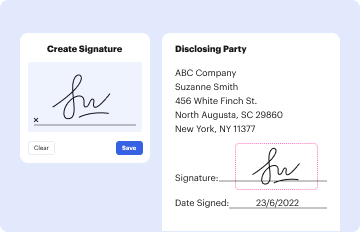
Signatures: Both parties must sign the document, either physically or via compliant electronic signatures.
- Addenda and Comments: Include any additional agreements or clarifications not covered in the primary document.
Who Typically Uses the Antique Mall Vendor Contract Template
The Antique Mall Vendor Contract Template is primarily utilized by businesses and individuals engaged in the sale of antiques within a mall setting.
-
Individual Vendors: Those new to selling antiques can use this template to establish a formal relationship with mall management.
-
Established Antique Dealers: Experienced vendors can streamline their rental agreements and focus on expanding their footprint within multiple malls.
-
Mall Operators: Management can use the template to create standardized agreements with multiple vendors, ensuring consistency.

Examples of Using the Antique Mall Vendor Contract Template
Real-world applications of the Antique Mall Vendor Contract Template demonstrate its versatility and utility for antique mall operations.
-
Pop-Up Shops: Vendors looking to temporarily showcase collections at an antique mall can use the template to ensure short-term agreements are clearly articulated.
-
Multi-Vendor Markets: In large antique malls with numerous vendors, the template provides a standard way to maintain organization and clarity.
-
Seasonal Events: During holiday seasons or special events, the template facilitates rapid onboarding of temporary vendors.
Important Terms Related to the Antique Mall Vendor Contract Template
Understanding key terminology within the contract is essential for effective communication and agreement adherence.
-
Booth Leasing: Refers to the rental arrangement of space within the antique mall.
-
Consignment Terms: When applicable, these terms govern how and when sales proceeds from consigned goods are distributed.
-
Default Provisions: Clauses that address what happens if either party fails to fulfill their contractual obligations.
-
Indemnification: Outlines any protection against loss or damage, specifying the party responsible for certain risks.
State-Specific Rules for the Antique Mall Vendor Contract Template
While the template provides a general framework, state-specific rules may affect its application and enforcement.
-
Consumer Rights Laws: Vary by state and may necessitate additional clauses to protect buyers within the contract.
-
Tax Obligations: Sales tax requirements for flea markets and antique malls differ across states, influencing contract terms regarding financial remittances.
-
Landlord-Tenant Regulations: Unique state laws that govern lease agreements may inform space leasing provisions within the contract.
Digital vs. Paper Version of the Antique Mall Vendor Contract Template
Modern business operations have seen a shift towards digital documentation, including the Antique Mall Vendor Contract Template.
-
Convenience and Accessibility: Digital versions offer ease in sharing and storing. Vendors and managers can access agreements on various devices, facilitating remote operations.
-
Version Control: Digital files help manage updates and revisions, reducing errors that can occur with paper-based systems.
-
Eco-Friendliness: A digital approach supports sustainability efforts by minimizing paper waste, while streamlining administrative tasks through efficient electronic processes.