
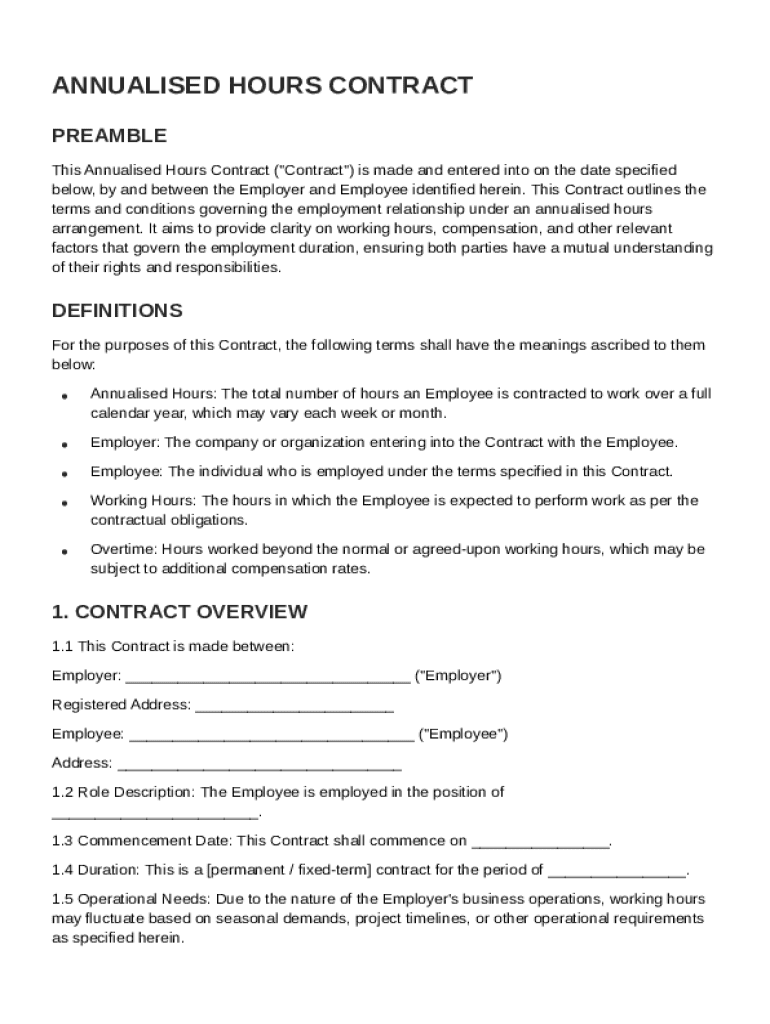







Definition and Meaning of the Annualised Hours Contract Template
An annualised hours contract is an employment agreement designed to outline the terms between an employer and an employee, focusing on the distribution of work hours over a specific period, typically a year. This type of contract aims to provide flexibility in scheduling, allowing for variations in work patterns based on seasonal demand or other specific business needs. It defines key aspects like the total annual hours an employee is expected to work, ensuring that working time aligns with both the employer’s operational requirements and the employee’s personal scheduling preferences.
Purpose and Structure
The primary goal of an annualised hours contract is to foster a more balanced approach to work schedules, avoiding extremes like overworking during peak periods or underutilization during slower times. Employers can tailor staffing levels more precisely, while employees benefit from more predictable time off and potentially more balanced work-life integration. The contract typically specifies compensation details, how hours are distributed across months or weeks, and what constitutes overtime.
How to Use the Annualised Hours Contract Template
When utilizing an annualised hours contract template, several steps can help effectively implement this flexible work arrangement. Initially, both parties must clearly identify the expected annual hours and discuss how these hours can fluctuate over different periods, establishing a mutually agreeable schedule.
Customization Guidelines
- Assessment of Needs: Evaluate business cycles to determine peak and off-peak operational needs.
- Consulting with Employees: Align employee availability and preferences with business requirements.
- Defining Flexibility: Clearly outline the scope for potential deviations and the process for scheduling adjustments.
- Review and Feedback: Create a procedure for regular review and revision of the contract terms to ensure they remain relevant and effective.
Steps to Complete the Annualised Hours Contract Template
Completing the annualised hours contract template involves several crucial phases to ensure that all employment terms are thoroughly captured and that legal and operational considerations are applied effectively.
- Determine Total Hours: Calculate the total number of working hours for the year, including any potential overtime allocations.
- Schedule Planning: Develop a comprehensive schedule layout, indicating which periods have intensive work phases and where down times exist.
- Define Compensation Structure: Clearly document the salary or hourly rate, including how pay is structured concerning annual hours.
- Outline Holidays and Leave: Specify the protocol for holidays and permissible leaves within the contract period.
- Include Additional Clauses: Add necessary clauses such as performance reviews, confidentiality terms, and termination conditions.
Key Elements of the Annualised Hours Contract Template
To provide comprehensive coverage for both employers and employees, several key components should be integrated into an annualised hours contract template:
Crucial Clauses
- Working Hours and Breaks: Detailed schedules of expected working hours and designated break times.
- Compensation and Overtime: Procedures for regular payment and additional pay scales for overtime or exceptional working circumstances.
- Holiday Entitlements: Protocols for holiday scheduling and approvals.
- Performance Evaluation: Scheduled reviews to assess employee performance relative to contractual obligations.
Additional Components
- Termination Conditions: Clear conditions under which either party can terminate the contract.
- Confidentiality Agreements: Obligations to protect company information.
- Non-Competition Clauses: Restrictions on employee engagement with competing firms post-employment.
Who Typically Uses the Annualised Hours Contract Template
The audience for an annualised hours contract generally includes any businesses or employees that need flexibility in work schedules. This is most prevalent in industries with fluctuating workloads, such as retail, agriculture, or tourism.


Industries and Roles
- Retail: Managing workforce peaks during holidays or sales events.
- Agriculture: Aligning labor needs with planting and harvest times.
- Tourism and Hospitality: Adapting to seasonal visitor trends.
Legal Use of the Annualised Hours Contract Template
It's crucial for any business using this template to ensure they comply with labor laws and regulations that govern working hours and contractual agreements.
Compliance Considerations
- Fair Labor Standards: Contracts must adhere to fair working hours and ensure appropriate compensation.
- State Regulations: Some states may have specific rules regarding maximum allowable work hours and required breaks.
- ** Legal Reviews**: It is advisable to have contracts reviewed by legal professionals to ensure compliance and protect both parties' rights.
State-Specific Rules for the Annualised Hours Contract Template
Workplace regulations can significantly differ between states, affecting how annualised hours contracts are applied. Employers need to be aware of specific state laws related to work hours, minimum wage requirements, and employee rights.
Notable Variations
- Working Time Limits: States may impose different maximum working hour restrictions and required break periods.
- Minimum Wage Requirements: Compliance with state-specific minimum wage laws is mandatory.
- Record-keeping Requirements: Some states require detailed logs of hours worked for accurate wage calculations and tax purposes.
Examples of Using the Annualised Hours Contract Template
Real-world scenarios offer valuable insight into how annualised hours contracts can be practically applied and adjusted to meet specific business demands and employee preferences.
Case Studies
- Retail Chain Example: A retail chain restructures staff hours across the year to maximize efficiency during sales.
- Agricultural Firm Scenario: An agricultural company aligns labor schedules with planting seasons, ensuring peak workforce availability when needed.




