
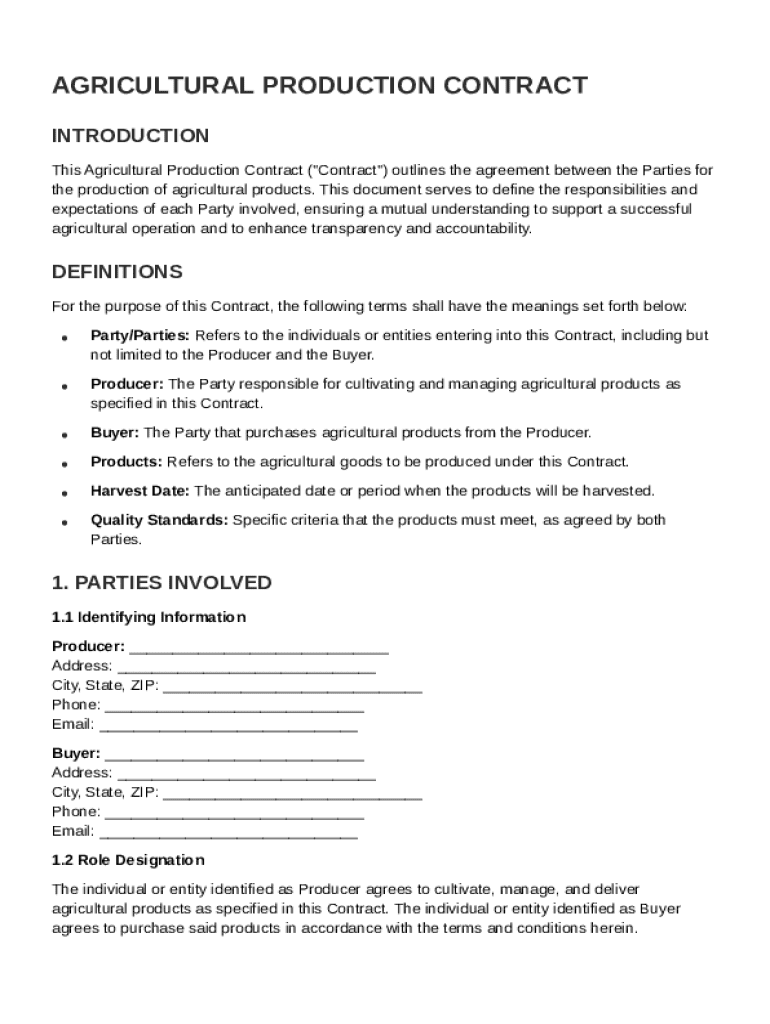







Definition and Purpose of the Agricultural Production Contract Template
An Agricultural Production Contract Template is a legally binding document that establishes the terms and conditions between a producer (often a farmer) and a buyer for the production and sale of agricultural products. This template serves as a guide to clearly outline each party's obligations, including what products will be produced, quality and delivery specifications, payment terms, and any compliance requirements. For example, a contract may specify that a farmer will grow a certain quantity of organic soybeans, ensuring the quality meets predefined standards before delivery to a buyer, who agrees to purchase the entire lot at an agreed price.
Key Elements of the Agricultural Production Contract Template
Effective Agricultural Production Contracts include several critical elements to ensure clarity and enforceability:
- Identification of Parties: Clear naming of the parties involved, typically a producer (farmer) and a buyer (distributor or retailer).
- Description of Products: Detailed description of the agricultural products, including type, quality standards, and certification requirements, such as organic or non-GMO.
- Financial Terms: Payment terms, including price per unit, payment schedule, and penalties for late payment, ensuring financial transparency and planning.
- Delivery Terms: Details about delivery schedules, methods, and possible penalties for non-compliance with these terms.
- Compliance and Regulations: Specific regulations that the producer must adhere to, such as environmental laws or industry standards.
How to Use the Agricultural Production Contract Template
Using the Agricultural Production Contract Template effectively involves several steps to ensure both parties understand and agree to the terms. Typically, the process includes:
- Review and Customization: Begin by reviewing the entire template to ensure all sections are applicable to your situation. Customize sections to fit specific agreements concerning product type, volume, and delivery.
- Consultation: Both parties should consult with legal advisors to ensure all clauses are understood and equitable. This step is crucial for complex contracts involving large volumes or international trade.
- Negotiation: Use the template as a basis for discussions, allowing room for negotiation on key terms such as pricing or delivery schedules.
Steps to Complete the Agricultural Production Contract Template
Filling out the template involves a systematic approach to include all necessary data:
- Input Basic Information: Start by entering the names and contact information of both parties.
- Detail Product Specifications: Clearly describe the type of agricultural production required, along with any quality standards.
- Define Financial Terms and Conditions: Include payment methods, schedules, and any incentives or penalties.
- Finalize Compliance Requirements: Note any legal, environmental, or industry-specific regulations that affect the production or delivery of the products.
- Review and Sign: Ensure both parties understand the final contract before providing signatures for legal binding.
Who Typically Uses the Agricultural Production Contract Template
The Agricultural Production Contract Template is primarily utilized by:
- Farmers and Agricultural Producers: To establish clear, enforceable agreements for the production and sale of crops or livestock.
- Buyers and Distributors: Including grocery chains or food manufacturers seeking consistent supply and quality.
- Agricultural Cooperatives: To organize collaborative agreements among multiple farms or producers and a single buyer.
- Legal Advisors and Consultants: They use the template as a foundation for drafting a specific client-tailored contract.


Importance of the Agricultural Production Contract Template
Using this template is crucial for:
- Reducing Disputes: Clarifies expectations and conditions to prevent misunderstandings.
- Ensuring Compliance: Aligns production activities with legal and industry standards to avoid penalties.
- Financial Planning: Allows both parties to plan financially by establishing clear payment and delivery terms.
- Efficiency in Negotiations: Provides a structured starting point that can be rapidly adjusted to fit specific needs.
State-Specific Rules for the Agricultural Production Contract Template
U.S. states may have unique agricultural laws influencing contract terms:
- California: Requires strict adherence to environmental regulations that must be included in the contract.
- Iowa: May have specific grain handling and storage requirements that are crucial for crop contracts.
- Florida: Focuses on citrus production contracts with disease prevention measures.
Understanding these variations is essential for legality and enforceability in different jurisdictions.
Software Compatibility and Digital Management
Many farmers and buyers use digital platforms to manage production contracts:
- DocHub: For editing, signing, and sharing contracts securely online, integrating seamlessly with Google Workspace.
- QuickBooks or Farm Management Software: Useful for tracking financial terms and compliance within the contract.
Opening and editing the Agricultural Production Contract Template through these platforms streamlines the document management process, ensuring alignment with technological advancements in agricultural business practices.




