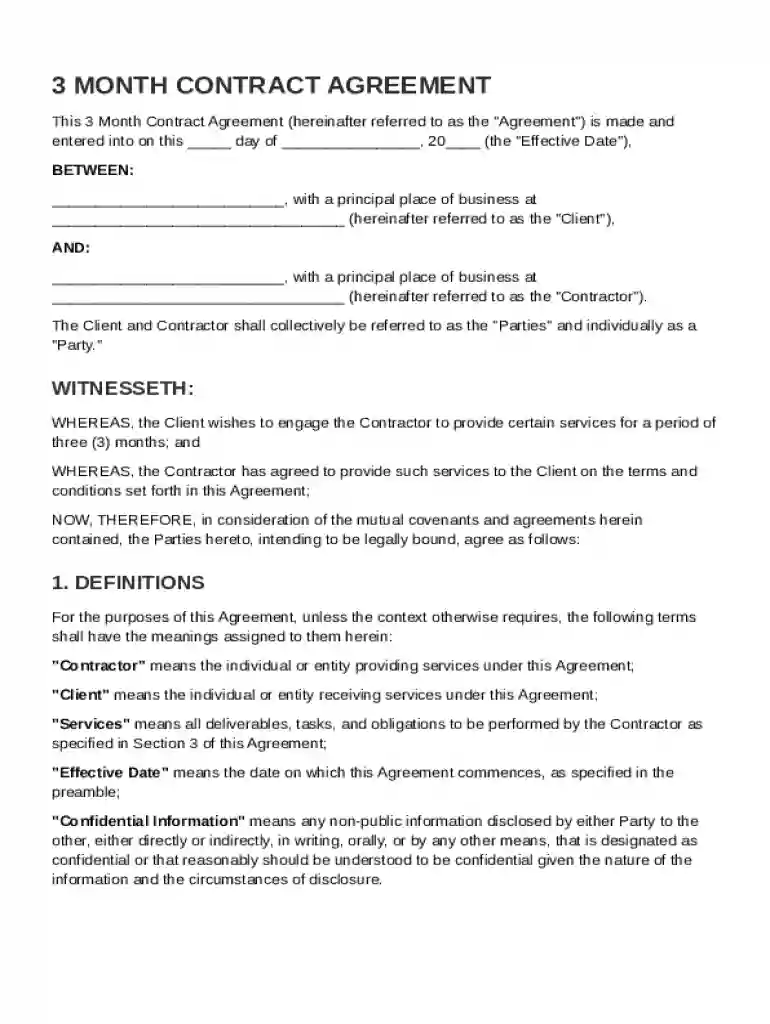
Definition and Meaning of the 3 Month Contract Template
A 3 Month Contract Template is a legal document used to formalize a temporary engagement between a client and a contractor, specifying the terms and conditions under which services will be provided for a period of three months. This contractual agreement is essential for establishing a clear understanding between both parties regarding responsibilities, payment, confidentiality, and other critical aspects. It typically includes sections on definitions, obligations of each party, compensation structure, confidentiality clauses, termination processes, dispute resolution methods, and governing law references. By outlining these elements, the template serves to protect the interests of both the client and the contractor and promote a harmonious working relationship.
Key Elements of the 3 Month Contract Template
The 3 Month Contract Template includes several core components vital to establishing a comprehensive and enforceable agreement:
- Definitions: Clear explanations of relevant terms used throughout the contract to prevent misunderstandings.
- Responsibilities of Both Parties: Details the specific obligations and duties of the client and contractor, ensuring clarity on expected deliverables and performance standards.
- Payment Terms: Outlines the agreed-upon compensation, including amount, payment schedule, method of payment, and conditions for any bonuses or penalties.
- Confidentiality Obligations: Specifies the requirements for maintaining the confidentiality of sensitive information shared during the course of the contract.
- Termination Conditions: Describes the procedures for ending the contract, including notice requirements and circumstances under which termination is permitted.
- Dispute Resolution Procedures: Provides methods for resolving disagreements that may arise during the contract period, such as mediation or arbitration.
- Governing Law: Identifies the legal jurisdiction that will oversee the interpretation and enforcement of the contract.
How to Use the 3 Month Contract Template
To effectively use the 3 Month Contract Template:
- Download the Template: Obtain a copy of the template in your preferred format (e.g., PDF or DOC) from a reputable source, such as a document management platform.
- Customize the Content: Fill in specific details related to your agreement, such as the names of both parties, the scope of work, payment details, and any additional clauses needed for your particular circumstances.
- Review and Revise: Ensure that all sections are accurately filled out and meet the needs of both parties. It may be beneficial to consult with a legal professional for advice and verification.
- Discuss with Counterparty: Share the completed contract with the other party, allowing time for questions, revisions, and mutual agreement on the terms.
- Finalize and Sign: Once all parties agree on the terms, sign the contract electronically or physically. Collect and store copies for future reference.
Legal Use of the 3 Month Contract Template
The 3 Month Contract Template is designed to comply with the U.S. legal standards for contract law. However, users must ensure that the template is used in accordance with the specific laws and regulations of their jurisdiction. Here are some key points to consider regarding its legal use:
- Compliance: Ensure that the contract adheres to applicable laws, such as labor laws, tax regulations, and any industry-specific regulations.
- Validity: A contract must have essential elements, such as offer, acceptance, and consideration, to be enforceable.
- Mutual Consent: Both parties must agree to the terms explicitly to avoid potential disputes.
- Electronic Signatures: In the U.S., electronic signatures are legally binding under the ESIGN Act, making them a valid form of agreement for the template.
Steps to Complete the 3 Month Contract Template
- Outline Contractual Terms: Begin by defining the scope of work and responsibilities. Clearly articulate the expected deliverables.
- Specify Payment Details: Detail the payment schedule, amounts, and any conditions related to payment adjustments.
- Insert Confidentiality Clauses: Protect sensitive information by specifying what information is deemed confidential and the obligations concerning its use and disclosure.
- Detail Termination Processes: Include provisions for early termination and the necessary notice period.
- Finalize Dispute Resolution Method: Choose an appropriate dispute resolution mechanism that both parties are comfortable with.
- Choose Governing Law: Select the jurisdiction under which any legal issues will be addressed.
- Obtain Signatures: Ensure both parties sign the document to validate the agreement legally.
Who Typically Uses the 3 Month Contract Template
The 3 Month Contract Template is often utilized by businesses and individuals in various sectors needing short-term contractual arrangements. Common users include:

- Freelancers and Independent Contractors: For project-based work, needing defined terms and conditions.
- Small to Medium Enterprises (SMEs): Hiring contractors for temporary projects without long-term commitment.
- Consultants: Engaging with multiple clients for defined consulting periods.
- Event Planners: Contracting vendors or service providers for specific events or projects.
Examples of Using the 3 Month Contract Template
The versatility of the 3 Month Contract Template shows through in various business scenarios:
- Information Technology Projects: A software developer is hired for three months to improve an existing system.
- Marketing Campaigns: A marketing consultant is contracted to plan and execute a campaign over a quarter.
- Seasonal Industries: Retail hires temporary employees for peak sales periods like the holiday season.
- Construction: A subcontractor is brought on for a specific phase of a construction project.
State-Specific Rules for the 3 Month Contract Template
When using the 3 Month Contract Template within the United States, it's crucial to consider state-level variations in contract law. Here are some examples of how state-specific rules might influence the contract:
- Employment Classification: Some states have strict guidelines on classifying workers as contractors. Ensure compliance with rules specific to your state to avoid penalties.
- Non-compete Clauses: The enforceability of non-compete clauses varies. While generally enforceable in most states if reasonable, specific states have restrictions or outright bans.
- Interest Rates on Late Payments: States may cap the interest rate chargeable on late payments, necessitating customization of those terms within your contract.
- Privacy Laws: States like California boast robust privacy protection laws, requiring additional considerations in confidentiality sections.