




Definition and Meaning
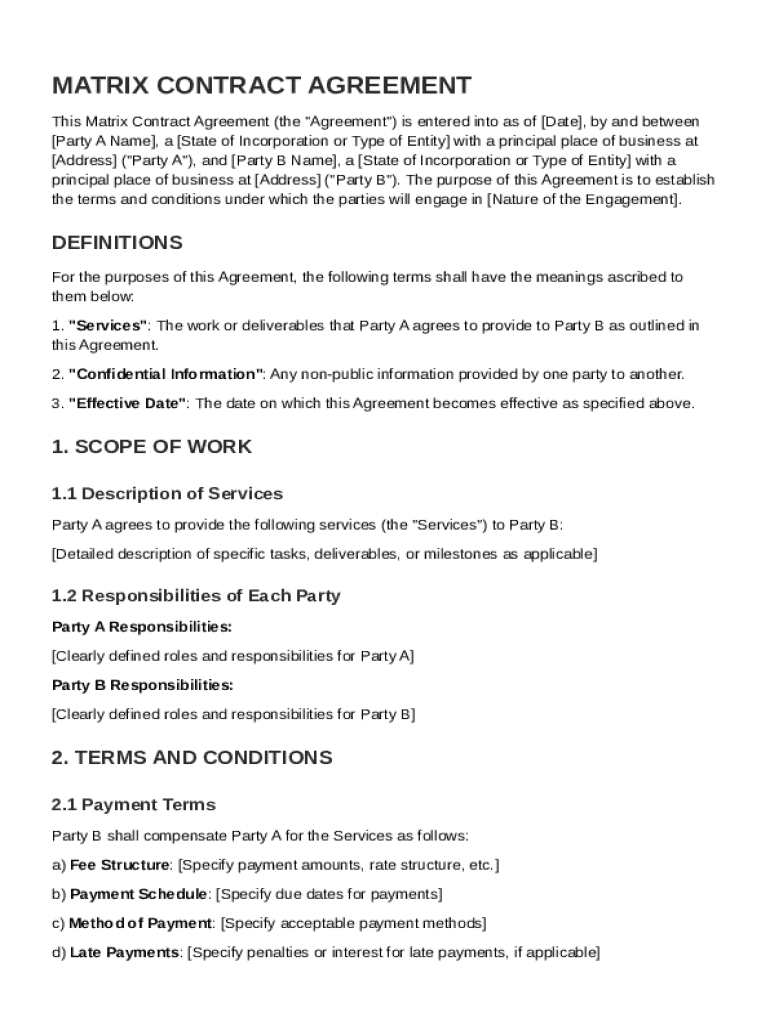
The Matrix Contract Template is a standardized form widely used to formalize agreements between two or more parties for the delivery of specific services. This template provides a clear framework outlining critical aspects such as the scope of work, timing, and financial arrangements, thereby ensuring mutual understanding and agreement. Key elements typically include service definitions, detailed responsibilities of each party, terms of payment, guidelines on confidentiality, and protocols for dispute resolution.
Importance of a Defined Framework
- Clarity: The template ensures that both parties have a clear understanding of their obligations.
- Prevent Miscommunication: By documenting critical agreement terms, the risk of misunderstanding is minimized.
- Legally Binding: Complies with legal standards to protect both parties' interests.
Real-World Applications
For example, a company hiring a marketing agency might use this template to clearly describe the marketing services, timeline, deliverables, and payment schedule, ensuring that all parties involved have aligned expectations and legal protection.
Key Elements of the Matrix Contract Template
The Matrix Contract Template is composed of several essential parts, each contributing to the contract's overall effectiveness and clarity.
Essential Components
- Scope of Work: Defines the specific services or products the contract covers.
- Responsibilities: Details the obligations and duties of each party involved.
- Payment Terms: Outlines how and when payment will be made for services rendered.
- Confidentiality: Protects sensitive information from being disclosed without permission.
- Dispute Resolution: Provides a framework for addressing disagreements, often including mediation and arbitration clauses.
Examples of Contract Usage
- Tech Companies: When outsourcing software development, parties can outline scope, deadlines, and periodic payment benchmarks.
- Healthcare Providers: Used for securing third-party service agreements where precision in service terms is non-negotiable.
How to Use the Matrix Contract Template
Using the Matrix Contract Template effectively requires understanding each section and customizing it to meet the specific needs of your situation.
Step-by-Step Instructions
- Identify Parties: Clearly list all parties involved in the contract.
- Detail the Scope: Define the services or products covered.
- Establish Payment Terms: Include exact amounts, due dates, and payment methods.
- Address Confidentiality: Specify what information is protected under the agreement.
- Outline Dispute Resolution: Include mediation/arbitration clauses to ensure smooth conflict handling.
Practical Example
Consider a small business owner contracting a freelance graphic designer. The template will detail the design project's scope, payment per milestone, and confidentiality clauses concerning proprietary business ideas.
Legal Use of the Matrix Contract Template
Understanding the legal implications of the Matrix Contract Template ensures compliance and enforces rights should disputes arise.
Compliance Standards
- Legally Enforceable: Meets US legal standards for binding agreements.
- Defined Obligations: Clearly articulates each party's commitments.
- Consistent Terms: Legal precision helps avoid vague language that can lead to disputes.
Legal Scenarios
For instance, a legal dispute may arise if one party fails to deliver as promised. The contract acts as a point of reference, outlining agreed-upon terms and possible remedies or recourses through legal channels.
Who Typically Uses the Matrix Contract Template
Different industries and professions can benefit from the Matrix Contract Template due to its adaptability and comprehensive nature.

Common Users
- Service Providers: Consultants and freelancers who need clear outlines for project-based work.
- Businesses: Companies entering partnerships or procurement contracts.
- Legal Professionals: Often guide clients on creating or reviewing agreements.

Use Cases
A consultant working with multiple clients can use the template to ensure all projects under consideration are documented, from consulting services to payment details, enhancing professional accountability.
State-Specific Rules for the Matrix Contract Template
Different states may have varying regulations affecting contract specifications and enforceability.
State Variations
- Governing Laws: Contracts must adhere to state laws where obligations are performed.
- State-Specific Dispute Resolution: Legal remedies may differ based on jurisdiction.
Practical Implications
A business operating in California, for example, may include specific clauses related to state employment laws and data protection rights, ensuring that the contract remains compliant with local legislation.
Important Terms Related to the Matrix Contract Template
Understanding the terminology used within the Matrix Contract Template is crucial for successful implementation and comprehension.
Key Terminology
- Indemnification: A contractual obligation of one party to compensate another for specified loss or damage incurred.
- Force Majeure: Provisions that release parties from fulfilling obligations due to exceptional circumstances beyond their control.
- Arbitration Clause: A component that stipulates the resolution of disputes through arbitration rather than court proceedings.
Example Terms in Context
Consider a scenario where an unexpected pandemic affects contract obligations. A force majeure clause can provide necessary relief, allowing parties to renegotiate terms based on the situation.
Examples of Using the Matrix Contract Template
Practical examples illustrate the diverse applications and flexibility of the Matrix Contract Template across various settings.
Business Insights
- Creative Industries: Graphic design agencies can standardize client agreements to ensure clarity on deliverables and deadlines.
- Manufacturing Contracts: Use the template to define terms with suppliers, detailing everything from raw material quantities to delivery schedules.
Case Studies
In a recent case, a digital marketing firm employed the Matrix Contract Template to formalize engagement with clients, leading to reduced misunderstandings and clearer communications regarding service deliverables. This approach enhanced client satisfaction and streamlined operations.