






Key Elements of the Standard Service Contract Template
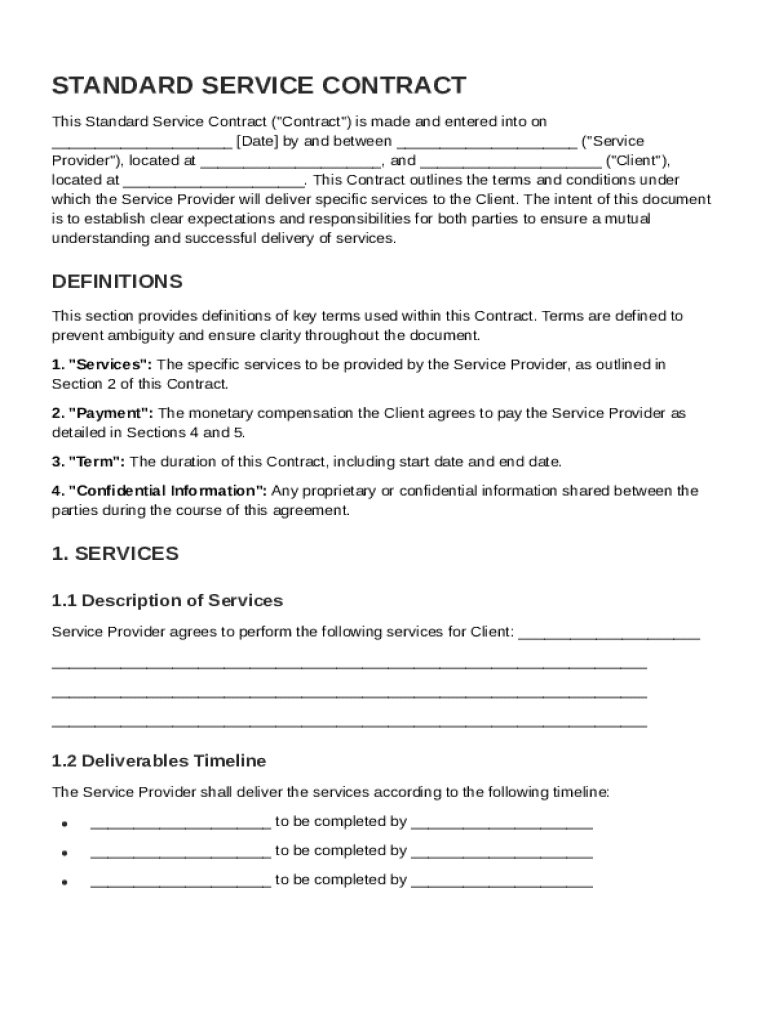
A Standard Service Contract Template is a crucial document for establishing a formal relationship between a service provider and a client. It outlines specific terms and conditions to ensure both parties clearly understand their responsibilities and expectations. Key elements of this template include:
- Definitions: Clearly defined terms such as "service provider," "client," and "services." These definitions eliminate ambiguity by providing precise meanings for the terms used throughout the document.
- Service Descriptions: Detailed explanations of the services to be provided. This section should cover the scope, quality, and objectives of the services to ensure a mutual understanding.
- Payment Terms: Information regarding how and when payments will be made. This includes the total cost, payment method, schedule, and any late fee policies or discounts for early payment.
- Responsibilities: A breakdown of the obligations each party has under the contract, including delivery timelines and service standards that must be adhered to.
- Confidentiality: Clauses that protect sensitive information exchanged during the contract's execution. This ensures that proprietary information remains private.
- Liability Limitations: Provisions that limit the extent to which the service provider is liable for damages. This helps mitigate risks and can define scenarios in which liability applies.
- Dispute Resolution Processes: Step-by-step procedures for resolving disagreements, either through mediation, arbitration, or litigation.
How to Use the Standard Service Contract Template
Understanding how to effectively utilize a Standard Service Contract Template can significantly streamline the process of drafting legally-binding agreements. Follow these steps for optimal usage:
- Initial Review: Begin by thoroughly reviewing the entire template to gain a comprehensive understanding of each section.
- Customization: Tailor the template to fit specific situations by modifying sections to reflect the particular services offered. Ensure all service descriptions and terms align with the details agreed upon verbally or otherwise.
- Legal Review: For added assurance, seek legal advice to verify that all modifications comply with local laws and regulations. This step is crucial in avoiding any legal pitfalls.
- Finalization: Once reviewed and customized, both parties should examine the contract for any last-minute changes. Ensure that both parties are in agreement with all parts of the document.
- Consent and Signature: Have both parties sign the document. The signature confirms their consent and willingness to adhere to the stipulated terms.
- Distribution: Provide copies to all parties involved. Keep a signed copy for record-keeping purposes, accessible for future reference.
Who Typically Uses the Standard Service Contract Template
A wide range of professionals and businesses utilize the Standard Service Contract Template to formalize agreements in various sectors. Here are some typical users:
- Freelancers: Independent workers, including graphic designers, writers, and consultants, use these templates to ensure clarity and secure payment for services rendered.
- Business Service Providers: Companies offering IT support, marketing services, and other professional services utilize these templates to maintain consistency across client interactions.
- Consultants and Advisors: Industry experts providing specialized advice often use these contracts to outline their deliverables and client responsibilities.
- Creative Agencies: Advertising and content agencies employ these contracts to define project scopes and deliverables with their clients.
- Event Planners: Professionals organizing events use these contracts to detail services like event design, coordination, and management.


Important Terms Related to the Standard Service Contract Template
Familiarity with critical terminology ensures a clear understanding and execution of the contract. Some key terms related to the Standard Service Contract Template include:
- Term: The duration of the contract, typically defined with start and end dates.
- Breach of Contract: An act of failing to comply with the terms set forth in the contract, which could lead to termination or legal action.
- Indemnification: An agreement that one party will compensate for any losses or damages incurred by the other party during the execution of the contract.
- Force Majeure: A clause that frees both parties from liability or obligation when an extraordinary event or circumstance beyond their control occurs. This could include natural disasters or acts of war.
- Termination: The conditions under which the contract can be ended before its natural expiration, along with any notice period required.
Legal Use of the Standard Service Contract Template
Utilizing the Standard Service Contract Template legally means ensuring that the document is enforceable and compliant with relevant laws. Considerations include:
- Jurisdiction: Identify the specific legal jurisdiction under which the contract will be governed. This determines which state or federal laws apply.
- Contractual Capacity: Ensure that all parties involved are legally allowed to enter into a contract, meaning they are of legal age and have sound mental capacity.
- Consent: Confirm that the agreement is entered into voluntarily, without coercion or undue influence, and that all parties understand the document's implications.
- Legality of Purpose: Ensure the contract's purpose is legal and does not violate public policy or law.
- Compliance with Electronic Signatures: In digital settings, ensure that electronic signatures are collected according to the ESIGN Act, making them legally binding.
Steps to Complete the Standard Service Contract Template
Successfully completing a Standard Service Contract Template involves a sequence of steps to ensure the document is thorough and appropriate for all parties:
- Gather Information: Start by collecting all necessary details, including personal information, service descriptions, and terms agreed upon during negotiations.
- Draft Preliminary Terms: Insert preliminary information into the template, focusing on key areas like service description, payment terms, and timelines.
- Collaborate and Review: Share the draft with the other party for review and feedback. Make necessary revisions based on their input to resolve any discrepancies.
- Acquire Signatures: Once all parties have agreed to the terms, acquire signatures to indicate mutual consent.
- Implement the Agreement: Begin service delivery in accordance with the laid-out terms.
- Monitor Compliance: Continuously monitor adherence to the contract by both parties throughout its duration to ensure obligations are met.
Who Issues the Standard Service Contract Template
Standard Service Contract Templates are generally developed and distributed by:
- Legal Professionals: Attorneys and law firms who specialize in creating legally sound documents may issue customized templates for their clients.
- Online Legal Services: Platforms that offer a repository of legal templates cater to a wide range of clientele.
- Industry Associations: Professional organizations may provide templates tailored to specific industries, ensuring that members are equipped with compliant documents.
- In-House Legal Teams: Larger companies may have dedicated legal teams creating and issuing internal standard service contracts for use with clients and suppliers.
State-Specific Rules for the Standard Service Contract Template
Compliance with state-specific regulations is vital to the validity of a Standard Service Contract Template. Examples of considerations include:
- State Law Compliance: Every state may have special requirements regarding contractual language, dispute resolution procedures, and enforceability.
- Signature Requirements: Some states have specific regulations about witnesses or notarization of contracts.
- Securities or Licensure: Industry-specific requirements may vary, impacting the contractual obligations, especially in sectors like finance or health care.
- Consumer Protection Laws: Specific rules protecting consumer rights may require disclosure or additional clauses within the contract.
Understanding these elements helps in adapting the template to meet local requirements, ensuring the effectiveness and legality of the service contract across different jurisdictions.