Definition & Meaning
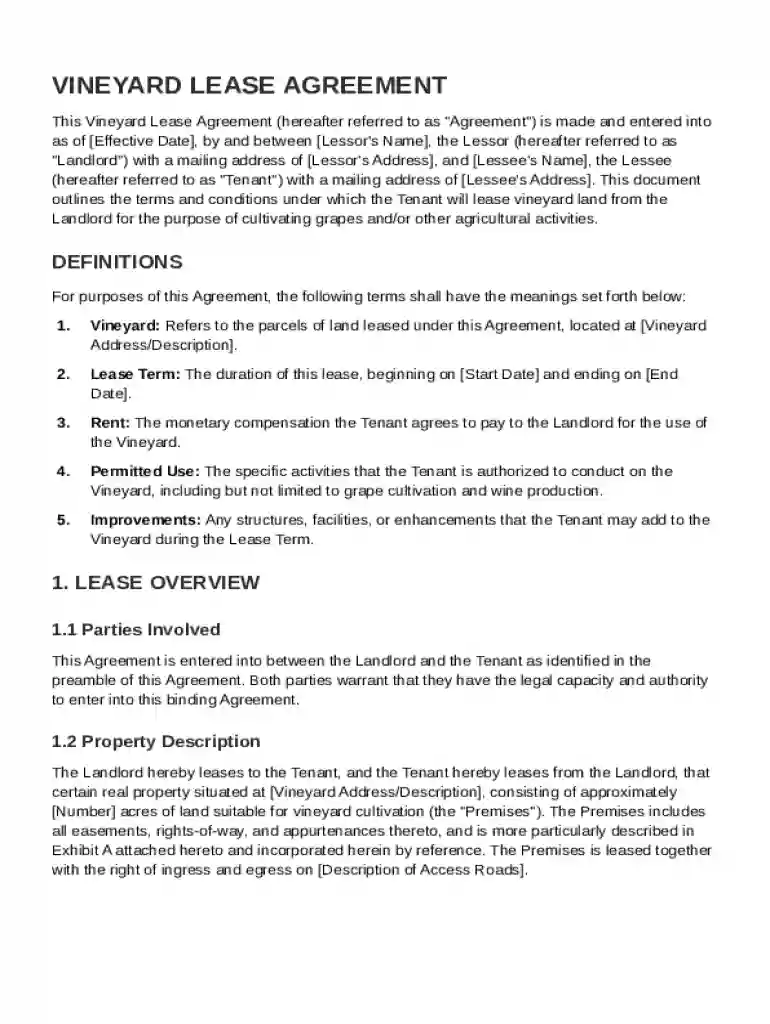
A Vineyard Lease Agreement Template is a legal document designed for use when leasing land specifically for grape cultivation and related agricultural activities. This template outlines the terms and conditions under which the Landlord, often a property owner, allows a Tenant, typically a cultivator or winemaker, to use the land for vineyard purposes. It clarifies the responsibilities and expectations of both parties, such as the duration of the lease, payment structures, and permissible uses of the property. The agreement is crucial for establishing a formal legal relationship, protecting both the Landlord and the Tenant by defining clear, agreed-upon terms.
Key Elements of the Vineyard Lease Agreement Template
The Vineyard Lease Agreement Template contains several critical components to ensure comprehensive coverage of all relevant aspects:
- Lease Duration: Defines the time frame the lease will cover, whether it's annual, seasonal, or long-term, and includes provisions for renewals or extensions.
- Rent Payment Structure: Details the rent amount, payment schedule, and acceptable payment methods (e.g., monthly, quarterly).
- Permitted Uses: Specifies activities allowed on the property, ensuring the Tenant uses the land according to agreed-upon purposes such as grape growing.
- Maintenance Responsibilities: Divides the upkeep obligations between Tenant and Landlord, covering landscaping, irrigation, and structure maintenance.
- Insurance Requirements: Mandates the type and amount of insurance the Tenant must maintain to protect against potential liabilities or property damage.
- Dispute Resolution Procedures: Provides methods for resolving disagreements, often including mediation or arbitration, to avoid costly litigation.
Important Terms Related to the Template
To effectively utilize the Vineyard Lease Agreement Template, understanding key legal and agricultural terms is crucial:
- Landlord: The property owner who grants the lease.
- Tenant: The individual or entity leasing the land for vineyard purposes.
- Improvements: Enhancements or alterations made to the property, which might include planting vines, installing trellises, or building facilities.
- Covenants: Binding promises made in the lease regarding what each party must do or refrain from doing.
By familiarizing themselves with these terms, users can better navigate and customize the template.
Steps to Complete the Vineyard Lease Agreement Template
Completing this agreement involves specific steps to ensure it's legally binding and comprehensive:
- Identify Parties: Clearly state the full legal names of both Landlord and Tenant.
- Define Property: Use detailed descriptions or legal property descriptions, including any maps or surveys if available.
- Agree on Rent and Terms: Determine the amount, frequency, and method of payments.
- List Allowed Uses: Specify activities the Tenant can perform on the property.
- Detail Maintenance Duties: Outline who is responsible for various upkeep tasks.
- Insurance Specifications: Include insurance details required by the Tenant.
- Dispute Resolution: Explain how disputes will be handled, whether through arbitration, mediation, or another method.
- Finalize with Signatures: Both parties must sign the agreement, with witnesses or notaries when necessary.
Each step is essential to ensure the document's enforceability and clarity.
Who Typically Uses the Vineyard Lease Agreement Template
This template is predominantly used by:
- Landowners: Individuals or companies owning land suitable for vineyard use who wish to lease it to grape growers.
- Winemakers: Producers looking for land to cultivate grapes directly linked to their wine production.
- Agricultural Businesses: Entities engaging in large-scale grape production as part of their business ventures.
These users benefit from clear guidelines and protections provided by the agreement.

Legal Use of the Vineyard Lease Agreement Template
The legal framework supporting the Vineyard Lease Agreement Template ensures that it's a valid contractual document:
- Compliance with State Laws: Adapt the template to reflect specific state requirements or restrictions.
- Binding Terms: Ensure both parties honor the agreement, with legal recourse for breaches.
- Amendment Procedures: Include processes for legally altering the agreement post-signature.
Users should ensure the template aligns with applicable legal standards to protect their interests.
State-Specific Rules for the Vineyard Lease Agreement Template
Regulations can differ significantly across states regarding vineyard leases:
- Environmental Protections: States might enforce specific environmental guidelines that affect how the land is used and maintained.
- Zoning Laws: Local zoning regulations may limit or stipulate particular uses for the land.
- Lease Registration Requirements: Some states require registration of certain leases for legal recognition.
Understanding these state-specific nuances is essential for compliance.
Examples of Using the Vineyard Lease Agreement Template
Real-world scenarios highlight the template’s practical applications:
- Small-Scale Winemaker: A budding winemaker leases land in Napa to start vine cultivation, using the template to set clear terms with the landowner.
- Corporate Vineyard Expansion: A large winery leases additional acreage in Oregon, relying on the template to formalize terms for expanding operations.
These examples demonstrate the template’s versatility across different vineyard endeavors.