Definition and Purpose of the New Lease Agreement Template
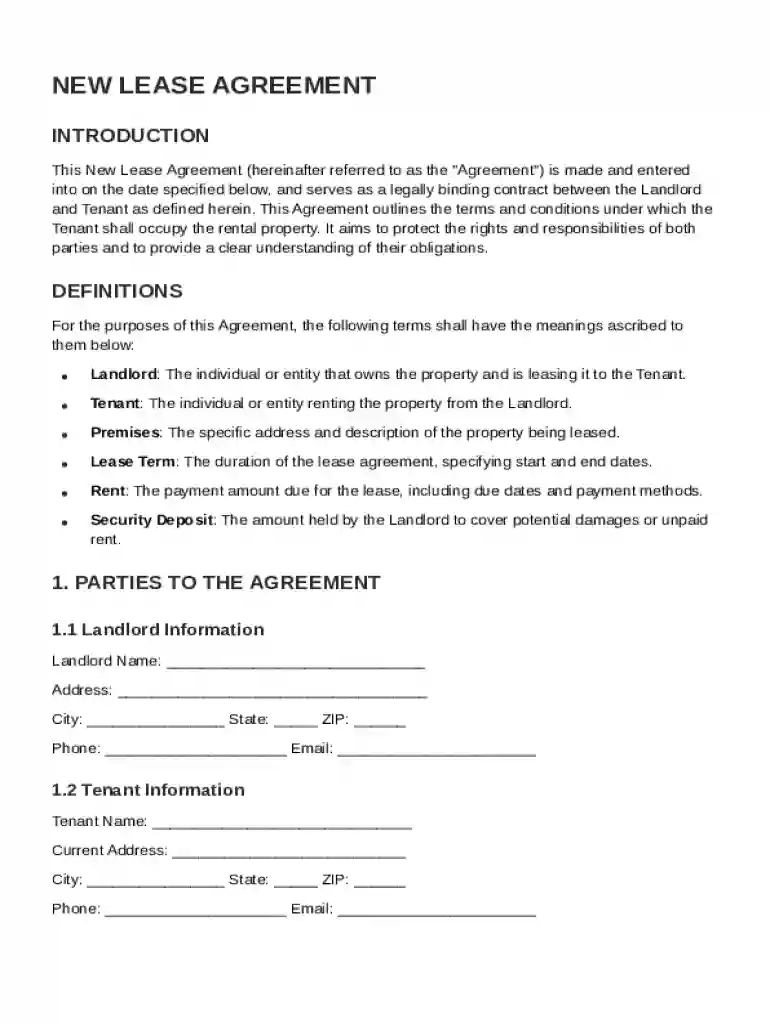
The New Lease Agreement Template is a foundational document serving as a legally binding contract between a landlord and tenant. It defines the legal framework outlining the terms and conditions under which a tenant rents a residential or commercial property from a landlord. This form aims to clearly specify expectations, responsibilities, and legal rights of both parties to minimize potential disputes. Such agreements typically include standard sections on rent amount, payment schedule, lease duration, security deposit terms, property maintenance expectations, and procedures for amendments or termination.
Key Elements Included
- Parties Involved: Clearly identifies the landlord and tenant, with contact details.
- Property Description: Precise details about the rental property, including address and any additional facilities.
- Lease Term: Defined duration of the lease, whether month-to-month or fixed-term.
- Rent Details: Amount, due date, and acceptable payment methods.
- Security Deposit: Specifics on the amount, use, and refunding process of the deposit.
- Maintenance Responsibilities: Description of both parties' duties regarding property upkeep.
- Termination Conditions: Criteria and procedures for ending the lease early or at its natural expiration.
How to Use the New Lease Agreement Template
Utilizing the New Lease Agreement Template involves several strategic steps to ensure effectiveness and legal compliance. By incorporating a methodical approach, users can capitalize on its full range of benefits.
- Review the Template: Begin with a thorough examination to ensure it aligns with specific needs and legal requirements.
- Customize: Adjust clauses to fit the particular situation, including rent amount, lease duration, and any additional terms.
- Consult Legal Advice: Consider having a legal professional review customized agreements to ensure compliance with state regulations.
- Complete with Parties: Both landlord and tenant should complete their respective sections and initial each page after reviewing.
- Secure Signatures: Ensure all parties sign the final document to affirm agreement and binding terms.
- Distribute Copies: Provide signed copies to all parties for their records, ensuring full transparency.
Important Considerations
- State-Specific Differences: Regulations may vary significantly by state; accounting for these is crucial in customization.
- Legal Advice: Consulting with an attorney can prevent costly oversights.
- Document Updates: Regularly review and update the terms to adapt to evolving legal and situational contexts.
Key Features of the New Lease Agreement Template
The New Lease Agreement Template is designed to be comprehensive and user-friendly, offering several core features conducive to effective tenancy management.
Fillable Sections
- Customizable Fields: Easily adapt the template to specify individual requirements.
- Required Fields: Mandatory sections ensure all essential information is captured.
- Automated Calculations: Built-in formulas can calculate financial aspects like prorated rent.
Accessibility and Compatibility
- Formats: Available in multiple file formats such as PDF, DOC, and more to ensure wide accessibility.
- Integration with Document Systems: Compatible with document management platforms like DocHub, facilitating easier editing and sharing.
- Security Features: Options for password protection and digital encryption to safeguard sensitive information.
Legal Use of the New Lease Agreement Template
A properly executed lease agreement safeguards both landlords and tenants by enforcing legal requirements around renting.
Common Legal Inclusions
- Governing Law: Specifies which jurisdiction's laws apply to the lease.
- Compliance with Property Codes: Ensures the lease adheres to local housing regulations.
- Legally Binding Signatures: When correctly signed, the template becomes legally enforceable, protecting all parties' rights.
Potential Legal Disputes
- Breach of Contract: Legal guidance is recommended if either party fails to meet their obligations.
- Lease Modification: Amendments require mutual consent and proper documentation to remain valid.
Steps to Complete the New Lease Agreement Template
Completing the New Lease Agreement Template requires careful attention to detail to ensure all information is correctly filled out and legally sound.
- Gather Required Information: Collect all necessary details about the property, tenant, and rental terms.
- Input Data into Template: Fill in the collected information carefully.
- Add Specific Clauses: Include any additional agreements or clauses specific to the property or parties involved.
- Review and Revise: Reread the completed template to check for errors or omissions.
- Final Review with Tenant: Discuss and confirm all terms with the tenant before proceeding to sign.
Detailed Completion Criteria
- Accuracy: Ensure all fields are accurate and reflect agreed terms.
- Complete Signatures: Double-check that all signatures are present and correctly dated.
- Clarification of Ambiguities: Resolve any unclear terms or clauses to prevent future disputes.
Variations and Alternatives to the New Lease Agreement Template
In some scenarios, alternative forms or variations may be more suitable than a standard lease agreement.
Potential Alternatives
- Month-to-Month Lease: For tenants or landlords seeking flexibility beyond annual commitments.
- Commercial Lease: A more detailed and specific form designed for leasing business properties.
- Roommate Agreement: For those sharing rental spaces and needing to establish separate responsibilities and terms.
Scenarios Necessitating Alternatives
- Short-Term Rentals: Situations where a shorter duration or different terms than standard leases apply.
- Corporate Leases: Requires forms that can adapt to commercial tenant needs and properties.
By considering these detailed variations and processes, landlords and tenants can ensure a mutually beneficial and legally sound leasing arrangement.