




Definition and Meaning
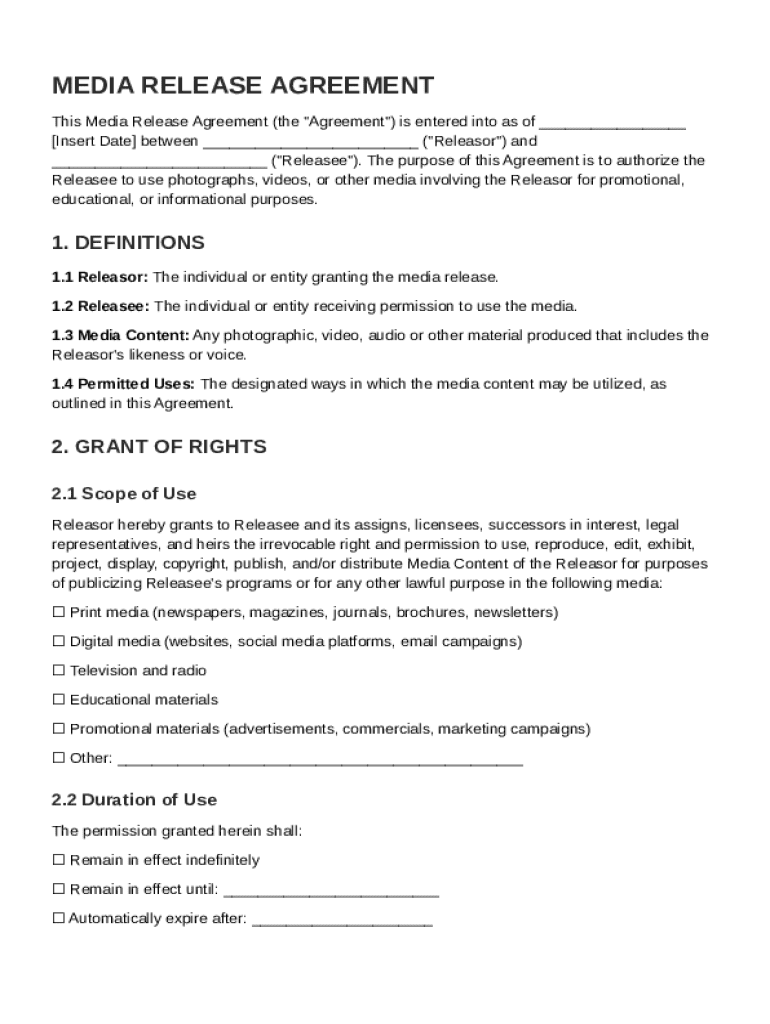
A Media Release Agreement Template is a legal document that formally gives a party, known as the Releasee, the right to use photographs, videos, or other media involving another party, called the Releasor, for purposes such as promotional, educational, or informational activities. The agreement ensures that the Releasor is fully aware of and agrees to the terms under which the media content will be used. This includes understanding the extent of rights granted, any compensation involved, liability matters, and how the media will be managed by the Releasee. The document also defines any limitations on usage and details ownership rights, thereby protecting both parties legally in case of disputes.
Key Elements of the Media Release Agreement Template
The Media Release Agreement Template encompasses several critical components that articulate the scope and limitations of media usage.
- Definitions and Roles: Clarifies the roles of Releasor and Releasee, including a detailed explanation of the media covered by the agreement.
- Rights Granted: Specifies the rights that the Releasor extends to the Releasee, such as the scope of media use and any constraints on the medium or audience.
- Ownership and Retention: Details the ownership rights, addressing whether the Releasor retains ownership or if these rights are part of the transfer to the Releasee.
- Compensation Terms: Outlines any monetary or non-monetary compensation the Releasor will receive in exchange for granting media rights.
- Liability and Indemnification: Includes provisions that address responsibilities and indemnification agreements to protect both parties from potential legal issues.
- Termination Conditions: Specifies how and when the agreement can be terminated by either party.
How to Use the Media Release Agreement Template
Utilizing the Media Release Agreement Template effectively requires an understanding of its structure and application.
- Review the Template: Familiarize yourself with each section of the template to ensure it aligns with your legal needs and objectives.
- Fill Out Party Details: Include accurate information for both Releasor and Releasee, including contact information and any relevant organizational details.
- Define Media Types: Clearly list all media types covered by the agreement to prevent any ambiguities or misunderstandings.
- Clarify Rights and Compensation: Ensure the rights granted and compensations agreed upon are well-defined and accepted by both parties.
- Seek Legal Advice: For complex arrangements, legal consultation is advisable to ensure comprehensive coverage and compliance with relevant laws.
Steps to Complete the Media Release Agreement Template
Completing a Media Release Agreement Template follows a structured process to ensure legal soundness and mutual understanding.
- Identify Parties Involved: Clearly state the names and details of the Releasor and Releasee.
- Detail the Media Content: Provide a comprehensive description of the media content involved.
- Specify Purpose and Usage: Outline the intended purpose of media use, including any limitations or conditions.
- Agree on Compensation: Both parties should mutually agree and document any compensation or benefits tied to the agreement.
- Include Signatures: Capture the signatures of both parties to validate the agreement legally.
Legal Use of the Media Release Agreement Template
Compliance with legal standards is essential when drafting and utilizing a Media Release Agreement Template.
- Adheres to U.S. Laws: Ensure the agreement respects federal and state laws applicable to media use and intellectual property rights.
- Binding Nature: The agreement functions as a legally binding contract, ensuring enforceability in legal proceedings if disputes arise.
- Protection from Infringement: The agreement guards against unauthorized uses that could infringe on the Releasor’s rights.
Who Typically Uses the Media Release Agreement Template
Various individuals and organizations benefit from using a Media Release Agreement Template.
- Public Relations and Marketing Firms: Commonly use these agreements to secure rights to media content for campaigns.
- Educational Institutions: Often require agreements to use student images or works in promotional materials.
- Media Production Companies: Utilize these agreements to secure the necessary permissions for using contributors' media in projects.


State-Specific Rules for the Media Release Agreement Template
The application and enforcement of Media Release Agreements can vary by state law, often influencing certain provisions.
- Variation in State Laws: Each state may have specific regulations regarding privacy, intellectual property, and contract enforcement.
- Specific Clauses: Ensure that the agreement reflects any state-mandated clauses or requirements to maintain legal validity.
- Legal Consultation: Engaging with a local attorney can ensure compliance with state-specific requirements.
Examples of Using the Media Release Agreement Template
Real-world scenarios where a Media Release Agreement Template is utilized can illustrate its practical applications.
- Promotional Campaign: A corporation might use a media release agreement to legally use employee or customer images in an advertising campaign.
- Documentary Creation: Filmmakers can use these agreements to feature people's likenesses and narratives in documentaries.
- Event Coverage: Media agencies can draft these agreements to cover events, ensuring permissions for filming and broadcasting are in place.