Definition and Meaning
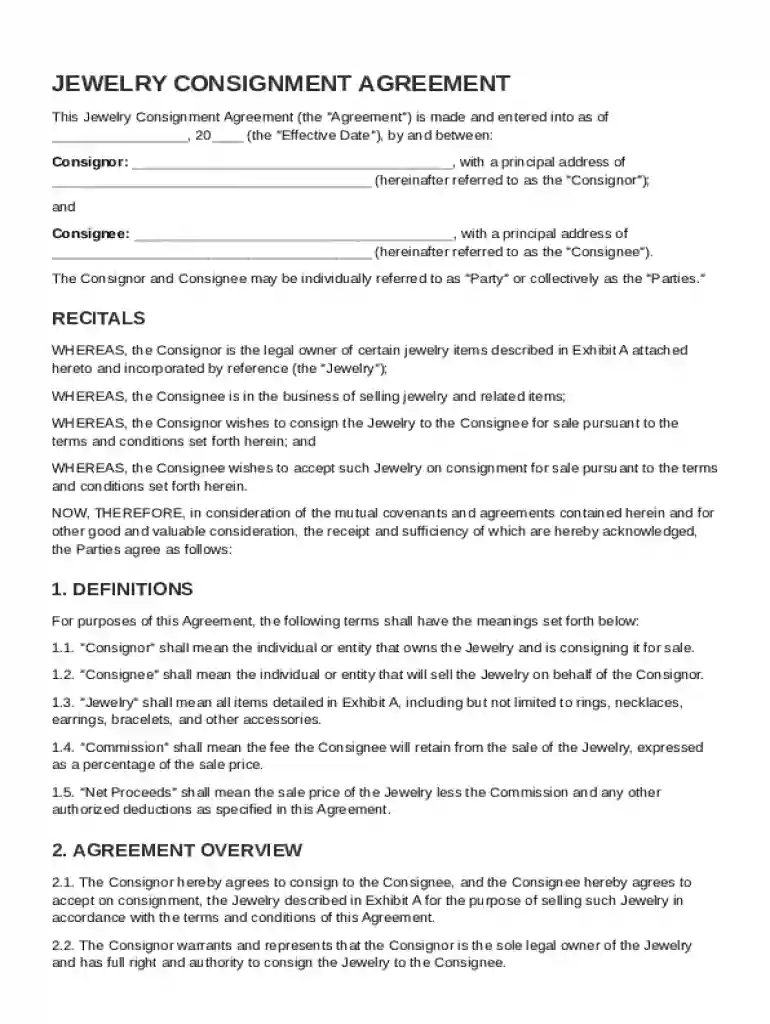
The Jewelry Consignment Contract Template is a legal document that outlines the agreement between a consignor, who is the owner of the jewelry items, and a consignee, who is responsible for selling the items. This contract specifies the terms of the consignment arrangement, providing detailed responsibilities for both parties. It covers definitions of the terms used, the sales terms, liability issues, insurance requirements, marketing strategies, reporting obligations, and procedures for resolving disputes. Its purpose is to ensure that the consignee sells the jewelry on behalf of the consignor while appropriately handling and insuring the consigned items.
Key Elements of the Jewelry Consignment Contract Template
The template includes several critical components that ensure a comprehensive agreement:
- Consignment Terms: Clearly defines the duration of the consignment, conditions for sale, and how the proceeds will be split between the consignor and the consignee.
- Responsibilities: Details the obligations of each party, such as maintenance and display responsibilities for the consignee and delivery obligations for the consignor.
- Commission Structure: Outlines the percentage of sales that will be retained by the consignee as commission.
- Insurance Requirements: Specifies insurance obligations to protect the consigned items from damage or loss while in the consignee's possession.
- Dispute Resolution: Provides mechanisms for resolving disagreements, including mediation or arbitration options.
How to Use the Jewelry Consignment Contract Template
Using the Jewelry Consignment Contract Template requires several steps to ensure accuracy and completeness:
- Download and Open the Template: Obtain the form from a trusted document management platform like DocHub.
- Fill in the Details: Ensure that all relevant information, such as names, addresses, item descriptions, and consignment terms, are accurately input.
- Customize Terms as Needed: Adjust any specific terms that are unique to the consignment relationship.
- Review for Completeness and Accuracy: Verify that all sections are thoroughly completed, and that any legal obligations are clearly articulated.
- Final Review with Legal Counsel: Consider confirmation by legal professionals to validate the contract’s enforceability.
Who Typically Uses the Jewelry Consignment Contract Template
Various individuals and businesses utilize the Jewelry Consignment Contract Template to formalize agreements:

- Individual Sellers: Private owners of jewelry who wish to sell items without managing the sales directly.
- Consignment Shops: Retailers specializing in selling consigned goods and require a formal agreement.
- Dealers and Jewelers: Professional jewelers who take items on consignment for sale within their stores.
- Auction Houses: Companies that include jewelry in auctioned lots may use a consignment agreement to define terms with the consignor.
Steps to Complete the Jewelry Consignment Contract Template
Completing the template involves methodical attention to detail:
- Identify Parties: Confirm and document the full names and contact details of both the consignor and consignee.
- Describe Consigned Items: Provide detailed descriptions of the jewelry pieces, including estimated values and any appraisals.
- Specify Sale Terms: Include consignment period, price settings, and commission rates.
- Agree on Insurance Provisions: Define insurance responsibilities during the consignment period.
- Sign and Date: Secure signatures from both parties, confirming mutual understanding and agreement.
Legal Use of the Jewelry Consignment Contract Template
To ensure the legality of the jewelry consignment contract:
- Compliance with State Laws: Verify alignment with state-specific regulations that may affect contract terms.
- Legally Binding Signatures: Confirm all parties sign the agreement in a manner that ensures enforceability.
- Clarity and Comprehensiveness: Use precise language to prevent ambiguities that could invalidate the contract.
Important Terms Related to Jewelry Consignment Contract Template
Understanding critical terms within the template is vital:
- Consignor: The individual or entity that owns the jewelry items and is providing them for consignment.
- Consignee: The person or business entity responsible for selling the consigned jewelry.
- Commission: The agreed fee retained by the consignee as payment for successful sales.
- Insurance Coverage: The protection against potential loss or damage to the jewelry while in consignment.
Business Types That Benefit Most from Jewelry Consignment Contract Template
The template serves several business models effectively:
- Boutique Jewelers: Smaller jewelry retailers focused on unique or artisan pieces often use consignment to expand offerings.
- Online Marketplaces: Digital platforms selling luxury goods may incorporate consignment agreements to manage inventory.
- Antique Dealers: Vendors dealing in vintage or rare jewelry pieces frequently use consignment methods to facilitate sales.
State-Specific Rules for the Jewelry Consignment Contract Template
Depending on jurisdiction, there may be specific legal considerations:
- Different Commission Regulations: States may have unique rules regarding commission structures or maximum limits.
- Consumer Protection Laws: Varying levels of consumer protection around disclosure and return policies.
- Insurance Obligations: Some states might require specific insurance provisions for consigned goods.
Software Compatibility with Jewelry Consignment Contract Template
To digitally manage the template:
- Platforms: Use platforms like DocHub that support editing and management of documents across multiple file types, ensuring ease of use and broad compatibility.
- Google Workspace Integration: Seamless compatibility with Google Drive for quick access and editing.
- Mobile Accessibility: Platforms offering mobile functionality support completion and management on the go.