






Definition and Purpose of a Commercial Building Lease Agreement Template
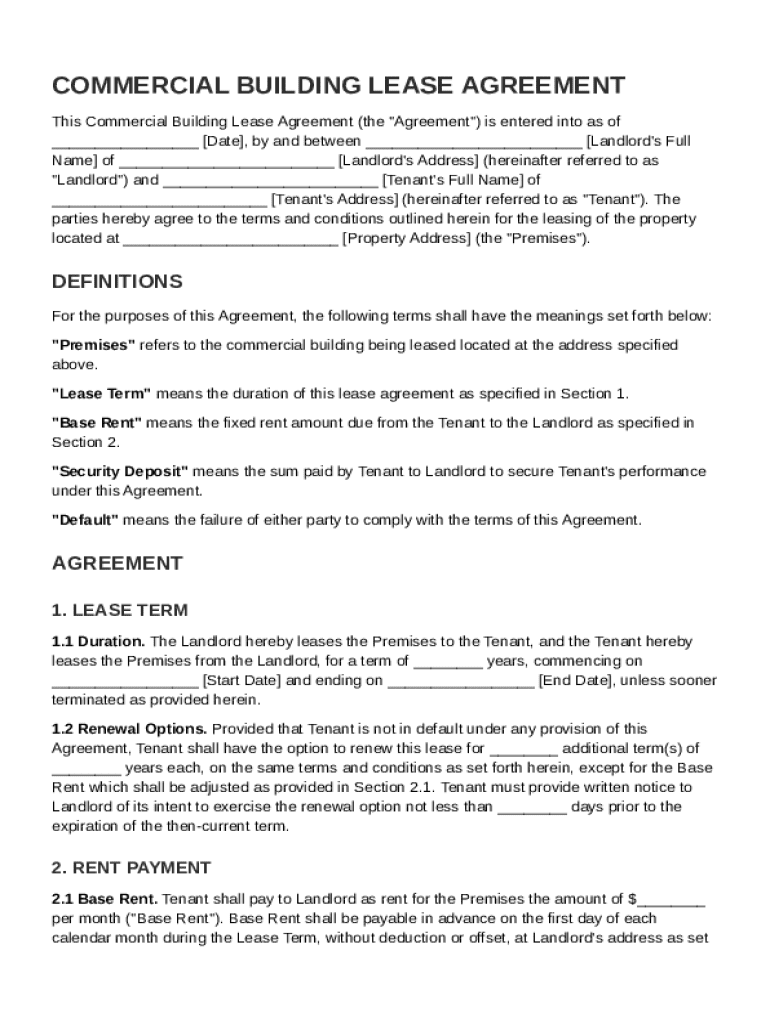
A Commercial Building Lease Agreement Template serves as a structured document outlining the terms and conditions for leasing a commercial property. These are pre-formatted, customizable forms that provide a legal framework, simplifying the process of crafting a new lease agreement. The template typically includes essential provisions such as definitions of involved parties, lease terms, payment obligations, and permissible uses of the property. By utilizing this template, both landlords and tenants can ensure clear communication and mutual understanding of their rights and responsibilities.
Key Components of the Template
- Parties Involved: Identifies the landlord and tenant by name and contact information.
- Property Description: Details the specific address and condition of the leased property.
- Lease Term: Defines the duration of the lease, including start and end dates.
- Rent and Payment Details: Specifies the rent amount, due dates, and any penalties for late payments.
- Security Deposit: Clarifies the amount, purpose, and conditions for refunding the security deposit.
Steps to Complete a Commercial Building Lease Agreement Template
When preparing a Commercial Building Lease Agreement using a template, it is crucial to follow a step-by-step approach to ensure all necessary details are accurately captured. Here is a guide to completing the template effectively.
- Fill in Essential Details: Begin by providing the names and contact information of both the landlord and tenant.
- Describe the Premises: Enter the full address and description of the commercial space being leased.
- Specify Lease Term: Record the lease’s commencement and termination dates, along with any renewal options.
- Outline Rental Terms: Include the rental amount, due date, and acceptable payment methods or locations.
- Define Use of Premises: Mention the approved uses of the property, ensuring they align with local zoning laws.
- Include Maintenance and Repairs Agreement: Detail which party is responsible for specific maintenance tasks or repairs.
- Input Security Deposit Details: Specify the amount, conditions for use, and return policies for the security deposit.
- Address Liability and Insurance: Include insurance requirements and clarify liability coverage for both parties.
Why You Should Use a Commercial Building Lease Agreement Template
Utilizing a Commercial Building Lease Agreement Template offers numerous advantages, ensuring that all necessary lease components are comprehensively addressed. This not only minimizes potential legal disputes but also simplifies the process of drafting a lease agreement.
- Efficiency: Saves time by providing a pre-designed structure that simply requires customization, avoiding a lengthy drafting process from scratch.
- Legal Protection: Ensures that all critical legal aspects and requirements are covered, safeguarding both parties’ interests.
- Clarity: Offers clear terms and expectations, reducing the likelihood of misunderstandings or disputes.
- Consistency: Provides a standardized form that can be reused for multiple properties or tenants, maintaining consistency in lease management.
- Flexibility: Allows for modifications to suit specific needs or preferences of each lease agreement.
Key Elements of the Commercial Building Lease Agreement Template
A well-structured Commercial Building Lease Agreement Template includes various pivotal elements that ensure comprehensive coverage of all aspects of the lease. These elements define the tenants' and landlords' rights and responsibilities while providing legal clarity.
Lease Specifics
- Length and Renewal Options: Establishes the duration of the lease and outlines conditions or processes for renewal.
- Rent Adjustment Clauses: Covers periodic rent reviews or increases.
Legal Provisions
- Default and Termination Conditions: Defines what constitutes lease violation and the resulting consequences.
- Subleasing Restrictions: Specifies conditions under which subleasing is allowed.
Obligatory Matters
- Maintenance and Repairs: Clarifies responsibilities for property upkeeps, such as roofing or plumbing repairs.
- Compliance with Laws: Ensures both parties agree to comply with applicable zoning, health, and safety regulations.
State-Specific Rules for Commercial Building Lease Agreements
Different U.S. states have specific laws influencing the terms and conditions included within a Commercial Building Lease Agreement Template. Familiarizing yourself with these state-specific regulations is crucial to ensure legal compliance.
Variations by State
- Security Deposit Limits: Some states cap the amount a landlord can require as a security deposit.
- Notice Requirements: The amount of notice required for lease termination or rent increase can vary by state.
- Habitability Standards: States may have differing requirements for property conditions deemed habitable.
Who Typically Uses a Commercial Building Lease Agreement Template
Commercial landlords and tenants frequently employ a Commercial Building Lease Agreement Template to formalize the leasing terms and conditions for a business space. These templates are vital tools for landlords or property managers who rent out various types of commercial properties.
Common Users
- Property Owners or Managers: Manage multiple properties and seek a systematic approach to administer leases.
- Corporations and Small Business Owners: Secure office space, storefronts, or warehouses to conduct their business operations.
- Real Estate Legal Professionals: Use templates to streamline the creation of legally binding agreements on behalf of clients.


Examples of Using a Commercial Building Lease Agreement Template
Deploying a Commercial Building Lease Agreement Template in varied scenarios can address specific property leasing needs effectively. These examples showcase the template's adaptability across different leasing circumstances.
Practical Scenarios
- Retail Space Leasing: A landlord leases a retail space to a tenant for operating a clothing store, specifying use restrictions to ensure compatibility with the property location.
- Office Space: A company leases multiple office suites in a shared building, incorporating options for renewal and clauses for shared facility use.
- Warehouse Lease: A logistic firm enters a warehouse lease, where clear terms on maintenance responsibilities are specified.
Legal Use of the Commercial Building Lease Agreement Template
Ensuring the legal enforceability of lease agreements is critical in any business transaction. Using a Commercial Building Lease Agreement Template can greatly assist in maintaining legal integrity by accommodating associated regulatory requirements.
Compliance Measures
- Ensure Accurate Completion: All sections of the agreement must be properly filled and parties must willingly agree to the terms.
- Witness or Notarization: Certain jurisdictions may require notarization or witnesses for validity.
- Adherence to Local Laws: The template must align with state and local laws concerning property leasing to be enforceable.
Important Terms Related to the Commercial Building Lease Agreement Template
Understanding the terminology used within a Commercial Building Lease Agreement Template is essential for both landlords and tenants. Clarifying these terms ensures that both parties have accurate expectations and full comprehension of the agreement.
Essential Terms
- Base Rent: The agreed-upon basic rental amount, excluding any additional charges or fees.
- Common Area Maintenance (CAM): Fees for maintaining shared facilities, such as lobbies and parking areas.
- Force Majeure: Clause that releases parties from obligations due to unforeseen events beyond their control.