
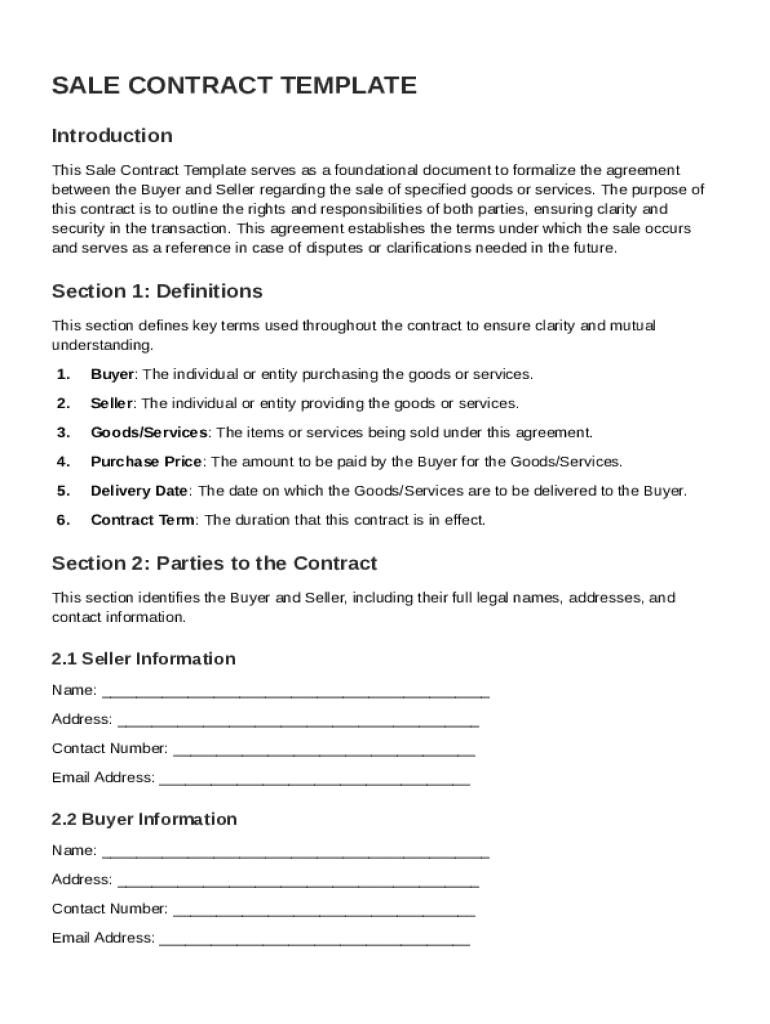







Definition & Meaning
The Sale Contract Template is a structured document utilized to formalize an agreement between a buyer and a seller. It specifies critical areas of the agreement to ensure clear communication and understanding between all parties involved. This document outlines the sale of goods or services, detailing important aspects such as the item description, purchase price, payment terms, and delivery conditions. The template serves as both a legal safeguard and a guide to prevent misunderstandings, securing the interests of both parties by clearly establishing each party's obligations and rights during the transaction process. Examples include contracts for selling vehicles, real estate, or personal property, each requiring different levels of detail and specificity based on the nature of the transaction.
Key Elements of the Sale Contract Template
The Sale Contract Template comprises several core elements that define the transaction and its boundaries. Key components include:
- Party Identification: Clearly naming and detailing the buyer and seller ensures that each party is unmistakable and legally responsible for fulfilling contractual obligations.
- Goods/Services Description: Providing detailed descriptions of the goods or services for sale, including specifications, condition, or special features, prevents disputes about quality or expectations.
- Purchase Price and Payment Terms: This section specifies the total purchase price, including any deposits required, payment method, and the schedule or due date for final payment.
- Delivery Terms: This defines how goods will be delivered, setting terms for timing, shipping method, and responsibility for shipping costs.
- Warranties and Representations: Covering any guarantees about the product, such as defects or repairs, or detailing that no warranties apply.
- Termination Rights and Governing Law: This specifies the grounds under which one party may terminate the contract and identifies the jurisdiction whose laws will govern the contract's interpretation.
Steps to Complete the Sale Contract Template
Completing a Sale Contract Template involves several critical steps to ensure that all necessary information is accurately captured and legally compliant:
- Gather Basic Information: Collect all relevant details from both parties, such as full names, addresses, and contact details.
- Describe the Goods/Services: Clearly define what is being bought or sold, including any specific features or conditions.
- Agree on the Purchase Price: Set the final purchase price, inclusive of any taxes, fees, or financing agreements.
- Establish Payment and Delivery Terms: Outline the payment schedule and method, as well as detailed delivery or pick-up terms.
- Draft the Warranties and Termination Clauses: Determine if there are any warranties and establish under what conditions the contract can be terminated—including specifying applicable legal jurisdiction.
- Review and Finalize the Document: Each party should review the terms to ensure mutual understanding and legal compliance before signing.
Legal Use of the Sale Contract Template
The Sale Contract Template is a legally binding agreement, ensuring that each party's obligations are clearly established and can be enforced by law if necessary. Its enforceability arises from the formalization of the agreement, providing a basis for legal recourse in the event of a dispute. For instance, a seller can seek legal intervention if a buyer fails to meet payment obligations as agreed in the contract, and vice versa. It is essential to use clear and unambiguous language to prevent misunderstandings and to conform with state and federal laws to maintain its legal validity.
Important Terms Related to Sale Contract Template
Understanding specific terminology is crucial in the context of Sale Contracts. Important terms include:
- Consideration: A core component of any contract representing something of value exchanged between parties, typically financial.
- Force Majeure: A clause that releases parties from liability or obligation when an extraordinary event beyond their control prevents them from fulfilling the contract.
- Breach of Contract: Occurs when one party fails to perform any agreed-upon terms, leading to potential legal implications.
- Indemnification: Agreement to compensate for any loss or damage that another party suffers, protecting one party against claims.
Why Use a Sale Contract Template
Utilizing a Sale Contract Template offers numerous benefits, such as clarity, legal protection, and efficiency. It minimizes the risk of legal disputes by ensuring every aspect of the transaction is documented and agreed upon in advance. The template acts as a comprehensive tool that anticipates potential issues and addresses them with predefined responses, such as default payment scenarios or unacceptable behavior by either party. It is beneficial particularly for high-stake transactions, like selling expensive assets or businesses, where financial and legal risks are considerable.
Who Typically Uses the Sale Contract Template
This template is primarily utilized by individuals and businesses engaging in the purchase and sale of goods and services. Typical users include real estate agents, car dealerships, online sellers, freelancers selling services, or corporations engaging in large-volume sales. Each user employs the template to streamline their transaction process, regardless of their industry, covering their legal bases, and ensuring smooth communications. Business professionals often standardize these contracts for repeat transactions, embedding industry-best practices.

State-Specific Rules for the Sale Contract Template
Certain sections of a Sale Contract Template may need to be tailored to adhere to specific state's legal requirements. Different states have varying regulations that could affect elements like consumer guarantees, implied warranties, and termination terms. For example, California has stringent consumer protection laws, requiring sellers to provide specific disclosures, whereas New York might have different privacy and data handling regulations affecting contracts. It is critical to review state laws applicable to specific transactions and ensure your templates are adapted accordingly to ensure compliance and legal standing.




