







Definition and Meaning
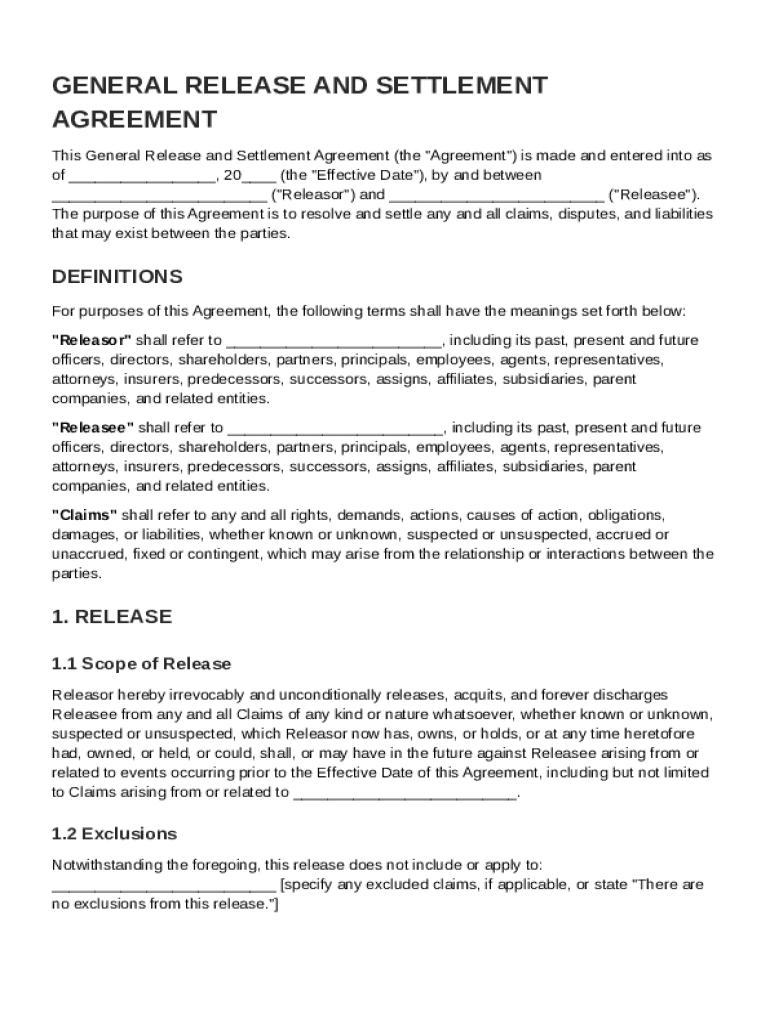
The General Release and Settlement Agreement Template is a contractual document that formalizes the resolution of disputes between two parties, referred to as the Releasor and the Releasee. This template is important for legally ending claims or liabilities between these parties without admitting fault. These agreements typically include elements such as the defined parties involved, the scope of released claims, settlement terms, and any confidentiality obligations. They ensure that both parties have a mutual understanding, preventing future legal disputes related to the issues specified.
Key Aspects of the Definition
- Parties Involved: Clearly identifies the Releasor, who relinquishes potential claims, and the Releasee, who is released from these claims.
- Scope of Release: Specifies the range of disputes settled, whether past, present, or potential future claims.
- Settlement Terms: Includes any monetary compensation or non-monetary terms agreed upon, forming the crux of the settlement.
Key Elements of the General Release and Settlement Agreement Template
Understanding the key elements of this agreement template is vital for ensuring its effectiveness and legality. Each section plays a crucial role in protecting the interests of the parties involved while formalizing the dispute resolution process.
Major Components
- Party Definitions: Clearly defines the identities and roles of the Releasor and Releasee.
- Release of Claims: Details precisely which claims are being released or retained.
- Confidentiality Clauses: Obligations preventing disclosure of settlement details to third parties, protecting sensitive information.
- Governing Law: The jurisdiction under which the agreement is governed, relevant for legal compliance.
- Miscellaneous Provisions: Encompasses other essential terms, like indemnifications and representations, which ensure a comprehensive agreement.
Steps to Complete the General Release and Settlement Agreement Template
For an effective General Release and Settlement Agreement, following a structured completion process ensures all critical areas are covered and agreed upon by both parties.
Step-by-Step Breakdown
- Identify Parties: Accurately state names and roles (Releasor and Releasee).
- Define Claims: Clear articulation of claims being released, retaining none for potential future disputes.
- Agree on Settlement Terms: Discuss and record any monetary or non-monetary settlements.
- Add Confidentiality Clauses: Specify if details of the agreement remain confidential or if information can be disclosed.
- Specify Governing Law: Determine which state laws apply and ensure compliance with legal requirements.
- Execute the Agreement: Obtain signatures from both parties and any required witnesses or notaries.
How to Use the General Release and Settlement Agreement Template
Using the template involves not only filling it out correctly but also understanding its context and implications.
Practical Application
- Customizing the Template: Adjust template language to fit specific situations, ensuring all recognized claims are covered.
- Detailed Review and Confirmation: Have legal counsel review before finalizing to avoid oversights.
- Formal Signing Procedure: Ensure all parties sign in accordance with legal guidelines to validate the agreement.
Legal Use of the General Release and Settlement Agreement Template
The legality of using a General Release and Settlement Agreement depends on compliance with state and federal laws, making legal awareness essential.
Compliance and Legality
- State Laws Alignment: Adapting the template to meet specific state requirements is crucial for its enforceability.
- No Admission of Liability: Clearly state that the settlement is not an admission of fault, maintaining legal neutrality.
- Legal Counsel Involvement: Engaging a lawyer for review ensures the agreement's legality and comprehensive coverage.
Important Terms Related to the General Release and Settlement Agreement Template
Familiarity with important terms associated with this document enhances understanding and ensures correct interpretation of the agreement.
Critical Terminology
- Releasor and Releasee: Parties involved in the agreement, essential for understanding who holds claims and who is released.
- Indemnification: Protection against future claims related to the issues settled in the agreement.
- Waiver of Rights: Acknowledging that certain claims can no longer be pursued post-agreement.
Examples of Using the General Release and Settlement Agreement Template
Real-world scenarios illustrate the practical application and benefits of using this template in resolving disputes.
Use Case Scenarios
- Employment Disputes: Agreements resolving workplace disputes, protecting both employer and employee from further claims.
- Insurance Settlements: Used to close disputes between insurers and policyholders over claim payouts.
- Personal Injury Claims: Resolves injury disputes with agreed compensation, preventing future legal action.
State-Specific Rules and Variations for the General Release and Settlement Agreement Template
State laws influence the drafting and execution of these agreements. Awareness of state-specific nuances ensures legal compliance and effectiveness.
State-by-State Considerations
- Jurisdictional Differences: Each state may have unique requirements for content and enforceability.
- Disclosure Requirements: Certain states may mandate the disclosure of specific legal rights before finalization.
- Execution Procedures: Notarization requirements vary by state, affecting the validity of the agreement.
Who Typically Uses the General Release and Settlement Agreement Template
Identifying typical users of the template helps in understanding its practical applications and targeted audience.

Primary Users
- Legal Professionals: Lawyers drafting settlements for client disputes.
- Human Resource Managers: Crafting agreements for resolving employment-related conflicts.
- Insurance Adjustors: Using the template for claim settlements to avoid litigation.




