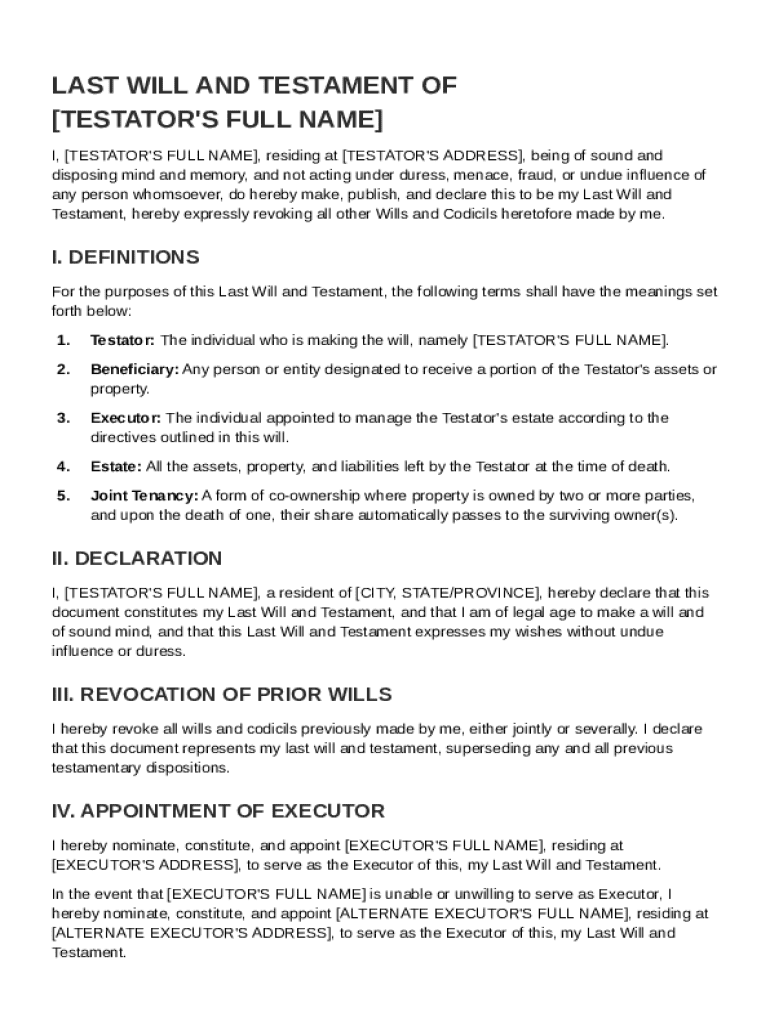







Definition and Meaning of a Will Contract Template
A Will Contract Template, commonly known as a Last Will and Testament, is a legal document used to outline the distribution of an individual's estate upon their death. It serves as a guide for executors and beneficiaries, detailing who receives specific assets and properties. The template includes essential sections such as definitions of key terms, the appointment of an executor, specific bequests to beneficiaries, and, if applicable, provisions for the guardianship of minor children. It is crucial for ensuring that an individual's wishes are respected posthumously and to avoid potential disputes among family members or heirs.
How to Use the Will Contract Template
Using a Will Contract Template involves several steps to ensure that it accurately reflects the testator's wishes. Here's a step-by-step guide:
- Review the Template: Begin by thoroughly reading the template to understand all sections and options available.
- Personal Information: Enter the full legal name and other relevant personal details of the testator at the beginning of the document.
- Beneficiaries Designation: Clearly list all beneficiaries, identifying them by full name and relationship to the testator.
- Asset Allocation: Specify the assets each beneficiary will receive. This can include real estate, personal belongings, and financial assets.
- Executor Appointment: Choose a trusted individual as the executor, responsible for managing the estate and ensuring the will's terms are fulfilled.
- Additional Provisions: Add clauses for unique circumstances, such as care instructions for pets or funeral preferences.
- Legal Formalities: Ensure the will is signed by the testator in the presence of at least two witnesses, who should also sign the document.
Steps to Complete the Will Contract Template
Completing a Will Contract Template requires attention to detail and awareness of legal requirements. Follow these steps for a comprehensive completion process:
- Gather Documents: Before starting, collect all necessary documents, such as property titles, bank account numbers, and beneficiary details.
- Fill in Personal Details: Accurately fill out sections requiring personal information of the testator, beneficiaries, and executor.
- Specify Bequests: List specific bequests in detail, ensuring all assets are covered and there are no ambiguities in distribution.
- Include Conditional Bequests: For assets with conditions, such as age restrictions on inheritance, specify these clearly.
- Designate Guardianship: If applicable, appoint a guardian for any minor children, clearly describing their responsibilities.
- Review and Revise: Carefully review the completed document to ensure it accurately reflects the testator's intentions and is free from errors.
Key Elements of the Will Contract Template
Understanding the key elements included in a Will Contract Template is vital for formulating a precise and legally sound document. The primary components include:
- Testator's Declaration: An introductory section where the testator asserts their intent to create the will and revokes all previous wills.
- Executor Appointment: Details on who will manage the estate and their powers throughout the probate process.
- Beneficiary Information: A detailed list of beneficiaries, including distinctions between primary and contingent beneficiaries.
- Asset Division: Specifics on how the testator's assets will be divided among the beneficiaries, addressing any unique circumstances or preferences.
- Residual Clause: Instructions on handling any property not explicitly mentioned elsewhere in the will.
- No-Contest Clause: A provision to discourage potential disputes or challenges to the specified allocations.
Legal Use of the Will Contract Template
The Will Contract Template is used legally to ensure an estate is distributed according to the testator's wishes within the framework of state inheritance laws. It provides:
- Legal Validity: By adhering to state-specific legal requirements, the template ensures that the will is considered valid in court.
- Clarity in Disputes: In the event of family disagreements, a well-drafted will serve as a legal authority to resolve conflicts.
- Avoidance of Intestacy: Prevents the estate from being distributed under intestacy laws, which may not align with the testator’s desires.
State-Specific Rules for the Will Contract Template
Estates are generally overseen by state laws, which can dictate specific requirements and procedures. Considerations include:
- Witness Requirements: Varying state laws on the number and nature of witnesses required for a will to be valid.
- Notarization Needs: Some states may require a will to be notarized to improve its enforceability.
- Guardianship Regulations: Special rules may apply for appointing a guardian for minor children, affecting options available in the will.
Important Terms Related to the Will Contract Template
Navigating a Will Contract Template involves understanding critical legal terms that inform its structure and functions:
- Testator: The person creating the will.
- Executor: An appointed individual responsible for executing the will terms.
- Beneficiary: A person or entity designated to receive property from the estate.
- Probate: The legal process through which the will is validated, and the estate is distributed.
- Bequeath: To give or leave personal property, often used synonymously with "devise."
Who Typically Uses the Will Contract Template
The Will Contract Template is used by individuals seeking to establish clear directives for their estate. Typical users include:
- Parents: To ensure guardianship and division of assets for children.
- Elderly Individuals: To formalize wishes and ease the transfer of assets.
- Wealthy Individuals: To prevent disputes over complex estates and provide clarity.
By understanding and utilizing these elements, individuals can competently engage with a Will Contract Template to effectively plan for the future distribution of their estates.