
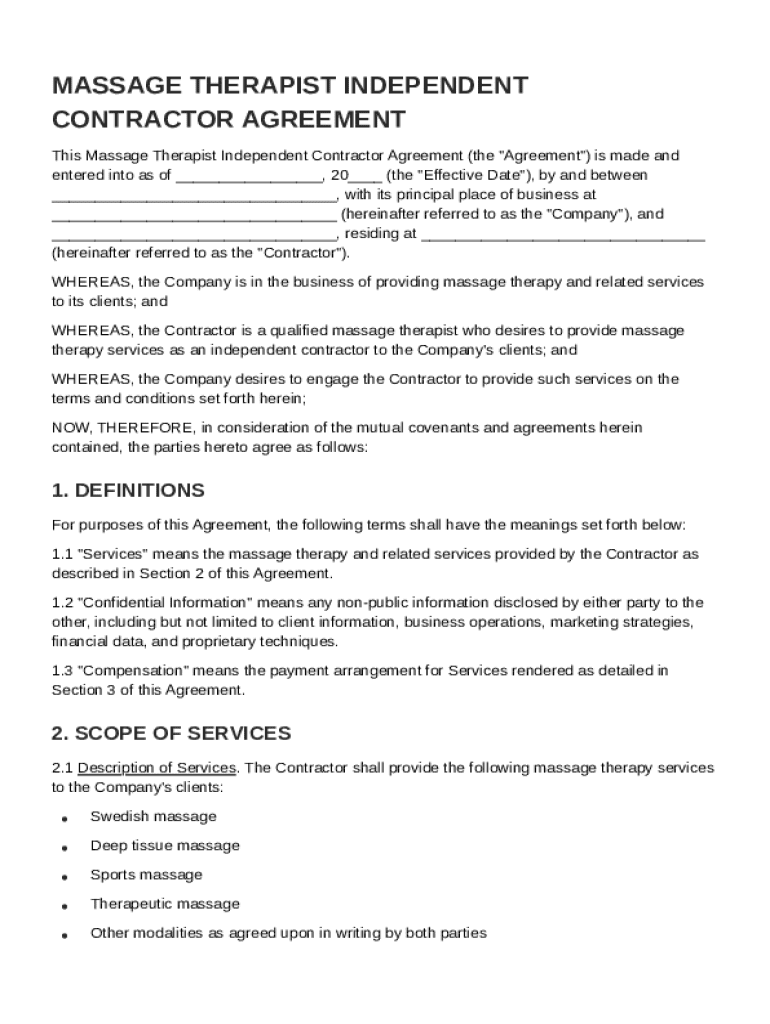







Definition & Meaning
The Massage Therapist Independent Contractor Agreement Template is a legal document used to define the working relationship between a massage therapist, acting as an independent contractor, and a company or client. This agreement outlines the scope of services provided, compensation arrangements, and the responsibilities of each party. It emphasizes the independent nature of the contractor, granting them autonomy over how they perform their work while defining the expectations and obligations that both parties must adhere to. By establishing clear parameters, this template helps prevent misunderstandings and ensures compliance with relevant laws.
Key Components
- Scope of Services: Clearly outlines what services the massage therapist is expected to provide.
- Compensation Terms: Describes the payment structure—whether hourly, by session, or otherwise.
- Independent Contractor Status: Affirms that the contractor is not an employee, detailing tax and benefit responsibilities.
- Liability and Insurance Requirements: Specifies any required insurance or liability coverage the contractor must maintain.
- Confidentiality and Non-Disclosure: Protects sensitive information learned during the course of the arrangement.
Key Elements of the Massage Therapist Independent Contractor Agreement Template
This template includes several critical elements to ensure it meets legal standards and properly governs the contractor relationship.
Detailed Provisions
- Termination Conditions: Specifies conditions under which the agreement can be terminated by either party.
- Non-Competition and Non-Solicitation Clauses: Limits the contractor's ability to compete with or solicit the company's clients within a certain period or geographic area after contract termination.
- Governing Law: Identifies the state laws that will govern the agreement, often aligned with the company's location or primary operations.
- Confidentiality Obligations: Strict provisions to protect company trade secrets or client confidentiality.
Practical Examples
An example scenario might involve a massage therapist contracting with a wellness spa to provide weekly massage sessions. The template would specify the types and number of massages to be performed, how the therapist would invoice the spa, and any restrictions on engaging with the spa's clients outside of the contract.
How to Use the Massage Therapist Independent Contractor Agreement Template
Utilizing this template effectively involves a few clear steps to tailor it to your specific needs.
Step-by-Step Instructions
- Customizing the Template: Begin by filling in the basic details such as names and addresses of both parties.
- Defining Services and Compensation: Enter specific service details and payment terms to clearly outline what is expected and when payment is due.
- Reviewing Legal Clauses: Ensure clauses like confidentiality and non-compete align with both parties' expectations and legal standards.
- Consulting Legal Advice: If necessary, consult a legal expert to review the final document for compliance with state laws.
- Finalizing and Signing: Once both parties agree on the terms, sign the document to make it legally binding.
Common Adjustments
In certain jurisdictions, additional disclosures or adjustments might be necessary to align with specific state labor laws, particularly regarding worker classification and labor rights.
Legal Use of the Massage Therapist Independent Contractor Agreement Template
This contract template must be executed following legal standards to maintain its validity.
Compliance Requirements
- IRS Compliance: Ensure the agreement aligns with IRS definitions of independent contractors to avoid misclassification.
- State-Specific Legislation: Different states have varying rules on independent contractor agreements, particularly regarding non-compete clauses.
Importance of Legal Review
A thorough legal review is advised to mitigate risks associated with misclassification or other legal disputes. For instance, adding clauses specific to insurance requirements can help protect both parties from liability.
Who Typically Uses the Massage Therapist Independent Contractor Agreement Template
This template is broadly useful across various sectors of the wellness and healthcare industries.


User Scenarios
- Wellness Centers: Employ this template to contract multiple therapists as independent contractors, enabling flexible scaling of services.
- Private Practices: Independent massage therapists use the template to formalize relationships with clients while maintaining autonomy.
- Event Planners: Utilize the contract to engage therapists for short-term commitments, like corporate wellness events or retreats.
Business Models
Businesses operating as sole proprietorships or LLCs frequently adopt this template due to the flexibility and protection it provides, ensuring clear boundaries without the complexities of full-time employment.
Steps to Complete the Massage Therapist Independent Contractor Agreement Template
Completing this template involves a thorough understanding of the intended business relationship.
Key Steps
- Initial Preparation: Gather necessary information such as business details, service descriptions, and any existing company policies relevant to the agreement.
- Drafting Process: Fill in each section carefully, using the template as a guideline while remaining open to adaptations based on business needs.
- Collaborative Review: Facilitate a conversation between the contracting parties to discuss roles, expectations, and any special terms.
- Final Adjustments and Signing: Make any needed amendments before both parties provide signatures.
Tips for Effective Completion
- Detailed Descriptions: Ensure service descriptions and expectations are clear to prevent disputes.
- Regular Updates: Regularly review and update the agreement in response to any changes in the business relationship or legal environment.
State-Specific Rules for the Massage Therapist Independent Contractor Agreement Template
Laws and regulations pertaining to independent contractors vary widely between states, impacting how these agreements should be structured.
Considerations
- Employment Classification: Some states, like California with its AB5 law, have strict criteria determining independent contractor status.
- Contractual Terms: Enforceability of non-solicitation or non-compete clauses can differ markedly from state to state.
Practical Adjustments
For example, in California, contracts need to specifically account for the stringent tests used to determine independent contractor status. Adjustments may include more detailed descriptions of the independent nature of the work and affirmations that the contractor sets their hours and supplies.
Important Terms Related to Massage Therapist Independent Contractor Agreement Template
Understanding key terms used within this template is crucial to ensuring all parties are aligned.
Definitions and Examples
- Independent Contractor: A worker who provides services under a contract but retains control over how those services are performed.
- Non-Compete Clause: A clause preventing the contractor from engaging in competing business activities within a specified period or location.
- Confidentiality Agreement: An agreement to keep certain business information private to protect trade secrets or client privacy.
Legal Implications
Each term in the agreement holds legal weight and can influence the rights and obligations of both parties significantly, such as liability clauses which may affect how damages are apportioned in a dispute.




