




01. Edit your form online
Type text, add images, blackout confidential details, add comments, highlights and more.

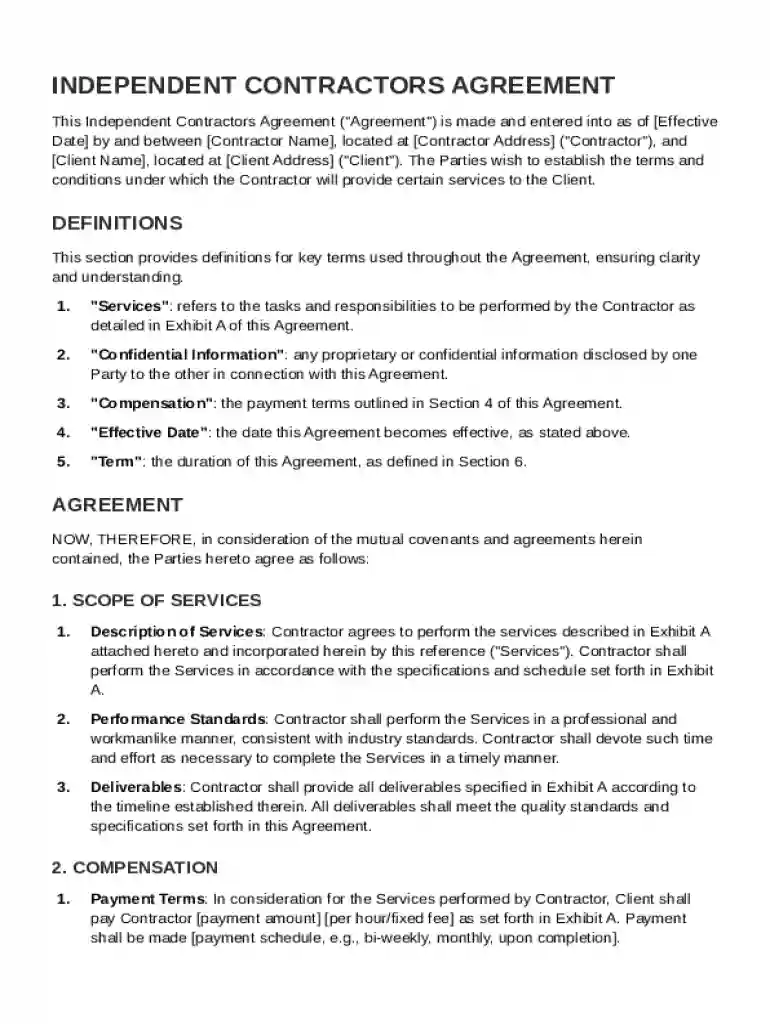
Type text, add images, blackout confidential details, add comments, highlights and more.

Draw your signature, type it, upload its image, or use your mobile device as a signature pad.

Send it via email, link, or fax. You can also download it, export it or print it out.
The Independent Contractors Agreement Template is an essential tool for outlining the working relationship between a contractor and a client. This document covers crucial elements to ensure clarity and prevent future disputes.
Scope of Services: Clearly define the services the contractor will provide. This helps both parties understand the expectations and deliverables.
Compensation Structure: Specify how and when the contractor will be paid. Include details about rates, payment schedules, and additional expenses covered by the client.
Confidentiality Obligations: Establish the contractor's duty to protect sensitive information. This section helps safeguard the client's business interests and data.
Termination Provisions: Outline conditions under which the agreement can be terminated. This includes notice periods and circumstances that warrant contract cancellation.
Intellectual Property Rights: Determine ownership of work created during the contract. Specify whether the client or contractor owns the intellectual property.
Dispute Resolution Processes: Detail the steps to resolve disagreements, such as mediation or arbitration. This helps avoid lengthy legal battles.
Miscellaneous Provisions: Include other relevant terms like the governing law, entire agreement clause, and amendments procedure.
The Independent Contractors Agreement is a legal document used to formalize a working arrangement between a contractor and a client. It distinguishes an independent contractor from an employee, ensuring compliance with regulations and establishing the terms of service.
Contractor Status: Reinforces that the contractor is a separate entity and not an employee. This distinction affects taxes, benefits, and liabilities.
Service Agreement: Acts as a binding contract that delineates the nature of the relationship, ensuring clarity on both ends.
Legal Protection: Provides a legal framework that protects both parties' rights and responsibilities.
Utilizing the Independent Contractors Agreement Template efficiently ensures all contractual elements are addressed.
Template Customization: Tailor the template to reflect the specifics of the job and the agreement between the parties.
Input Accurate Information: Ensure all names, timelines, and compensation details are accurate and up-to-date.
Review and Revise: Collaboratively review the draft with the contractor to ensure mutual understanding and agreement.
Completing an Independent Contractors Agreement requires careful attention to detail. Here are the steps to follow:
Identify the Parties: Include full legal names and contact information of both the contractor and the client.
Define Services: Clearly outline the services to be provided.
Establish Compensation Terms: Specify payment amounts, methods, and timelines.
Detail Confidentiality Terms: Describe the requirements for handling confidential information.
Address Termination Conditions: Include terms under which the contract may be terminated.
Sign and Date: Both parties should sign and date the contract to make it legally binding.
Retention of Copies: Each party should retain a signed copy of the agreement for their records.
This template is commonly used by various professionals and businesses to formalize partnerships with independent service providers.
Freelancers and Consultants: Professionals in roles such as marketing consultants or software developers use this to define their roles and protect their business interests.
Small Businesses and Startups: These entities often rely on independent contractors for specialized tasks without the commitment of hiring employees.
Larger Corporations: Enterprises occasionally hire contractors for expertise in niche areas without expanding their full-time workforce.


Electronic signatures provide a legally binding method to sign the Independent Contractors Agreement, offering convenience and efficiency.
ESIGN Act Compliance: Electronic signatures within the template comply with the Electronic Signatures in Global and National Commerce Act, ensuring legality.
Signature Options: The platform offers multiple ways to create electronic signatures, such as typing, drawing, or uploading.
Signature Requests: You can send out requests for signatures, track progress, and automate reminders for outstanding signatures.
There are numerous scenarios where the Independent Contractors Agreement Template can be effectively utilized:
Graphic Design Services: A client hiring a designer for a project can use the template to outline deliverables, timelines, and payment.
IT Consulting Projects: Companies engaging IT experts for cybersecurity assessments can define the scope and duration of services.
Writing and Editing Contracts: Freelance writers working on content creation for clients can specify the terms of their engagement, including confidentiality requirements.
Regulations governing independent contractors can vary by state. This impacts how contracts should be structured.
California's ABC Test: In California, stricter tests are used to determine contractor status, influencing contract language.
New York Labor Laws: New York requires explicit definitions of contractor roles to comply with labor laws.
Texas's Right-to-Work Policy: Texas offers more flexibility in structuring contractor agreements, though clear terms are still essential.
State Registration: Some states may require contractors to be registered. Ensure the agreement reflects compliance with local regulations.
Understanding key terms is crucial for effective agreement drafting and execution.
Service Deliverables: Specific outcomes the contractor is responsible for completing.
Non-Disclosure Agreement (NDA): A clause or separate document that ensures confidentiality.
Force Majeure: Includes conditions under which a party is not held liable for disruptions beyond their control.
Retainer Fee: An upfront payment that secures a contractor's service availability.
Subcontracting: Defines whether the contractor can outsource parts of the service delivery.
At DocHub, your data security is our priority. We follow HIPAA, SOC2, GDPR, and other standards, so you can work on your documents with confidence.





Independent Contractor approval status is effective for services provided between contract dates specified above, not to exceed 12 months from the start date.
Sample Independent Contractor Agreement. This Agreement is made between. (Client) with a principal place of business at


