






Definition and Meaning
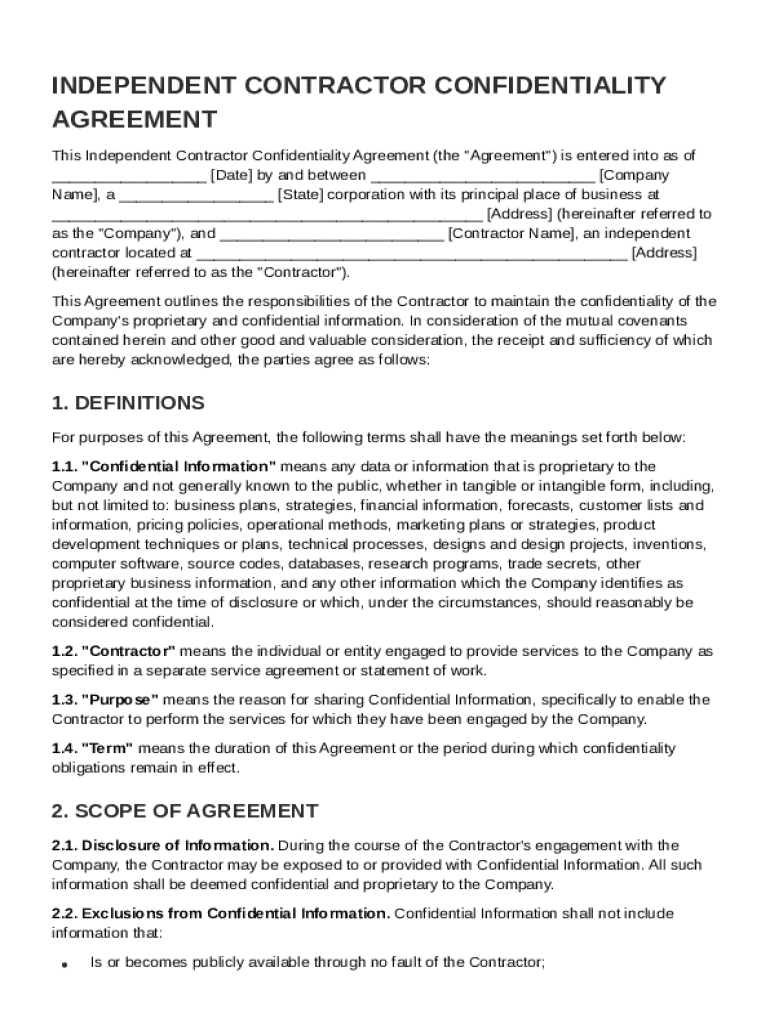
The "Independent Contractor Confidentiality Agreement Template" is a legal document used to ensure that independent contractors maintain the confidentiality of a company's proprietary information. It serves to protect intellectual property, trade secrets, and sensitive business information. The agreement defines what constitutes 'Confidential Information' and sets the terms under which this information must be handled by the contractor. It typically includes obligations not to disclose or use the information outside the scope of the contract and specifies the duration of these obligations.
Practical Examples
- Consulting Services: If a business hires an independent consultant to improve internal processes, the consultant may gain access to proprietary methodologies.
- Freelance Developers: Freelancers developing software for a company will likely access confidential code and project details that need protection.
Key Features Included
- Definitions of what constitutes confidential information.
- Clarification on the approved uses for such information.
- Specification of the duration the information must remain confidential.
- Protocols for the return or destruction of confidential materials post-engagement.
How to Use the Template
Using the Independent Contractor Confidentiality Agreement Template involves customizing it to fit the specific needs of your business. This process ensures that all parties understand their obligations and the scope of confidentiality.
Step-by-Step Instructions
- Identify the Parties: Ensure all parties are correctly identified with full legal names.
- Define Confidential Information: Clearly state what information is considered confidential.
- Outline the Obligations: Specify what the contractor can and cannot do with the confidential information.
- Establish Duration: Decide how long the confidentiality obligations will last.
- Include Legal Provisions: Make sure to add clauses related to governing law, jurisdiction, and dispute resolution.
Customization Tips
- Adapt the language to reflect specific industry norms or regulatory requirements.
- Modify sections to include any proprietary technologies or processes unique to your company.
Steps to Complete the Agreement
Completing the Independent Contractor Confidentiality Agreement Template requires careful attention to detail to ensure all necessary components are addressed.
Detailed Process
- Draft Initial Agreement: Use the template as a starting point to draft your agreement.
- Review Legal Requirements: Confirm that the agreement complies with relevant legal standards and industry practices.
- Consult with Legal Counsel: It may be prudent to have a legal expert review the draft to mitigate risk.
- Finalization and Execution: Once finalized, the agreement should be signed by all involved parties.
Additional Considerations
- Make provisions for digital vs. paper signatures to accommodate different signing preferences.
- Ensure there is a copy retention policy in place.
Key Elements of the Template
The Independent Contractor Confidentiality Agreement Template contains several critical segments designed to cover aspects crucial to maintaining confidentiality.
Fundamental Components
- Identification of Parties: Clearly names the business and contractor.
- Definition of Confidential Information: Lists specific information considered confidential.
- Non-Disclosure Obligations: Outlines what the contractor is prohibited from doing with the information.
- Termination Clause: Explains how and when the agreement may be terminated.
- Remedies for Breach: Details potential consequences should a breach occur.
Legal Use of the Template
The template's legal use is focused on protecting a company's sensitive information, which can include trade secrets, proprietary processes, and any data not intended for public disclosure.
Jurisdictional Compliance
- U.S. Law Alignment: Ensure the agreement aligns with U.S. laws on confidentiality and non-disclosure.
- State-Specific Regulations: Some states may have additional requirements or limitations that should be observed.
Who Typically Uses the Template
Various business types and sectors make use of the Independent Contractor Confidentiality Agreement Template to ensure their proprietary information remains secure.


Common Industries
- Technology Firms: Frequently engage external developers and consultants.
- Creative Agencies: Often work with freelancers and need to protect creative ideas and client lists.
- Healthcare: Requires stringent confidentiality due to sensitive patient information.
Business Roles
- Project Managers: Oversee independent contractor engagements.
- Human Resources: Handle the onboarding process, including agreement execution.
Important Terms Related to the Template
Understanding the associated terminology is essential for effectively utilizing the template.
Glossary of Terms
- Confidential Information: Specific data or material deemed private and proprietary.
- Non-Disclosure: Legal obligation to prevent sharing or releasing confidential information.
- Breach of Confidentiality: Unauthorized access, disclosure, or use of confidential information.
State-Specific Rules
U.S. states may impose varying requirements for confidentiality agreements.
Notable State Variations
- California: Known for specific regulations on employment contracts and non-compete clauses.
- New York: Requires clear specifications of confidential materials to be enforceable in courts.
- Texas: Has unique requirements for what information can be protected as confidential.
Ensure you understand local requirements to prevent unenforceable or invalid agreements.