




Definition & Meaning
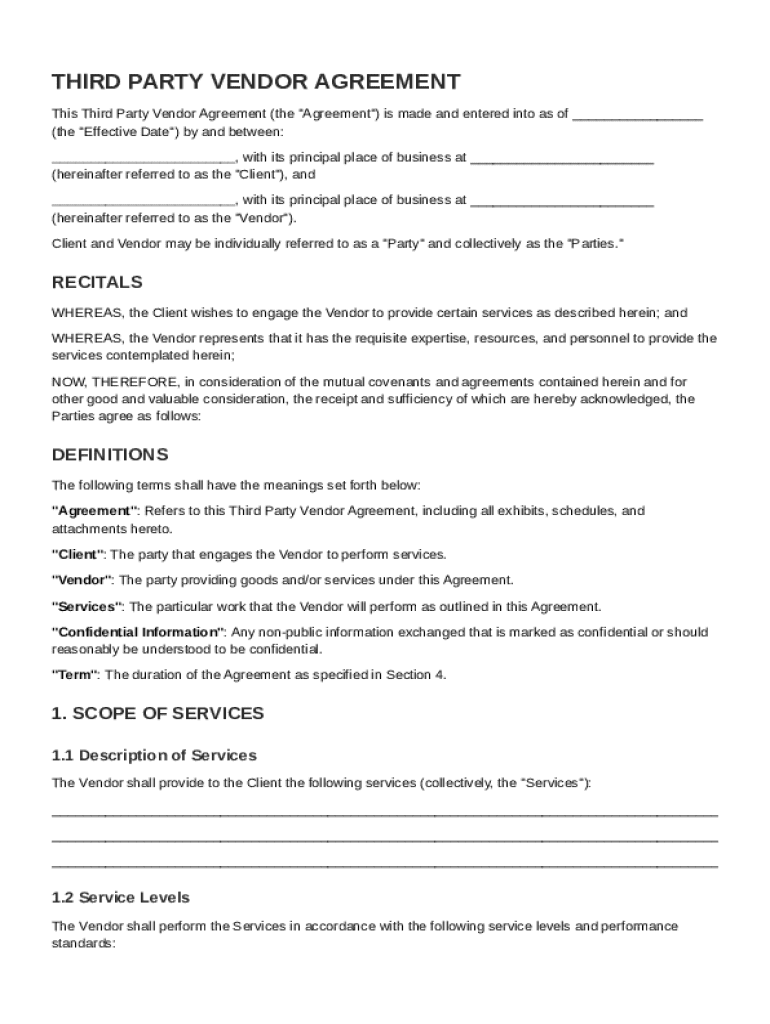
The Third Party Vendor Agreement Template is a legal document used to outline the terms and conditions under which a business (Client) hires another entity (Vendor) to provide services. This agreement sets the foundation for the business relationship by clearly defining the roles, responsibilities, and expectations of both parties involved. It typically includes key sections such as the scope of services, compensation, confidentiality obligations, and the nature of the relationship, usually as independent contractors.
Key Sections:
- Scope of Services: Specifies the services the Vendor will perform. This ensures that both parties have a mutual understanding of what is expected.
- Compensation: Details how and when the Vendor will be paid, along with any related terms like invoicing schedules.
- Confidentiality: Establishes how proprietary and sensitive information should be handled.
How to Use the Third Party Vendor Agreement Template
To effectively use the Third Party Vendor Agreement Template, follow these steps:
- Identify the Parties: Clearly state the name and address of both the Client and the Vendor.
- Define the Scope of Work: Outline the specific services that the Vendor will deliver to the Client.
- Specify Terms: Include payment terms, deadlines, and other conditions critical to the agreement.
- Review and Customize: Modify sections to suit unique needs and legal requirements specific to the industry or service.
- Consult Legal Counsel: It is recommended to have an attorney review the draft agreement to ensure it complies with relevant laws.
Practical Tips:
- Use clear and concise language to avoid potential ambiguities.
- Update the template regularly to reflect any changes in business practices or legal standards.
How to Obtain the Third Party Vendor Agreement Template
Acquiring a Third Party Vendor Agreement Template can be straightforward:
- From Legal Services Platforms: Many platforms offer templates as a part of their document services. Ensure the service aligns with the specific needs of your business.
- Customization Services: Some firms provide templates that can be tailored to specific industries or services.
- Directly from Legal Counsel: Engaging directly with an attorney can be the best approach for very specific or complex services.
Considerations:
- Ensure that any template obtained is up-to-date with current laws.
- Consider professional legal help for complex agreements to ensure thorough protection and compliance.
Important Terms Related to Third Party Vendor Agreement Template
Understanding key legal terms is crucial when dealing with Third Party Vendor Agreements:
- Indemnification: A provision where one party agrees to compensate the other for certain costs and damages.
- Force Majeure: A clause that frees both parties from liability or obligation when an extraordinary event prevents one or both from performing under the contract.
- Warranties: These are assurances or guarantees provided by the Vendor regarding the quality or nature of the services.
Nuanced Meanings:
- Assignment Clause: Dictates the conditions under which one party can transfer its rights or obligations under the agreement to another party.
- Severability: Ensures that if part of the contract is invalid, the rest remains enforceable.
Key Elements of the Third Party Vendor Agreement Template
The essential components of the Third Party Vendor Agreement Template include:
- Introduction: Captures essential details about both parties.
- Terms of Relationship: Clarifies that the relationship is independent, protecting both parties from undesired liabilities.
- Modification: Describes how changes to the agreement will be handled, often requiring written consent from both parties.
Additional Details:
- Dispute Resolution: Outlines the process for addressing disagreements, often through mediation or arbitration.
- Governing Law: States which jurisdiction’s laws will apply to the agreement.
Legal Use of the Third Party Vendor Agreement Template
The template serves to legally bind the involved parties, ensuring all terms are enforceable under the law. It should comply with specific industry regulations and state laws:
- Enforceability: Ensure the document is signed by authorized representatives of both parties.
- Jurisdiction Compliance: Tailor the agreement to reflect local legal standards and requirements.
Real-World Scenario:
- Industry Regulations: For industries with specific regulations, such as healthcare, additional provisions may be necessary to address compliance.
Business Types That Benefit Most from the Third Party Vendor Agreement Template
Businesses that frequently outsource services or deal with multiple vendors can greatly benefit from this agreement, including:
- Technology Companies: Commonly engage in software development or IT support services.
- Manufacturing Firms: Often rely on specific components or materials from outside vendors.
- Marketing Agencies: Work with freelance professionals for various creative services.
Benefits:
- Streamlines the onboarding of new vendors.
- Sets clear expectations to reduce potential disputes.
State-Specific Rules for the Third Party Vendor Agreement Template
While the Third Party Vendor Agreement Template serves as a universal framework, variations may be necessary to comply with state-specific regulations:
- California: The state's stringent employment laws require explicit definitions in the agreement to maintain the independent contractor status.
- New York: Higher standards for confidentiality agreements could necessitate additional clauses.
Recommendations:
- Consult legal experts familiar with local laws to avoid inadvertent breaches.
- Regularly review and update agreements as state laws evolve.
Each of these sections provides comprehensive insight into the functions and uses of the Third Party Vendor Agreement Template, ensuring both clarity and functionality in its application.