






Definition and Purpose of a Technology Service Agreement
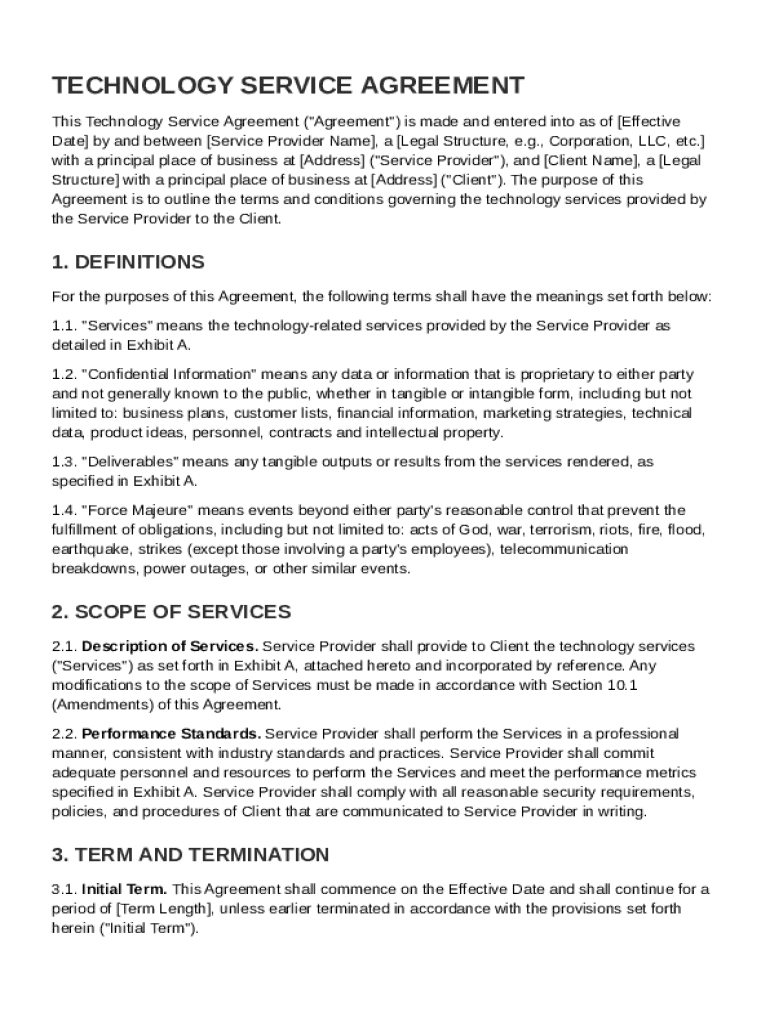
A Technology Service Agreement is a formal document outlining the contractual relationship between a service provider and a client for technology services. This agreement serves as a foundation, clearly defining the responsibilities, expectations, and rights of both parties involved. It typically includes sections on the scope of work to be performed, payment terms, confidentiality clauses, intellectual property rights, and conditions under which the agreement can be terminated. By setting these parameters, the agreement helps avoid misunderstandings and disputes, ensuring that both parties have clear, mutually agreed upon guidelines that govern the provision of services and compensation.
How to Use the Technology Service Agreement Template
Using the Technology Service Agreement Template involves a series of straightforward steps designed to customize the document to meet your specific needs. To begin, download or import the template into your preferred document editor. Review each section to ensure it aligns with your unique service offering and client relationship. Modify the predefined fields, such as the name of the service provider and client, and ensure the scope of work accurately reflects the services provided. Specify the compensation structure, including rates, billing periods, and payment schedules. Once all relevant sections are customized, review the agreement for accuracy and completeness, and obtain signatures from all parties involved.
Steps to Complete the Technology Service Agreement Template
-
Download and Open the Template: Obtain the Technology Service Agreement Template from a reputable source, such as DocHub, and open it in a compatible editor.
-
Identify the Parties Involved: Fill in the names and contact information for both the service provider and the client. Ensure that all identifiers are accurate to avoid potential disputes.
-
Define the Scope of Services: Clearly outline the specific services to be provided, including deliverables, timelines, and any expected outcomes. Be as detailed as possible to prevent ambiguities.
-
Set Compensation Terms: Specify the payment terms, including the rates, invoicing schedule, and payment method. Include conditions for late payments or any additional charges that may apply.
-
Include Confidentiality and IP Clauses: Add sections that address confidentiality and the handling of intellectual property, ensuring both are protected throughout the duration of the agreement.
-
Outline Termination Conditions: Detail the conditions under which the agreement can be terminated by either party, including any notice periods that must be observed.
-
Review and Sign: Carefully review the completed agreement, making any necessary changes. Once finalized, circulate it for signatures from all parties to formalize the agreement.
Key Elements of the Technology Service Agreement Template
- Parties to the Agreement: This section includes the details of the service provider and the client, establishing the legal entities involved in the agreement.
- Scope of Services: Clearly defines what services will be provided, including any specific tasks, projects, or deliverables.
- Compensation and Payment Terms: Outlines how and when the client will pay the service provider, including any terms or conditions for late payment.
- Confidentiality Obligations: Sets rules for the handling and protection of sensitive information shared between parties.
- Intellectual Property Rights: Establishes ownership and usage rights over any intellectual property created or used during the agreement period.
- Termination Clauses: Provides conditions and procedures for terminating the agreement by either party, including any required notice periods.
- Dispute Resolution: Outlines how disputes between the parties will be resolved, which may include mediation, arbitration, or litigation processes.
Legal Use of the Technology Service Agreement Template
The Technology Service Agreement template is designed for lawful business transactions and must comply with applicable U.S. federal, state, and local laws. Each party should review the obligations and rights embedded in the agreement to ensure full compliance with the relevant legal requirements. Engaging a legal professional for reviewing and customizing the template to ensure it meets specific legal standards can be prudent. This ensures the document holds legal validity and provides protection in case of disputes.
Who Typically Uses the Technology Service Agreement Template
This agreement is used by a diverse group of entities within the technology sector, including independent contractors, IT service providers, software developers, and consultancy firms. It is particularly relevant for businesses that provide technology services on a contract basis and need a formalized agreement to establish service expectations and compensation terms. Corporate clients, small businesses, and startups alike utilize this document to protect their interests when contracting technology services, ensuring both parties are clear on their roles and responsibilities.


Important Terms Related to the Technology Service Agreement Template
- Service Provider: The entity providing the technological services under the terms of the agreement.
- Client: The party receiving services and responsible for making payments as outlined in the contract.
- Scope of Work: The defined range of services, tasks, or deliverables expected from the service provider.
- Confidentiality Clause: A provision that restricts the sharing of private information protected under the agreement.
- Intellectual Property: Refers to creations of the mind, which are protected under the agreement, such as software, patents, and copyrights.
- Termination Clause: Details the terms and procedures for ending the agreement prior to its natural conclusion.
- Dispute Resolution: The method through which conflicts regarding the agreement will be resolved.
State-Specific Rules for the Technology Service Agreement Template
While the Technology Service Agreement provides a general framework applicable across the U.S., it is crucial to account for any state-specific legislation that may affect contractual agreements. For instance, some states have stricter regulations concerning non-compete clauses and confidentiality agreements. Therefore, it is recommended to consult with legal experts familiar with the laws in the specific state where services will be rendered. This ensures that the agreement adheres to local laws and any unique state-specific requirements are addressed.
Versions or Alternatives to the Technology Service Agreement Template
Several variations of the Technology Service Agreement Template exist, tailored to different types of service arrangements. Common variants include Managed Services Agreements for businesses offering ongoing IT support, Software License Agreements for entities distributing software products, and SaaS Agreements for companies providing software-as-a-service solutions. These specialized templates address industry-specific needs and may include additional clauses reflecting unique operational requirements, highlighting the flexibility of the framework to adapt to various business models.