






Definition & Meaning
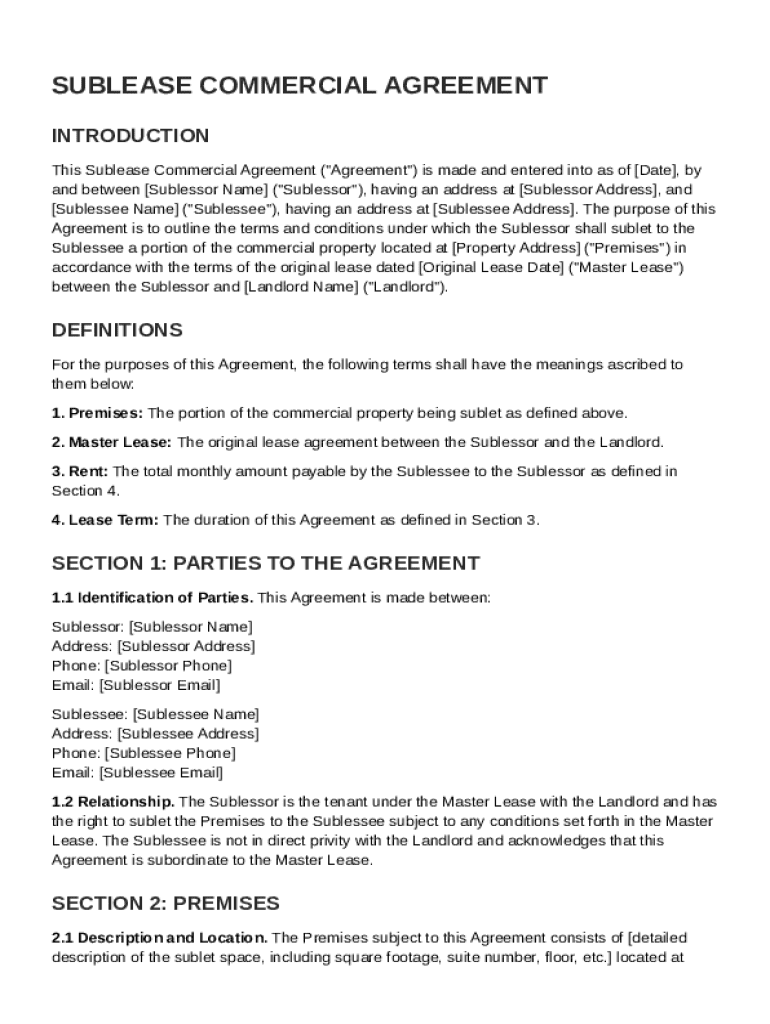
A Sublease Commercial Agreement Template is a formal document that outlines the terms and conditions under which a portion of a commercial property is sublet by the primary tenant (the Sublessor) to another party (the Sublessee). This legal contract establishes a binding relationship between the parties involved, ensuring mutual understanding and clarity. Key elements include definitions, party identification, lease terms, and conditions.
- Definitions: Specify terms like "Sublessor," "Sublessee," and "Premises" to ensure clarity.
- Parties Involved: Clearly identify all parties, including their legal names and contact information, to avoid miscommunication.
This template ensures the agreement adheres to legal standards and protects the rights and responsibilities of each party involved.
How to Use the Sublease Commercial Agreement Template
To effectively use the Sublease Commercial Agreement Template, follow a structured approach to ensure every detail is accurately represented and legally binding.
-
Customizing the Template: Tailor the template to fit the specific details of your agreement. This includes adjusting terms related to the property location, rent, and lease duration.
-
Review and Adjust: Make necessary adjustments for specific states' legal requirements by consulting a legal advisor if needed to ensure compliance with local laws.
-
Collaborate with Stakeholders: Allow both parties to review and provide input on the draft to ensure mutual agreement and understanding.
The template should be updated with all pertinent information to represent both parties' interests adequately.
Steps to Complete the Sublease Commercial Agreement Template
Completing the Sublease Commercial Agreement Template involves several meticulous steps to ensure accuracy and legality.
-
Fill Out Party Details: Enter all relevant personal and contact details for both the Sublessor and the Sublessee. This information is crucial for legal identification.
-
Define Lease Terms: Specify the duration of the lease, including start and end dates, and clarify any renewal or termination conditions.
-
Detail Rent Payment Terms: Clearly outline the payment schedule, including amount, due date, and method of payment. Address any late fees or penalties to preempt disputes.
-
Outline Property Use: Specify the permitted use of the premises to prevent unauthorized activities. This ensures the property is used as intended in the agreement.
-
Include Additional Provisions: Add clauses regarding maintenance responsibilities, utility payments, and any modifications allowed to the premises.
-
Legal Review: Consult with a legal professional to review the completed template and ensure all state-specific requirements are met.
-
Sign and Execute: Both parties should sign the document, possibly in the presence of a notary, to affirm their understanding and agreement.
Following these steps ensures the agreement is both comprehensive and fair.
Key Elements of the Sublease Commercial Agreement Template
The template incorporates essential components that facilitate clear communication and legal security for the involved parties. Understanding and correctly filling out each section is vital for protecting interests.
-
Lease Term & Renewal: Clearly define the duration of the lease and conditions for its renewal to avoid future disputes.
-
Rent Amount & Schedule: Detail the rent amount, payment schedule, and accepted payment forms to establish financial obligations.
-
Maintenance Responsibilities: Assign responsibilities for property maintenance and repairs between the Sublessor and Sublessee, reducing potential conflicts.
-
Insurance Requirements: Specify any insurance coverages required by the Sublessee to protect the property from damage or liability claims.
These elements serve as the foundation for effective communication and legal compliance.
Legal Use of the Sublease Commercial Agreement Template
Utilizing the Sublease Commercial Agreement Template legally binds parties and dictates property management. Proper legal use ensures all actions within the sublease agreement are compliant with governing laws.
-
Compliance with Master Lease: The sublease must align with terms set in the original lease agreement, known as the Master Lease. Deviations could lead to legal issues.
-
Governing Law: Identify which state's laws govern the agreement to resolve potential legal disputes efficiently.
-
Disclosure Requirements: Fulfill obligatory disclosures to adhere to legal standards and enhance transparency.
When employed correctly, the template upholds legal standards, minimizing potential litigation risks.
State-Specific Rules for the Sublease Commercial Agreement Template
Legal requirements for sublease agreements can vary by state, so it’s important to understand state-specific considerations.
-
State Variations: Each state might have unique rules regarding notice requirements, lease durations, and permissible clauses.
-
Consult Legal Resources: Use state legal resources or consult with a lawyer to confirm that the agreement complies with regional laws and customs.
-
Licensing and Eligibility: Ensure all involved parties meet any state-required licensing or eligibility criteria to legally enter into a sublease agreement.
Following these state-specific guidelines safeguards against regional legal discrepancies.
Software Compatibility
The Sublease Commercial Agreement Template is designed to seamlessly work with various document editing and signing software, allowing users to complete and exchange agreements efficiently.
-
Cross-Platform Support: Compatible with popular software like PDF editors or word processors (e.g., Microsoft Word, Google Docs).
-
Integration with Cloud Services: Easily import and export agreements to cloud platforms like Google Drive and Dropbox.
-
Usage with DocHub: Utilize the tools provided by DocHub to edit, sign, and share documents, enhancing collaboration and efficiency.
This compatibility expands accessibility and streamlines workflow for all parties.
Who Typically Uses the Sublease Commercial Agreement Template
A wide range of business entities and individuals use this template, from small businesses to large corporations, each seeking to manage space temporarily without long-term commitment.
-
Small Business Owners: Sublease commercial space when underutilizing current leased premises to reduce costs.
-
Corporate Tenants: Offset high lease expenses by subleasing extra space in their leased properties.
-
Entrepreneurs & Start-ups: Opt for temporary office spaces through subleasing to conserve capital and maintain flexibility.
Understanding who uses the template can guide potential users in determining its applicability to their situation.


Important Terms Related to the Sublease Commercial Agreement Template
Grasping the key terms associated with this template aids in proper comprehension and effective usage of the agreement.
-
Sublessor: The original tenant who transfers some of their lease rights to a Sublessee.
-
Sublessee: The individual or entity granted rights to use specific parts of the leased premises from the Sublessor.
-
Master Lease: The primary lease agreement between the Sublessor and the property owner, which holds superior standing over the sublease.
These terms establish the language needed for effective agreement communication and negotiation.
Examples of Using the Sublease Commercial Agreement Template
Real-world scenarios illustrate the practical application and functionality of the Sublease Commercial Agreement Template.
-
Small Retail Outlet: A retail outlet subleases a section of its store space to a local artisan shop, enhancing foot traffic without full-time commitment.
-
Tech Start-up: A tech firm subleases surplus office space to a start-up, optimizing costs while building synergies with smaller enterprises.
-
Large Corporations: Multinational companies sublease extra office floors to smaller businesses during financial downturns to offset overheads.
These use cases demonstrate the template’s adaptability in diverse settings, providing valuable insights into potential benefits.