
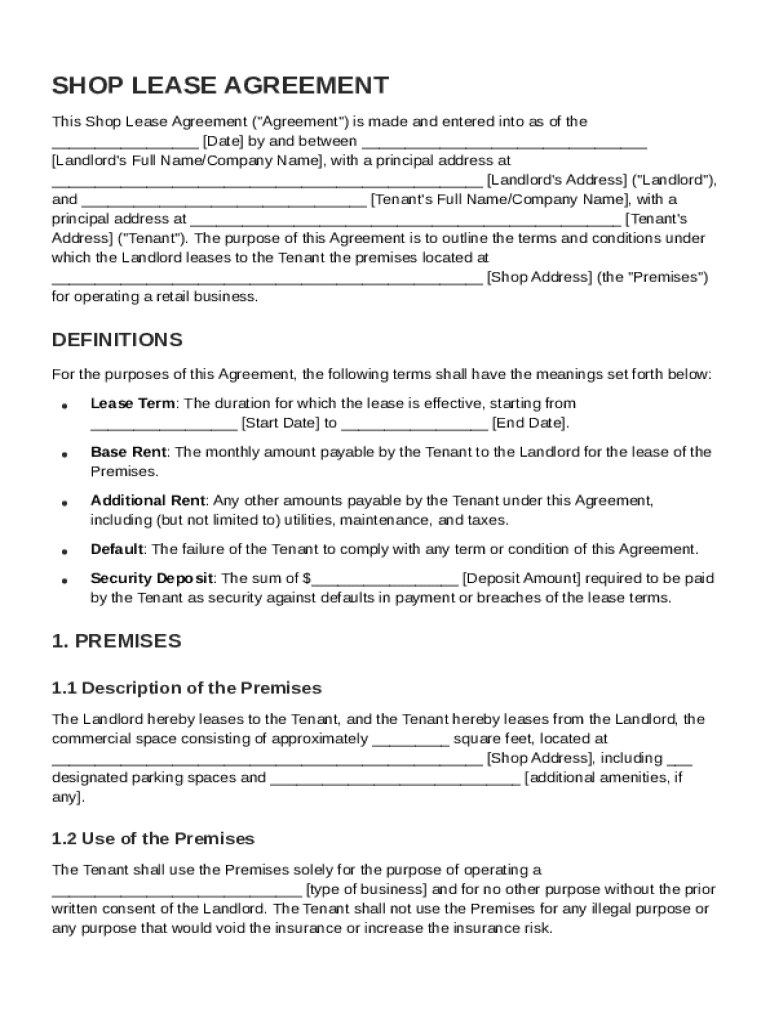







Definition & Meaning
A Shop Lease Agreement is a legal document that outlines the terms and conditions under which a landlord leases a commercial property to a tenant for the purpose of operating a retail business. It specifies fundamental aspects such as the duration of the lease, rent payment structure, and responsibilities of both parties. By providing a clear framework, it ensures that both landlord and tenant understand their rights and obligations, reducing potential disputes. Typically, these agreements encompass elements like security deposits, insurance requirements, and maintenance responsibilities, thus facilitating a smooth landlord-tenant relationship. They may also include clauses on default conditions and applicable governing laws to protect both parties.
Key Elements of the Shop Lease Agreement Template
Lease Term and Renewal
- Initial Term: This defined period, usually ranging from one to five years, dictates how long the tenant is granted use of the property.
- Renewal Options: Clauses often specify whether renewal is available, under what conditions, and any changes to the rental terms upon renewal. It's essential to agree on notice periods for intention to renew or terminate.
Rent and Payment Structure
- Base Rent: The agreement should clearly state the monthly rent amount, due date, and acceptable forms of payment.
- Escalation Clauses: Some leases include rent increase terms based on inflation or market rates, ensuring fair market value over time.
- Penalties: Consequences for late payments, such as fees or interest, often feature in the lease to encourage timely payment.
Security Deposits and Guarantees
- Deposit Amount: Typically equivalent to one or two months' rent, this sum is held as a security measure against property damage or lease violations.
- Return Conditions: The terms for refunding the deposit at the lease’s end should be clear, stating conditions like the property's condition and outstanding obligations.
Steps to Complete the Shop Lease Agreement Template
-
Review the Document Thoroughly: Ensure all parties understand the terms, ask for clarification on ambiguous clauses before signing.
-
Fill in Required Information: Details such as names and addresses of landlord and tenant, lease term, rent amount, and payment schedule should be accurately entered.
-
Address Maintenance Responsibilities: Specify whether the landlord or tenant is responsible for repairs and maintenance as well as any shared areas within a shopping plaza or mall.
-
Include Specific Clauses: Tailor sections related to use restrictions, subleasing permissions, and compliance with local zoning laws to fit the specific retail establishment.
-
Sign and Obtain Witnesses: Once reviewed and agreed upon, both parties, along with any required witnesses, should sign the agreement to make it legally binding.
Important Terms Related to Shop Lease Agreement Template
Default Conditions
- Common circumstances like non-payment of rent or breach of clauses can lead to a tenant's default. The lease should outline remedies and notice periods provided to rectify defaults.
Maintenance Responsibilities
- Tenant Responsibilities: Typically involves keeping the premises clean and safe, including minor repairs.
- Landlord Obligations: Usually major repairs essential services, such as plumbing or electrical systems.
Insurance Requirements
- Property Insurance: Landlords commonly require tenants to obtain insurance covering liabilities and property damage. The agreement should list minimum coverage levels and any required endorsements.
Legal Use of the Shop Lease Agreement Template
Adherence to Local Laws
- The use of these agreements must comply with state and federal regulations governing commercial leases. This may encompass adjustments for state-specific laws regarding eviction processes or discrimination clauses.
Legally Binding Nature
- A properly executed lease is a legally binding contract, ensuring enforceability in disputes. It requires clear language and mutual consent from involved parties, often necessitating notarization for extra precaution.
Who Typically Uses the Shop Lease Agreement Template

Small and Large Retail Businesses
- Retailers, from small boutiques to national chains, utilize lease agreements to secure operational spaces. These leases cater to varied business sizes with specific considerations for spatial layouts and foot traffic needs.
Landlords and Property Management Firms
- These stakeholders use lease templates to standardize rental processes across their commercial properties, ensuring contractual uniformity and legal protection in tenant interactions.
State-Specific Rules for the Shop Lease Agreement Template
- Each state may have differing rules on commercial leases, affecting areas such as security deposits, eviction processes, and rent controls. Landlords and tenants should consult local real estate laws or professionals to ensure compliance with regional laws. For instance, certain states limit the maximum security deposit amount or outline unique documentation for tax purposes.
Software Compatibility for Digital Shop Lease Agreement Template
- Software like DocHub facilitates the creation and management of digital lease agreements, offering features for editing, annotating, and signing documents. It supports various file formats, ensuring wide compatibility for importing and exporting necessary files. Advanced features aid in drafting customized clauses and managing complex agreements efficiently.




