
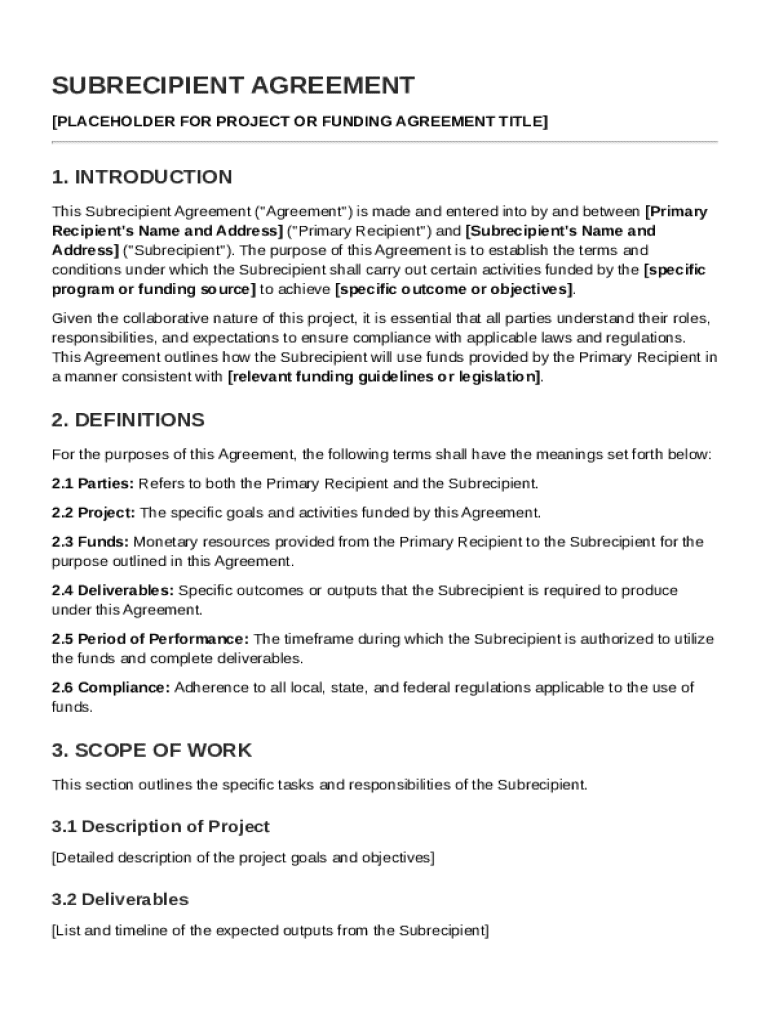




Definition and Purpose of the Subrecipient Agreement Template
A Subrecipient Agreement Template is a structured legal document outlining the terms and conditions between a primary recipient and a subrecipient involved in projects funded by external programs. This agreement is critical as it delineates the specific roles and responsibilities of each party, ensuring clarity and compliance. It involves provisions relating to funding usage, project execution responsibilities, and reporting obligations. Additionally, it covers adherence to laws and regulations, protecting intellectual property rights, and confidentiality requirements. The main goal of the template is to facilitate effective collaboration while ensuring the project's objectives are achieved and all relevant rules are followed.
How to Use the Subrecipient Agreement Template
Using a Subrecipient Agreement Template involves several key steps. First, identify the parties involved, including the primary recipient and subrecipient. Next, define the scope of the project and the specific activities for which the funding is allocated. Once these foundational elements are set, input details related to funding distribution, timelines, and deliverables.
-
Identify the Entities: Clearly state the primary recipient and the subrecipient involved in the agreement.
-
Define Project Scope: Detail the program or project's objectives and specific activities covered by the agreement.
-
Detail Funding and Resources: Specify the financial arrangements, including the total amount of funds allocated, payment schedule, and resource allocation.
-
Compliance and Reporting: Outline the compliance requirements and reporting obligations, ensuring that all parties adhere to necessary regulations.
-
Dispute Resolution: Include clauses related to dispute resolution to handle any disagreements that may arise during the project's execution.
These steps help in tailoring the template to suit the specific needs of the project and the involved parties.
Key Elements of the Subrecipient Agreement Template
The Subrecipient Agreement Template encompasses several crucial components that ensure comprehensive coverage of all necessary areas for collaboration. Key elements include:
- Roles and Responsibilities: Define each party's duties ensuring clarity and adherence to project goals.
- Funding Details: Outline the terms of funding, including distribution, utilization requirements, and reimbursement policies.
- Reporting Requirements: Specify the frequency and type of reports the subrecipient must submit, ensuring accountability and transparency.
- Compliance Clauses: Highlight the mandatory regulations and standards the subrecipient must comply with, including federal and state laws.
- Intellectual Property Rights: Address ownership, use rights, and licensing of any intellectual property developed during the project's duration.
- Confidentiality and Privacy: Ensure protection of sensitive information shared between parties involved in the agreement.
These elements form the backbone of the agreement, ensuring smooth operations and adherence to regulations.
Legal Use of the Subrecipient Agreement Template
The legal use of the Subrecipient Agreement Template ensures that all activities conducted under the agreement comply with applicable laws and regulations. The template helps in:
- Ensuring Accountability: It holds all parties accountable to their contractual obligations.
- Compliance with Laws: It includes provisions that require adherence to federal, state, and local laws, which is crucial for legally funded projects.
- Protection of Rights: It secures the intellectual property rights of both primary recipients and subrecipients.
Legal counsel may be involved in drafting or reviewing the agreement to ensure it meets all regulatory requirements and aligns with the specific circumstances of the project.
Steps to Complete the Subrecipient Agreement Template
Completing a Subrecipient Agreement Template involves several focused steps to ensure accuracy and compliance. The following are key procedural steps:
-
Draft the Initial Agreement: Begin by customizing the template with project-specific information and objectives.
-
Review by Legal Team: Have a legal expert review the document to ensure compliance and protection of interests.
-
Discuss with Subrecipient: Engage with the subrecipient to review terms and ensure mutual understanding.
-
Negotiate Terms: Make necessary amendments to terms and conditions based on feedback from involved parties.
-
Final Approval: Have all parties review and consent to the final document.
-
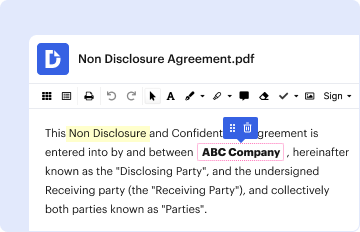
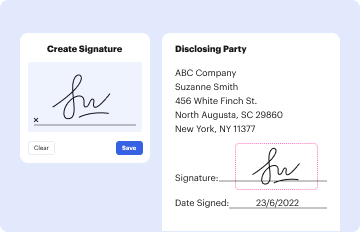
Signatures and Execution: Obtain signatures from authorized representatives of both parties to formalize the agreement.
This comprehensive approach ensures the document is both legally sound and operationally practical.
Who Typically Uses the Subrecipient Agreement Template
The Subrecipient Agreement Template is primarily used by organizations that receive external funding to execute projects, such as non-profits, educational institutions, governmental bodies, and research entities. These organizations often need to partner with other entities (subrecipients) to fulfill project mandates. The typical users include:
- Nonprofit Organizations: Engaging with local partners to implement community-based projects.
- Universities: Collaborating with research institutions or other universities on joint research projects.
- Government Agencies: Distributing funds received from federal grants to support local initiatives.
These users rely on the template to ensure compliant and efficient use of funds in achieving project objectives.

Important Terms Related to Subrecipient Agreements
Understanding the terminology associated with Subrecipient Agreements is crucial for effective use. Key terms include:
- Primary Recipient: The entity that receives the funding directly and is responsible for overseeing the subrecipient.
- Subrecipient: The entity that receives a portion of the funding to perform a part of the project activities.
- Compliance: Obligations to adhere to all regulations and laws applicable to the funding.
- Audit: A thorough examination and verification of the subrecipient's records and activities.
Familiarity with these terms ensures clear communication and understanding of the agreement's conditions.
Examples of Using the Subrecipient Agreement Template
Practical examples of using the Subrecipient Agreement Template highlight its versatility across various sectors:
- Healthcare Research: A university receives a federal grant for medical research and partners with a hospital to conduct clinical trials.
- Community Development: A government agency funds a non-profit to implement housing projects in underserved areas.
- Environmental Protection: An international NGO collaborates with local entities to execute conservation projects funded by global environmental funds.
These scenarios illustrate the template's role in facilitating collaborations that are legally compliant and aligned with project goals.