
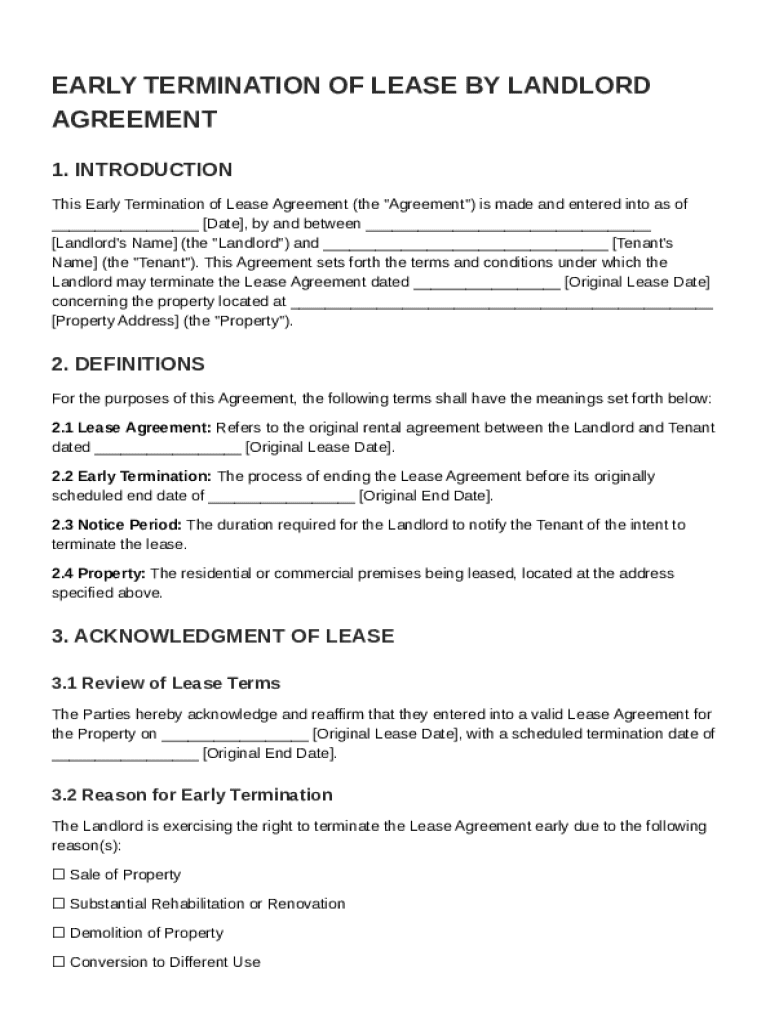







Definition and Meaning
An Early Termination of Lease by Landlord Agreement Template is a legal document that outlines the terms under which a landlord can end a lease agreement before its natural expiration date. This document serves as a formal agreement between landlords and tenants to ensure both parties understand the circumstances and requirements involved in an early lease termination. Typically, such a document will define the reasons for early termination, specify the notice period that the landlord must give to the tenant, and detail any obligations the tenant must fulfill before vacating the property. This structured approach helps prevent disputes and provides a roadmap for both parties to follow, legally protecting their interests.
How to Use the Early Termination of Lease by Landlord Agreement Template
Using this template involves a few key steps to ensure it is filled out correctly and comprehensively. First, the landlord should start by downloading the template from a reliable document platform like DocHub. After downloading, both parties need to carefully read the agreement to understand their responsibilities and rights.
Next, the landlord should complete all necessary sections such as the basic details of the lease, including the address of the property, names of the tenant and landlord, and the original lease date. The specific reason for termination must also be documented accurately. Signatures from both parties are required to finalize the agreement. It’s wise to store both physical and digital copies for future reference.
Key Elements of the Early Termination of Lease by Landlord Agreement Template
This type of lease termination agreement contains several core components that ensure clarity and legal compliance:
-
Definitions: Clear explanations of key terms used in the agreement, such as “landlord,” “tenant,” “lease termination,” and “notice period.”
-
Justifiable Reasons for Termination: Lists acceptable circumstances that allow a landlord to terminate a lease early, such as the tenant's breach of lease terms or property sale.
-
Notice Requirements: Details the exact time frame within which the landlord must notify the tenant about the termination. Compliance with state laws on this notice period is crucial.
-
Tenant's Responsibilities: Outlines the tenant's duties when vacating the premises, which might include cleaning, returning keys, and restoring the property to its original condition.
-
Security Deposit Provisions: Conditions under which the security deposit is returned to the tenant, including deductions for any damages or unpaid rent.
-
Mutual Release Clause: A statement that, upon termination, both parties are released from further obligations pertaining to the lease.
Steps to Complete the Early Termination of Lease by Landlord Agreement Template
-
Download the Template: Begin by acquiring the correct form from a trusted source like DocHub.
-
Review and Customize: Thoroughly read through the form to ensure all terms reflect the specific situation. Customize the template to include relevant details such as names, addresses, and lease terms.
-
Specify Termination Reasons: Clearly state the reason for early termination, ensuring it aligns with legal requirements.
-
Set Notice Period: Enter the notice period required by law, factoring in the specifics dictated by the jurisdiction governing the property.
-
Detail Tenant Obligations: Outline what the tenant is required to do before vacating the property, ensuring all expectations are clear.
-
Sign the Agreement: Both landlord and tenant should review and sign the document to confirm consent to the terms.
-
Distribute Copies: Provide both parties with signed copies for their records.
Important Terms Related to Early Termination of Lease by Landlord Agreement Template
Understanding key terms associated with this agreement can prevent misunderstandings and ensure legal compliance:
-
Lease: A contract outlining the terms under which a tenant rents property from a landlord.
-
Termination: The act of ending the lease before the agreed-upon lease term concludes.
-
Notice Period: The time frame landlords must adhere to when informing tenants of lease termination.
-
Security Deposit: A sum of money held in trust by the landlord to cover potential property damage caused by the tenant.
-
Breach of Contract: When either party fails to follow the terms agreed upon in the lease.
Who Typically Uses the Early Termination of Lease by Landlord Agreement Template
The primary users of this template are landlords who find themselves needing to terminate a lease early due to justifiable circumstances. This could include situations such as selling the property, undertaking significant renovations, or dealing with tenant violations that breach lease terms. Real estate management companies can also utilize this document to manage multiple properties. Additionally, tenants may use this as a negotiating tool if they are seeking flexibility within their lease agreements.


Legal Use of the Early Termination of Lease by Landlord Agreement Template
It is imperative that this agreement template meets state-specific legal requirements to ensure its enforceability. Landlords should ensure they are adhering to any state-specific regulations regarding notice periods, valid reasons for termination, and handling of security deposits. The document should be drafted clearly to prevent ambiguities that could lead to legal disputes. Compliance with the law certifies that both parties' rights are protected and respected throughout the lease termination process.
State-Specific Rules for the Early Termination of Lease by Landlord Agreement Template
Each state in the U.S. may have unique stipulations affecting early lease termination. For example:
-
California: Requires a 30-day notice for tenants who have lived in the unit for less than a year and 60 days otherwise.
-
Texas: Does not allow early termination unless specific conditions are met, such as military deployment or domestic violence situations.
-
New York: Enforces strict guidelines on valid termination reasons and notice periods, often requiring landlords to provide legal justification for lease termination.
Understanding and adhering to these state-specific rules is critical for the successful execution of the agreement.




