




01. Edit your form online
Type text, add images, blackout confidential details, add comments, highlights and more.

Type text, add images, blackout confidential details, add comments, highlights and more.

Draw your signature, type it, upload its image, or use your mobile device as a signature pad.

Send it via email, link, or fax. You can also download it, export it or print it out.
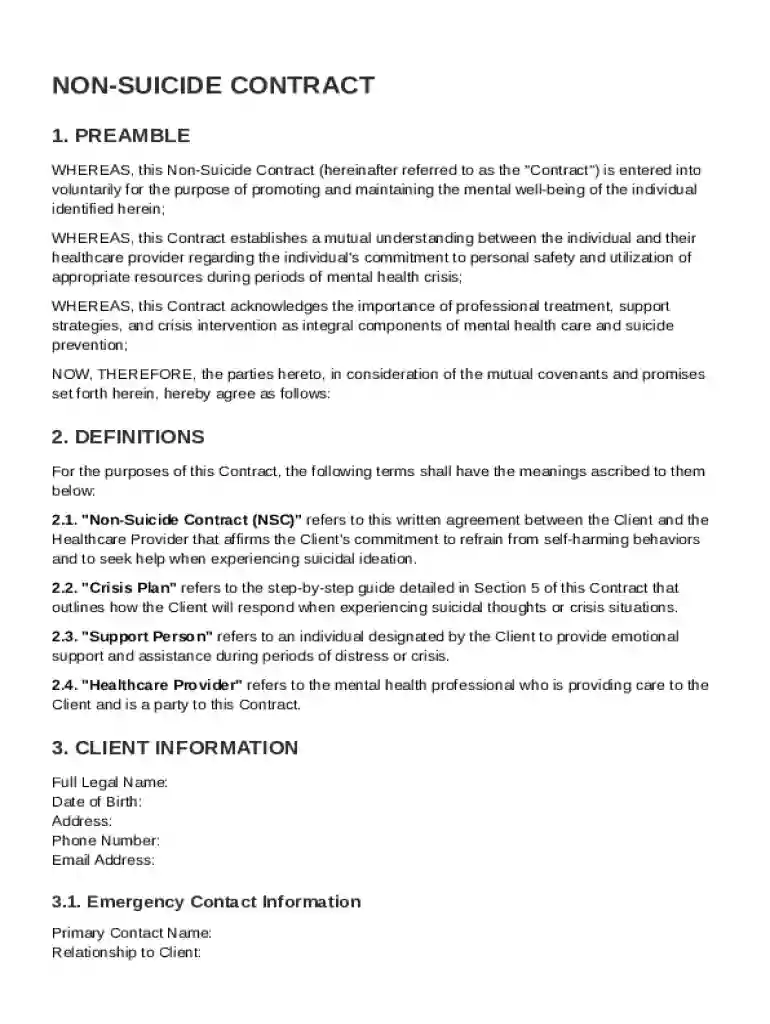
The Non-Suicide Contract is a voluntary agreement designed to encourage commitment to personal safety and mental health. This document serves as a mutual understanding between individuals and their healthcare providers, focusing on the prevention of self-harm through effective communication and support. By clearly defining roles, expectations, and safeguards, the contract aims to foster a proactive approach towards mental well-being. The agreement may include components such as identifying triggers, outlining support resources, and establishing crisis management strategies.
The Non-Suicide Contract template typically includes several essential components:
Commitment to Safety: Individuals agree to prioritize their well-being and adhere to planned actions if experiencing distress.
Identification of Triggers and Warning Signs: Listing personal triggers and warning signs assists healthcare providers in tailoring interventions to the individual's needs.
Crisis Management Plan: A structured plan detailing steps to be taken in emergencies, including who to contact and where to seek help.
Professional Support: Information about ongoing therapy sessions, medical treatment, and any necessary professionals involved in the individual's care.
Using the Non-Suicide Contract Template involves collaboration between individuals and their healthcare providers to personalize the agreement. The process generally includes the following steps:
Initial Discussion: Open dialogue about the purpose and importance of the contract, addressing any concerns the individual might have.
Customization: Tailor the template to account for specific triggers, personal circumstances, and preferred coping mechanisms.
Commitment Agreement: Both parties agree to the outlined terms, emphasizing the importance of mutual understanding and cooperation.
Completing the template requires a detailed and methodical approach:
Personal Information: Include the individual's basic information and emergency contact details.
Recognizing Signs: Thoroughly list known personal distress signals and triggers.
Developing a Crisis Plan: Work collaboratively to create a comprehensive crisis response plan, outlining specific actions to be taken and whom to contact.
Outlining Professional Support: Document ongoing therapeutic interventions, contact information for healthcare providers, and any treatments being used.
Signing the Agreement: Both the individual and the healthcare provider sign and date the contract to confirm mutual understanding and commitment.
The template serves multiple purposes, providing both practical and psychological benefits:
Framework for Dialogue: Encourages open conversations between individuals and their healthcare providers.
Proactive Safety Measures: Deters self-harm by establishing premeditated steps to take in times of crisis.
Empowerment: Gives individuals a sense of control over their mental health care plan, encouraging active participation in their recovery process.
In practice, the Non-Suicide Contract can be adapted to various scenarios:
Adolescent Mental Health: Used within school counseling programs to support teenagers facing stressful life circumstances or traumatic experiences.
Inpatient Treatment Facilities: Incorporated into care plans to ensure that patients have a clear and structured agreement supporting their mental health.
Personalized Mental Health Coaching: Utilized by mental health coaches to set boundaries and create a personalized framework for their clients.
While the contract is primarily a therapeutic tool, some legal aspects should be considered:
Non-Binding Nature: Although the contract is not legally binding, it is an important psychological and therapeutic tool.
Confidentiality Agreements: Ensure privacy and confidentiality of the information shared between the individual and the healthcare provider.
Documentation: Maintain proper records of the signed contract for both parties, underlining the commitment to the stipulations agreed upon.
To access the Non-Suicide Contract template, individuals and healthcare providers can explore various sources:
Mental Health Organizations: Many provide downloadable templates and guidelines.
Clinical Psychology Publications: Various journals and books might offer printed or digital versions of the template for clinical use.
Online Resources: Websites offering mental health support information might also host templates for public use.
At DocHub, your data security is our priority. We follow HIPAA, SOC2, GDPR, and other standards, so you can work on your documents with confidence.
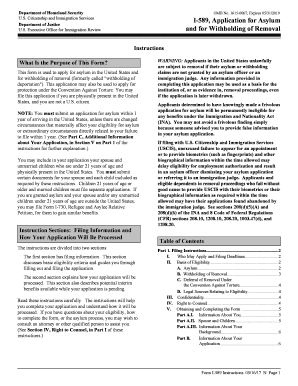


The document is divided into ten Parts, and within seven of these Parts there are several sub-headings (Parts and sub-headings are listed in the Table of
By engaging a client in a no-suicide contract a template, courtesy of the National Suicide Prevention Non-deployed veterans had a 61% higher suicide.
From Stanley, B. Brown, G.K. (2011). Safety planning intervention: A brief intervention to mitigate suicide risk. Cognitive and Behavioral Practice. 19, 256


