
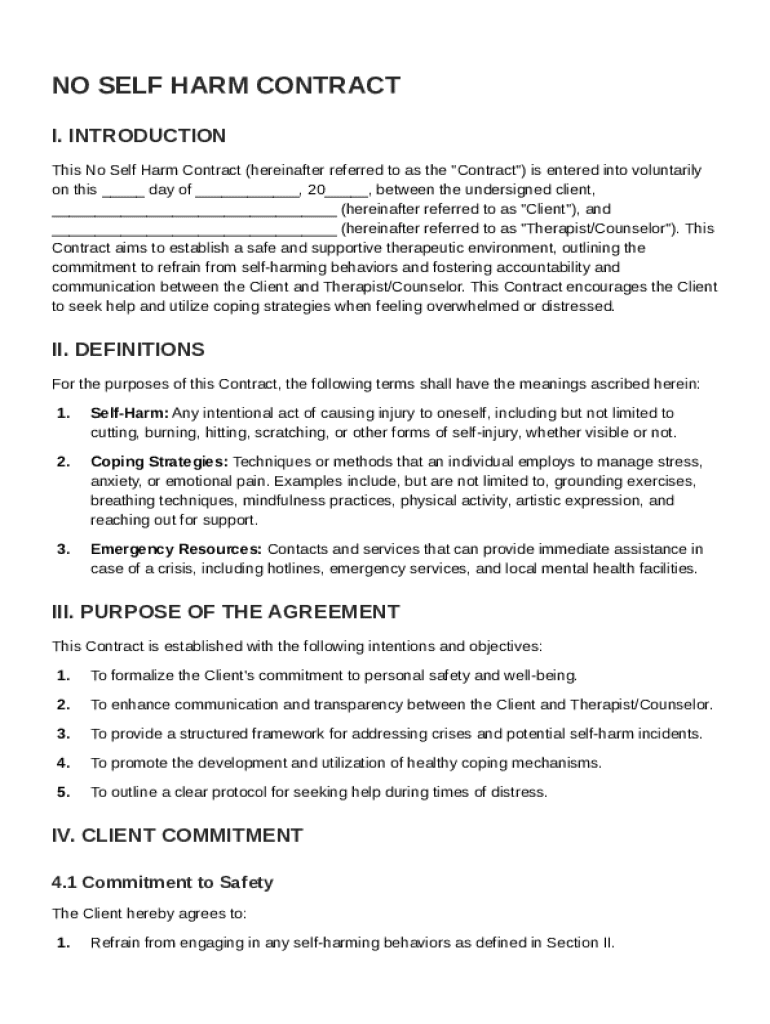







Definition & Purpose of the No Self Harm Contract
The No Self Harm Contract is a documented agreement generally used in therapeutic settings between a client and a therapist or counselor. It serves as a mutual understanding to promote the client's safety and accountability throughout the therapeutic process. The contract explicitly defines self-harm, including various forms it might take, and emphasizes the significance of collaboration in coping strategies. By establishing clear commitments from both parties, the contract aims to prevent self-harming behaviors through proactive communication and support.
How to Use the No Self Harm Contract Template
Utilizing the No Self Harm Contract Template involves several key steps to ensure it is correctly implemented and effective. Initially, the therapist and client should jointly review the template to understand its components and importance. The client needs to feel comfortable and agree with the commitments outlined in the document. Customization of the template is encouraged to suit the client's specific needs; this may include detailing personal coping strategies or emergency contacts that align more closely with the individual's circumstances. Once both parties agree on the terms, the contract should be signed and regularly revisited to assess its effectiveness and make adjustments as needed.
How to Obtain the No Self Harm Contract Template
The No Self Harm Contract Template is typically accessible through professional mental health organizations or directly from a therapist. Many practitioners incorporate such templates into their practice, providing them in printed or digital formats. Additionally, online platforms specializing in mental health resources may offer downloadable templates. When acquiring the template online, it is crucial to ensure its credibility by verifying the source. This aids in acquiring a template that is both professionally recognized and therapeutically sound.
Steps to Complete the No Self Harm Contract Template
-
Initial Discussion: Both the client and therapist should discuss the need for the contract, ensuring mutual understanding of its purpose.
-
Review the Template: Examine each section of the contract carefully, focusing on definitions and commitments required from both parties.
-
Customization: Adjust the language and specifics within the template to address the client's unique circumstances and triggers.
-
Agreement on Terms: Reach a consensus on the stipulated terms, ensuring both parties are clear and committed.
-
Signing the Contract: Once customization is complete, both parties should sign the document to formalize the agreement.
-
Periodic Review: Set regular intervals to review the contract, which can help in assessing its effectiveness and making necessary revisions.
Key Elements of the No Self Harm Contract Template
-
Definition of Self-Harm: Clearly specifies behaviors considered self-harm, helping both parties have a uniform understanding.
-
Coping Strategies: Outlines specific techniques agreed upon to manage urges, which may include mindfulness, distraction, or communication with a trusted individual.
-
Commitments: Details both the client's commitment to refraining from self-harm and the therapist's role in providing support.
-
Crisis Protocols: Instructions on what to do in a crisis situation, including a list of emergency contacts.
-
Confidentiality: Explains any limitations in confidentiality, particularly in life-threatening situations.
Who Typically Uses the No Self Harm Contract Template
This template is predominantly used in therapeutic settings by therapists, counselors, and social workers. It is particularly beneficial for clients who have exhibited self-harming behaviors or those at risk of such actions. The contract can also be used in schools and rehabilitation centers as part of broader efforts to provide structured support to individuals struggling with mental health challenges. Regardless of the setting, the template serves as a fundamental tool in mental health safety planning.


Important Terms Related to the No Self Harm Contract Template
-
Self-Harm: Acts of intentionally causing injury to oneself, often as a way to cope with emotional distress.
-
Coping Strategies: Techniques or activities designed to help manage and alleviate harmful urges or emotional distress.
-
Crisis Protocols: Action plans that are initiated when a client is at risk of harm, including steps to contact emergency services or support networks.
-
Confidentiality Limitations: Circumstances under which a therapist must disclose information to protect the client or others from harm.
Legal Use of the No Self Harm Contract Template
The No Self Harm Contract Template, while not legally binding, holds psychological importance and sets a precedent for accountability in therapeutic settings. Its primary purpose is to formalize an agreement that encourages safe behavior and active participation in therapeutic measures. However, it's essential to remember that it does not substitute professional legal documents. In practice, it acts as a guiding framework to support therapeutic outcomes and enhance communication between the client and therapist.




