Definition and Meaning of an Office Space Lease Agreement
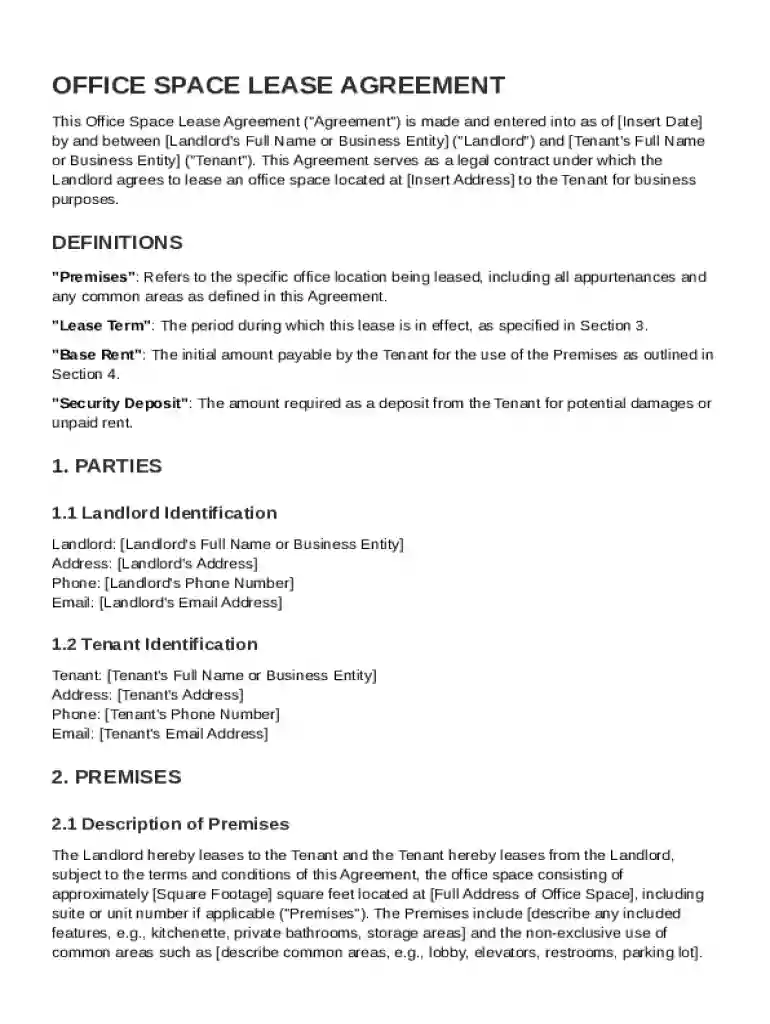
The Office Space Lease Agreement is a binding contract between a landlord and a tenant specifically designed for renting office space for business activities. This legal document clearly outlines the responsibilities of each party, including terms related to the premises, rent obligations, and maintenance duties. It provides a framework for the relationship between landlord and tenant, ensuring mutual understanding and compliance with the stipulations set forth in the agreement.
Key Elements of the Office Space Lease Agreement
- Identification of Parties: Clearly states the names and roles of both the landlord and the tenant.
- Description of Premises: Details the physical characteristics and boundaries of the office space.
- Lease Term: Specifies the duration of the lease, including the start and end dates.
- Rent and Payment Details: Outlines the rent amount, payment schedule, and acceptable payment methods.
- Security Deposit: Describes the amount, purpose, and conditions under which the deposit is returned.
- Maintenance Responsibilities: Allocates duty for repairs and upkeep between landlord and tenant.
- Alteration Procedures: Allows or restricts tenant modifications to the office space.
- Default and Termination Conditions: Lists conditions under which the lease may be terminated early, including breach of contract scenarios.
How to Use the Office Space Lease Agreement Template
The template serves as a useful starting point for drafting a comprehensive lease agreement tailored to specific needs. To use the template effectively:
- Download the Template: Obtain a copy from a reputable source such as DocHub.
- Customize the Agreement: Replace sample text with specific details pertinent to the lease, including party names and property information.
- Review Legal Terms: Ensure clarity and compliance with local rental laws and regulations.
- Consult Legal Counsel: For complex leases, a lawyer should review the agreement to ensure optimal protection and enforceability.
- Finalize and Sign: Once both parties agree to the terms, signatures should be collected to execute the contract.
Software Compatibility
- DocHub & Google Workspace: The template is compatible with DocHub’s online editing tools and Google Workspace, allowing users to streamline the lease drafting process.
Important Terms Related to the Office Space Lease Agreement Template
Understanding specific terms can simplify navigating the lease agreement:
- Lessee/Lessor: Lessee refers to the tenant, while the lessor is the landlord.
- Triple Net Lease: A lease where the tenant pays for property taxes, insurance, and maintenance.
- Gross Lease: Opposite of a triple net lease, the landlord covers these expenses.
- Tenant Improvements: Changes or improvements made by the tenant, often covered in the agreement.
- Common Area Maintenance (CAM): Fees related to shared spaces within the property.
Legal Use of the Office Space Lease Agreement
The Office Space Lease Agreement serves as a legal document that can be enforced in a court of law. It enables both parties to resolve disputes based on the written terms. Its legality stems from:
- Compliance with State Laws: Following specific state regulations ensures the lease is enforceable.
- Execution by Competent Parties: All signatories must have the legal capacity to enter into the agreement.
- Consideration: Mutual exchange of value (services for rent) is evident.
Who Typically Uses the Office Space Lease Agreement Template?
The template is invaluable for various stakeholders in the commercial real estate sector:

- Business Owners: Secure office locations for operations, tailored to small to mid-sized enterprises.
- Commercial Real Estate Agents: Facilitate leasing transactions between landlords and businesses.
- Property Managers: Handle leasing duties as part of their role in managing commercial properties.
Steps to Complete the Office Space Lease Agreement Template
- Identify the Parties: Clearly specify who the landlord and tenant are, including contact details.
- Detail the Premises: Accurately describe the location and dimensions of the rented office space.
- Set the Lease Term: Define the period for which the lease is valid.
- Outline Financials: Provide specifics on rent, due dates, and any additional costs like utilities or maintenance fees.
- Detail Responsibilities: Agree on who is responsible for repairs, alterations, and general upkeep.
- Add Legal Clauses: Ensure protection against potential issues with default or disputes.
State-Specific Rules for the Template
Requirements can vary by state, affecting key aspects of your lease agreement:
- Security Deposit Limits: Some states cap the amount a landlord can require.
- Notice Periods for Termination: Varying state laws dictate how much notice must be given for termination.
- Mandatory Disclosures: States often require landlords to disclose specific information regarding the property or surrounding area.
State-by-State Differences
While many lease components remain consistent, certain state-specific rules may impact your agreement in areas such as:
- Rent Control: States like New York and California may have rent control regulations absent in others.
- Health and Safety Codes: Some states have stricter regulations governing office space condition.
- Eviction Procedures: Know the state laws on how evictions must be legally conducted.