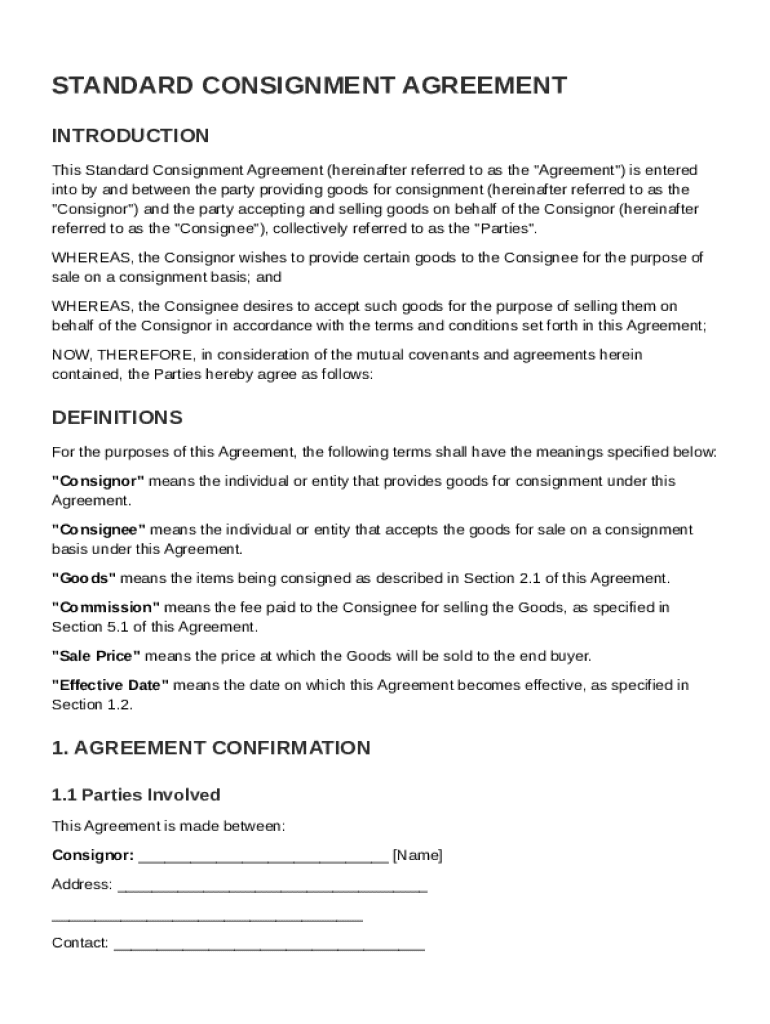







Definition & Meaning
The Standard Consignment Agreement Template is a legal document that establishes the terms and conditions under which a Consignor supplies goods to a Consignee, who then sells those goods on behalf of the Consignor. This agreement covers several critical aspects such as the roles and responsibilities of each party, financial arrangements like commission structures, and conditions for delivery and sale of goods. It is essential to ensure that both parties have a clear understanding of their obligations to prevent future disputes. The agreement also includes clauses related to liability, indemnity, duration, termination, and the governing law that presides over the contract.
Key Elements of the Standard Consignment Agreement Template
Roles & Responsibilities
- Consignor: The party that owns the goods and provides them to the Consignee for sale.
- Consignee: The party that receives the goods and is responsible for selling them on behalf of the Consignor.
Financial Agreements
- Commission Structures: Clearly defined percentage or fixed amount paid to the Consignee for each sale.
- Payment Terms: Specify terms for payment from the Consignee to the Consignor, including timelines and methods.
Conditions for Goods
- Delivery and Acceptance: Terms regarding the delivery process and acceptance criteria for goods.
- Return Policies: Define what happens in the case of unsold goods and any conditions under which goods may be returned.
Legal Provisions
- Liability and Indemnity: Outline the extent of responsibility and legal protection for both parties.
- Governing Law: Jurisdiction that governs the agreement to ensure legal compliance.
How to Use the Standard Consignment Agreement Template
The Standard Consignment Agreement Template is designed to be simple to use while being comprehensive. To utilize this template effectively, both parties should:
- Review the Template: Understand each section of the agreement and confirm it aligns with the intended business arrangement.
- Customize the Agreement: Tailor the template to fit specific needs, such as custom commission rates or payment terms.
- Consult Legal Advice: It's wise for both parties to consult with a legal professional to ensure all elements comply with the relevant state laws.
- Discuss Terms: Ensure that both parties agree to all terms before signing the agreement to avoid conflicts.
- Sign and Execute: Once satisfied, the document should be signed by both parties and a copy should be retained by each.
Important Terms Related to Standard Consignment Agreement Template
Understanding the terminology used in the Standard Consignment Agreement Template is crucial for its proper implementation:
- Consignor: The owner of the goods.
- Consignee: The seller of the goods.
- Commission: The fee paid to the Consignee for selling goods.
- Indemnity: A clause that provides security against future loss or claims.
- Jurisdiction: Legal authority under which the agreement falls.
Legal Use of the Standard Consignment Agreement Template
Employing a Standard Consignment Agreement Template facilitates a legally binding arrangement between the Consignor and the Consignee. This document must comply with the contractual laws applicable in the jurisdiction where the goods are to be sold. The terms should be explicit and clearly understood by both parties to uphold the agreement in a legal context. Including a governing law clause establishes which state or region’s laws will be applied to interpret the agreement.
Who Typically Uses the Standard Consignment Agreement Template
This type of agreement is commonly used by businesses and individuals involved in:
- Retail: Stores that sell goods on behalf of designers or manufacturers.
- Art Galeries: Artists provide their work to galleries, which sell and take a commission.
- Boutiques: Small businesses that may not have their own branded products rely on consignment.
- Auction Houses: Trade goods supplied by private owners or collectors.


Steps to Complete the Standard Consignment Agreement Template
- Identify the Parties Involved: Clearly state the names and addresses of the Consignor and Consignee.
- Detail the Goods: Provide a comprehensive description of the goods to be consigned.
- Set Terms: Establish terms such as duration, commissions, and payment procedures.
- Include Legal Clauses: Add necessary legal clauses regarding liability, dispute resolution, and termination.
- Review: Both parties should meticulously review the contract to ensure accuracy and fairness.
- Signatures: Each party should sign the agreement in the presence of witnesses for legal validation.
State-Specific Rules for the Standard Consignment Agreement Template
While the fundamental structure of a consignment agreement might remain similar across different jurisdictions, certain states in the U.S. may have specific requirements or interpretive rulings that impact these agreements:
- Sales Tax: Some states may require the Consignee to collect sales tax on consigned goods.
- Contract Filing: Certain states may have filing requirements for consignment contracts to be acknowledged legally.
- Consumer Protection Laws: States may have laws regarding the rights of consumers buying consigned goods that impact the terms of the consignment.
Understanding and adhering to these state-specific rules is essential for the validity and enforceability of the agreement. Consulting with legal counsel familiar with state laws ensures the agreement’s compliance.