01. Edit your form online
Type text, add images, blackout confidential details, add comments, highlights and more.

Type text, add images, blackout confidential details, add comments, highlights and more.

Draw your signature, type it, upload its image, or use your mobile device as a signature pad.

Send it via email, link, or fax. You can also download it, export it or print it out.
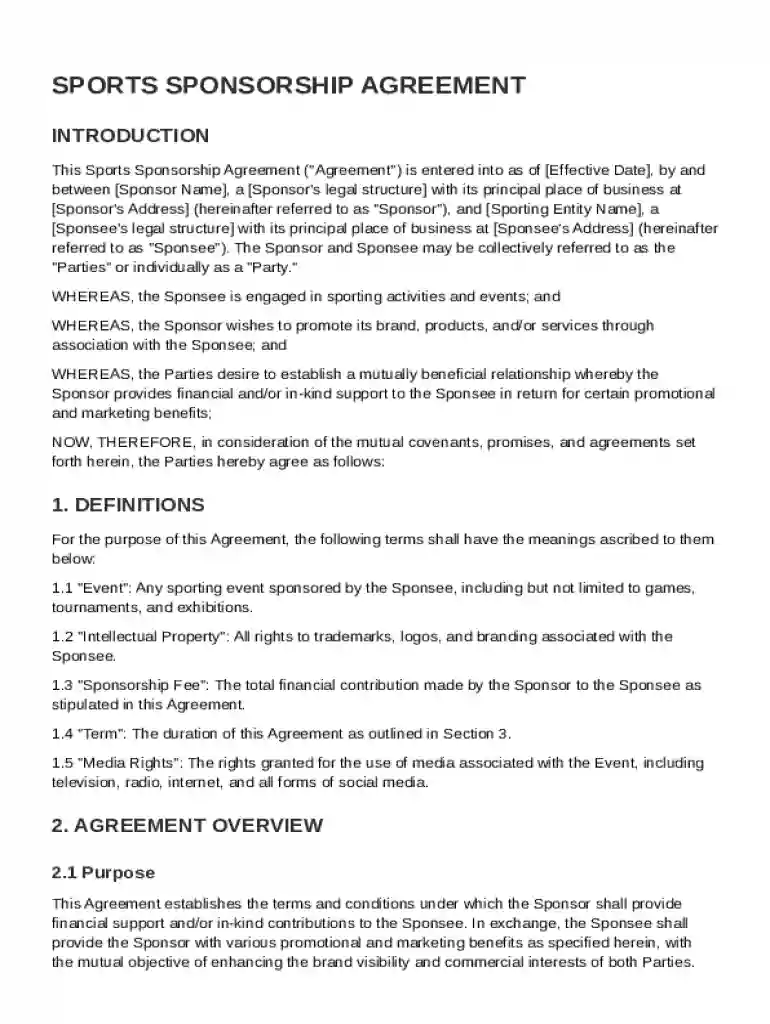
A Sports Sponsorship Agreement template is a formal document outlining the terms under which a sponsor provides financial or in-kind support to a sponsee. This relationship aims to promote the sponsor’s brand through the sponsee’s sporting events. The document defines the scope of sponsorship, including logos, promotional rights, and obligations, ensuring clarity and solidifying the partnership’s legal foundation. The agreement can impact marketing strategies significantly, making it important for businesses involved in sports marketing and event promotion.
To effectively use the Sports Sponsorship Agreement template, understanding its structure is crucial. The template typically divides into sections such as sponsorship rights, payment terms, intellectual property rights, and liability clauses. - Sponsorship Rights: This section specifies how the sponsor's brand will be displayed, including logo placement and media mentions. - Payment Terms: Details the financial commitments made by the sponsor, including any installment options. - Intellectual Property Rights: Discusses the use of logos, trademarks, and any promotional content. - Liability Clauses: Outlines the responsibilities and legal obligations of both parties.
The core components of any Sports Sponsorship Agreement template include: - Definitions: Clarifies specific terms used within the document to prevent misunderstandings. - Sponsorship Scope: Details the extent of visibility and marketing rights granted to the sponsor. - Payment Terms: Establishes the financial arrangement and schedule of payments. - Rights and Obligations: Specifies what the sponsor and sponsee are each expected to deliver. - Intellectual Property: Manages use of logos and branding materials. - Media Rights: Covers any media exposure provided as part of the sponsorship. - Liability and Indemnity Clauses: Legal protections for both parties.
Sports sponsorship agreements vary widely, accommodating different scenarios and types of sports. For example: - Professional Sports Teams: A beverage company sponsoring a professional basketball team, with brand placement on team jerseys. - Community Sports Events: A local bank sponsoring community soccer leagues, supporting event logistics in return for banner display. - Athlete Endorsements: An individual athlete receiving equipment sponsorship from a sportswear brand.
Understanding the technical terms within a Sports Sponsorship Agreement minimizes conflict: - Exclusive Sponsorship: Limits the number of sponsors, offering more visibility to each. - Activation: Refers to the activities a sponsor can undertake for promotion. - Term and Termination: Specifies agreement duration and grounds for early termination. - Force Majeure: Covers disruptions due to unforeseen events, such as natural disasters.
For legal use, it’s important that the agreement complies with applicable local laws and industry standards. Both parties should conduct due diligence to ensure contractual obligations are enforceable. Including clauses for dispute resolution, such as mediation or arbitration, can help avoid lengthy legal battles.
This template is primarily used by: - Sports Teams and Athletes: Seeking financial support and resources for training and events. - Businesses and Corporations: Wanting to enhance brand visibility through strategic sports partnerships. - Sports Event Organizers: Looking to secure funding or services to host sporting events efficiently.

Companies that stand to gain the most from a Sports Sponsorship Agreement include: - Consumer Goods Brands: Particularly those in beverages, apparel, and electronics. - Media Companies: Who leverage event sponsorship for greater advertising reach. - Retail Businesses: E.g., sports equipment retailers using sponsorship for event promotions and deeper market penetration.
In the U.S., the legal landscape for sports sponsorship can vary significantly by state. Some states may have specific regulations regarding advertising and promotional rights, or more stringent compliance requirements for contractual agreements. Legal counsel familiar with the state’s laws should review the agreement to ensure local compliance and adapt it as necessary.
In today’s dynamic business environment, digital agreements offer several advantages: - Easy Access: Parties can review and sign documents remotely. - Faster Turnaround: Electronic signatures enable quicker finalization. - Secure Storage: Digital documents stored in the cloud are easier to access and manage, compared to physical copies, and can offer enhanced security features such as encryption.
At DocHub, your data security is our priority. We follow HIPAA, SOC2, GDPR, and other standards, so you can work on your documents with confidence.