




Definition and Meaning
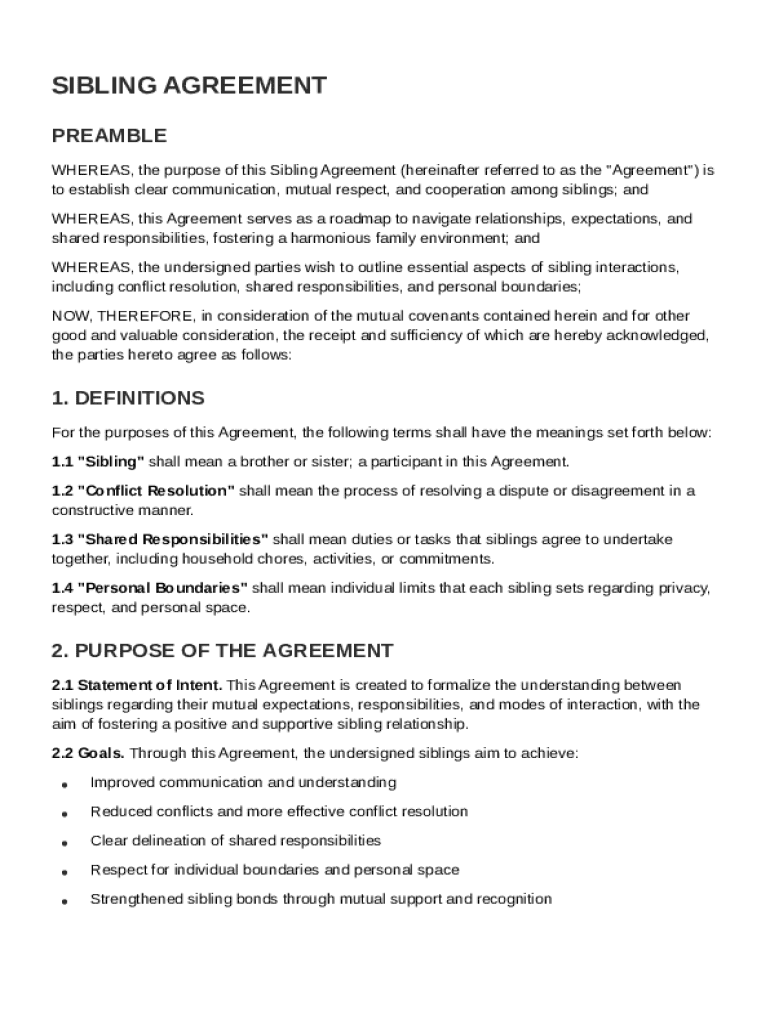
A Sibling Agreement Template is a formal document crafted to enhance communication, cooperation, and respect among siblings. It functions as a strategic framework for managing and resolving conflicts, distributing shared responsibilities, and establishing personal boundaries among siblings. By clearly outlining the definitions and purposes of sibling cooperation, this template ensures that all parties understand their roles and responsibilities within their relationships. This agreement aims to cultivate positive sibling relationships through structured guidelines that encourage regular check-ins, mutual respect, and recognition of contributions from each sibling involved.
How to Use the Sibling Agreement Template
Using the Sibling Agreement Template effectively involves several key steps that ensure comprehensive understanding and engagement from all parties. Begin by scheduling a meeting where all siblings can discuss their expectations and needs. During this meeting, review each section of the template together, ensuring clarity on each point and modifying sections as required to better suit your unique sibling dynamic. This participatory approach guarantees that everyone's voice is heard, fostering a collaborative environment. Once finalized, ensure each sibling has a copy of the signed agreement to reference for future discussions or disputes.
Steps to Complete the Sibling Agreement Template
-
Gather Information: Collect essential details such as the names of the siblings involved, contact information, and any relevant background that may influence the agreement.
-
Outline Roles and Responsibilities: Define the specific duties and expectations for each sibling, encompassing both shared responsibilities and individual tasks.
-
Set Conflict Resolution Guidelines: Develop a framework for resolving disagreements, including mediation procedures or third-party arbitration if necessary.
-
Specify Communication Protocols: Clearly articulate the preferred methods of communication, stipulating frequency and channels to be used for updates or emergencies.
-
Review and Adjust: Collaboratively review the draft agreement and make necessary adjustments based on feedback from all parties.
-
Finalize and Sign: Once the content is agreed upon, finalize the signatures of all siblings to formalize the agreement.
Key Elements of the Sibling Agreement Template
The Sibling Agreement Template comprises several crucial components that contribute to its effectiveness:
- Definitions and Purposes: Clear explanations of what each section entails and the overall aim of the agreement.
- Conflict Resolution Framework: Step-by-step guide on how to address and resolve conflicts in a supportive and constructive manner.
- Assignment of Responsibilities: Detailed breakdown of shared and individual responsibilities to prevent misunderstandings.
- Regular Check-Ins: Schedule and methods for regular updates and open communication between siblings.
Legal Use of the Sibling Agreement Template
The Sibling Agreement Template serves a legally supportive role by formally documenting the agreed terms between siblings. While not legally binding in the same way as a contract, it provides a clear record that can be referred to in case of disputes. This document enhances accountability and can be used as evidence of the siblings' intentions should legal clarification be required. It is advisable to consult a legal expert to tailor the agreement according to specific state laws, if necessary.
Who Typically Uses the Sibling Agreement Template
Typically, the Sibling Agreement Template is utilized by siblings who share property, businesses, or other significant responsibilities that require coordinated management. This could include siblings inheriting family assets, joint business operations, or even caregiving tasks for family members. The template is particularly beneficial in situations where clear communication and structured agreements are essential for the smooth functioning of shared arrangements.

Examples of Using the Sibling Agreement Template
Consider siblings who jointly own and manage a small family business. By using the Sibling Agreement Template, they can delineate roles such as financial management, marketing responsibilities, and operational duties. Similarly, in a scenario where siblings inherit property, the template can be used to outline maintenance responsibilities, rental management, and profit-sharing arrangements. Such practical applications underscore the template's versatility in addressing diverse sibling scenarios.
Versions or Alternatives to the Sibling Agreement Template
While the Sibling Agreement Template provides a comprehensive framework, variations may be required to suit specific needs. Some siblings may opt for a mediation-focused agreement, which prioritizes conflict resolution strategies. Alternatively, a business-oriented sibling agreement may include clauses related to financial investments and decision-making processes. For those needing legal enforceability, engaging a legal professional to draft a custom agreement could be a viable alternative. These diverse options demonstrate the adaptability of the Sibling Agreement Template to accommodate unique sibling dynamics and requirements.